

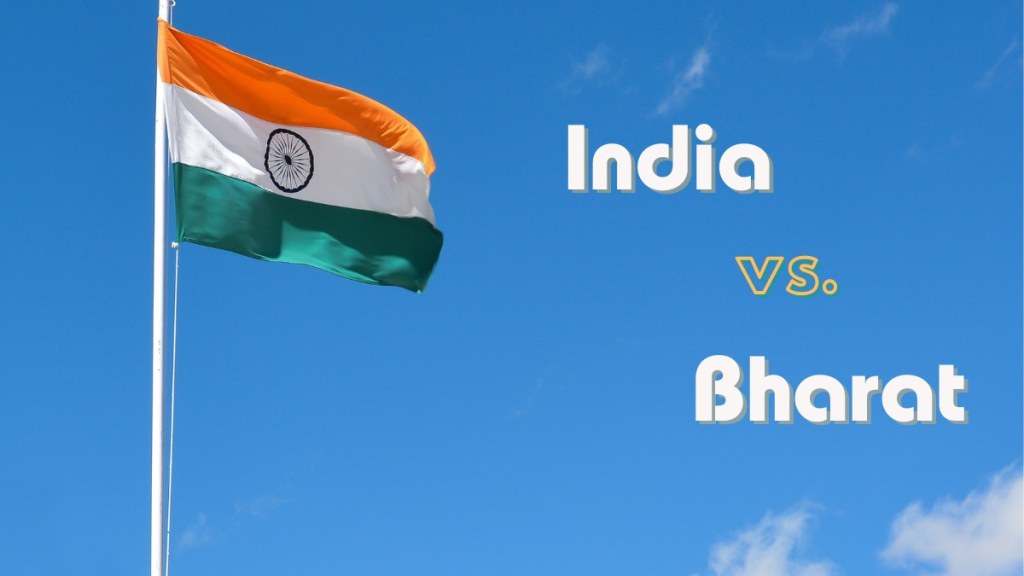
Source : https://www.jagranjosh.com
Introduction
India is a land of diverse cultures, languages, and traditions. But what’s in a name? Well, when it comes to India, it appears there’s quite a bit. India is perhaps the only country in the world with multiple names – Bharat, India, Hindustan, or Hind, each carrying its own historical and cultural significance. In this blog, we’ll delve into the evolution, implications, and suitability of these names for the country, examining how they reflect India’s complex identity.
The Ancient Names
Long before the modern labels, the ancients referred to this vast subcontinental land as “Jambu Dweep” and “Bharatvarsha.” The former, “Jambu Dweep,” was linked to the Jamun fruit, which is abundant in the region. The latter, “Bharatvarsha,” referred to the land of the sons of Bharat, a legendary emperor. These names reflected a deep connection between the land and its people, rooted in mythology and tradition.
Colonial Hangover and Cultural Influence
The names “India” and “Hindustan” have colonial origins, with “India” being used by Greek and Latin authors and “Hindustan” appearing in Persia as early as the third century B.C. These names evolved over time and were often context and language-sensitive, reflecting the changing political landscape of the subcontinent.
The Constitutional Conundrum
Fast forward to India’s independence, and the Constitution faced a unique challenge: what name should represent the nation officially? The Constituent Assembly had to choose between “Bharat” and “India.” While the Constitution uses both, the prevalent usage of “India” in official documents suggests a colonial hangover and cultural imperialism imposed by the West.
The Cultural Divide
Interestingly, the name chosen often depends on the context and language used. In English, it’s “India,” while in Hindi or other vernacular languages, it’s “Bharat.” This linguistic divide even extends to contemporary literature and societal perceptions. “India” is associated with the educated, urban, and economically better-off segments, while “Bharat” is linked to the rural, less privileged, and less educated population.
The Confusion Persists
The confusion surrounding these names persists today. Cultural events, like the “Azadi ka Amrit Mahotsav,” use “Bharat” and “India” interchangeably, suggesting a distinction between the spirit of “Bharat” and the constitutional republic of “India.” This duality in naming remains a baffling subject for Indian citizens.
Conclusion
The multiple names of India reflect its rich history, cultural diversity, and the impact of colonialism. While the Constitution acknowledges both “Bharat” and “India,” the choice of “India” as the prevalent official name raises questions about the lingering colonial influence. The ongoing debate and confusion surrounding these names highlight the complexity of India’s identity, which continues to evolve in the 21st century.

 Dr. Kiran Kakade (Ph.D.,LL.M.,MCA,MBA(HR))