

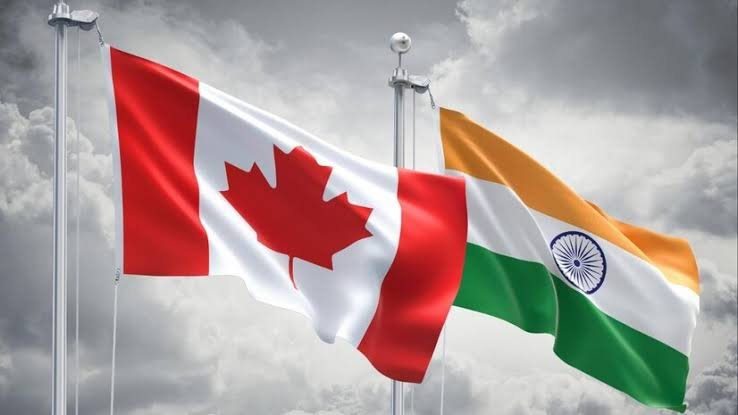
Image Source:- https://www.google.com/imgres
Introduction:
The ongoing dispute between India and Canada has taken center stage in recent months, raising concerns about its potential ramifications on trade relations and Canada’s inclusion in Indo-Pacific institutions. This diplomatic standoff emerged following Canadian Prime Minister Justin Trudeau’s accusations of Indian involvement in the death of Hardeep Singh Nijjar, a Canadian citizen and Khalistani terrorist. In this blog, we will delve into the key aspects of this dispute and explore its implications on global politics.
The Accusations and Response:
The disagreement between India and Canada reached a critical point when Prime Minister Trudeau voiced suspicions regarding India’s involvement in the death of Nijjar, which occurred in British Columbia on June 18. India swiftly dismissed these accusations as “absurd” and “motivated.” In retaliation, India expelled a senior Canadian diplomat, escalating tensions between the two nations.
Trade Implications:
One of the immediate consequences of this dispute is its potential impact on trade relations. Negotiations for the Early Progress Trade Agreement (EPTA) between Canada and India have been put on hold. Both countries have announced the suspension of trade talks, with Canadian Trade Minister Mary Ng postponing a planned trade mission to New Delhi indefinitely. This disruption in trade negotiations could have detrimental effects on economic ties between Canada and India.
Immigration Concerns:
Another critical aspect to consider is the flow of Indian immigrants to Canada. Indian immigrants constitute nearly one in five of all recent immigrants to Canada, contributing significantly to the country’s population growth. A deterioration in relations with India could result in a reduction of Indian immigration to Canada, potentially impacting the nation’s demographic landscape.
Impact on Indo-Pacific Institutions:
Beyond trade and immigration, this dispute could hinder Canada’s aspirations to join the network of Indo-Pacific institutions. Regional allies may be cautious about angering the Indian government, and India itself could block Canadian membership in certain groups due to its influence and power in the region. Canada’s ability to strengthen its position in the Indo-Pacific could be hampered by this diplomatic rift.
Conclusion:
The India-Canada dispute, fueled by accusations and diplomatic actions, has the potential to disrupt trade relations, impact immigration patterns, and hinder Canada’s ambitions in Indo-Pacific institutions. As both nations navigate the complexities of this dispute, the world watches closely, recognizing the broader implications it holds for global politics and alliances in an ever-changing geopolitical landscape.

 Dr. Kiran Kakade (Ph.D.,LL.M.,MCA,MBA(HR))