

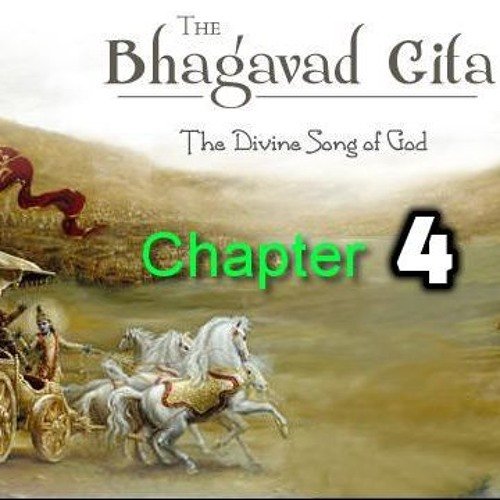
Image Source:- https://soundcloud.com
Introduction:
The Bhagavad Gita, often referred to as the Gita, is a sacred Hindu scripture that contains a wealth of spiritual and philosophical teachings. In Chapter 4 of the Gita, Lord Krishna imparts profound wisdom to Arjuna, touching upon essential concepts that hold relevance not only in the realm of spirituality but also in the world of management and leadership. This chapter delves into the significance of right action, sacrifice, and the pursuit of wisdom, providing valuable lessons for effective management practices.
The Transmission of Ancient Wisdom:
Krishna begins by revealing that he is transmitting an ancient teaching to Arjuna. This wisdom, although previously taught to gods and others, has become diluted and lost with time. This is a crucial lesson for managers – the importance of preserving and passing down institutional knowledge and best practices within an organization. Without this continuity, organizations can lose their way and become less effective.
The Eternal Nature of Leadership:
When Arjuna questions Krishna about the possibility of losing knowledge due to his birth being “countless eons later than the god of the sun,” Krishna clarifies that he is eternal and comes to earth in human form when righteousness falters and chaos threatens to prevail. This underscores the timeless nature of leadership and the need for leaders to emerge when their guidance is most needed, regardless of the era.
The Path of Right Action:
Krishna emphasizes the concept of “right action” or karma yoga. He asserts that God is in action through worship, and in this context, God is both the actor and the action. In management, this aligns with the idea that actions and decisions taken within an organization should be guided by righteousness and ethical considerations. Leaders must strive for actions that benefit not just the organization but society as a whole.
Sacrifice and Worship in Management:
The concept of sacrifice in the Gita, often referred to as “yajna,” is analogous to the idea of sacrifice in management. It represents the idea of selfless dedication and commitment to a higher purpose. In management, this translates into leaders making sacrifices for the greater good of the organization and its stakeholders.
The Pursuit of Wisdom:
Krishna contends that wisdom is the outcome of right action. This is a valuable lesson for managers who seek to continuously learn and evolve. Wisdom in management involves understanding the intricacies of the business, recognizing the truth beyond surface-level challenges, and making informed decisions that align with the organization’s goals and values.
The Role of a Wise Teacher:
Krishna highlights the importance of having a wise teacher as a guide. In the context of management, mentors and experienced leaders play a critical role in shaping the development of future leaders. Their guidance and insights can help emerging managers navigate complex challenges effectively.
Conclusion:
Chapter 4 of the Bhagavad Gita offers profound insights into management by emphasizing the significance of right action, sacrifice, and the pursuit of wisdom. These teachings remind us that effective management goes beyond mere tactical decisions; it involves aligning actions with values, seeking continuous growth, and being guided by ethical principles. Just as Krishna guided Arjuna, effective leaders in the world of management can inspire and lead their teams toward success by embodying these timeless lessons.

 Dr. Kiran Kakade (Ph.D.,LL.M.,MCA,MBA(HR))