
“Sell Your Technology to us,NASA said – ISRO Chief Somnath (Source: The Times of India)
Introduction:
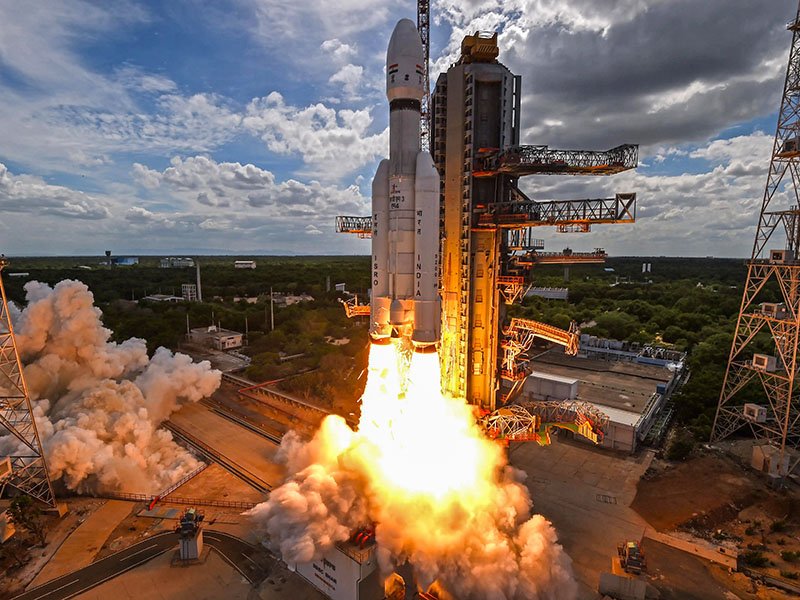
In the realm of space exploration, India has carved a niche for itself with remarkable achievements. One such moment of pride was when the United States showed interest in India’s low-cost space technology. This demand for India’s expertise signified the nation’s growth in the space race. In this blog, we delve into this historic journey, the challenges faced, and the ultimate triumph of ISRO in developing the Cryogenic engine.
The Quest for Efficient Fuel:
To understand the significance of India’s Cryogenic engine technology, we need to appreciate the need for efficient rocket fuel. Traditional solid propellent fuel, akin to the fuel in our cars, is heavy and limits the rocket’s payload capacity, leading to high costs. India sought a solution, and it came in the form of the Cryogenic engine.
The Russian Connection:
In 1991, ISRO inked an agreement with Russia’s Glavkosmos for the technology transfer of the Cryogenic engine. This powerful engine used liquid hydrogen and oxygen, offering fuel efficiency and a lighter weight. The United States watched closely, realizing the potential for India to become a major player in rocket and satellite launches.
US Objections and a Thrilling Transfer:
The United States, under the Missile Technology Control Regime (MTCR), objected to the technology transfer. ISRO and Glavkosmos devised a Plan B – outsourcing the engine’s manufacturing to Kerala Hi-tech Industries Limited (KELTEC) to circumvent MTCR restrictions. This clever maneuver ensured that technically it was not a violation of the MTCR.
The Espionage Game:
As the Cryogenic engine technology transfer progressed, American spies in Russia were on high alert. The USA realized the threat India’s progress posed to NASA’s business opportunities. The arrest and torture of Nambi Narayanan, a key figure in the Cryogenic engine project, revealed the extent of espionage in this space race.
The Turning Point:
In 1997, prominent scientists and public figures, along with former Chief Election Commissioner T.N. Seshan, wrote a joint letter to the government, denouncing the espionage charges against Nambi Narayanan and his deputy, Sasi Kumaran, as fabricated. Despite the ordeal, Nambi Narayanan did not implicate higher-ups at ISRO, preventing the organization’s collapse.
India’s Indomitable Spirit:
The truth eventually came to light, leading to the acquittal of Nambi Narayanan and Sasi Kumaran. ISRO faced the challenge of developing the Cryogenic engine indigenously. The necessity to do so, given the circumstances, became the driving force behind India’s indomitable spirit in space technology.
India’s Triumph:
ISRO successfully developed the Cryogenic engine, and India’s space program soared to new heights. It launched several GSLV rockets, carrying satellites from India and various other countries into orbit at a fraction of NASA’s cost. India also sent a spacecraft to Mars at a mere quarter of the cost of comparable missions by the USA.
Conclusion:
India’s remarkable journey from being embroiled in international espionage to becoming a global space powerhouse is a testament to the nation’s resilience, determination, and scientific prowess. This tale of triumph against all odds is a source of pride and inspiration, emphasizing that in the pursuit of knowledge and exploration, truth and resilience always prevail.
Sathyameva Jayathe. Jai Hind.
 Dr. Kiran Kakade (Ph.D.,LL.M.,MCA,MBA(HR))