

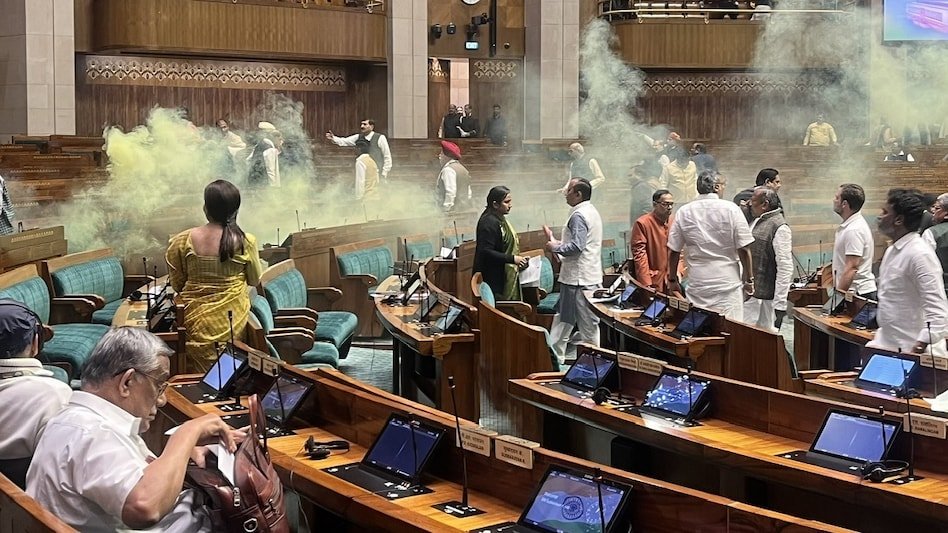
India, a democratic nation of 1.4 billion people, rests upon the pillars of citizen-elected governance. However, recent events surrounding the breach of parliamentary security call for a deeper reflection on the state of our democracy, particularly among the youth.
As we grapple with multifaceted issues such as farmer suicides, unemployment, health crises, and various social challenges, it becomes evident that the very fabric of our society is woven with threads of complexity. Population explosion is a contributing factor to these issues, urging us to explore democratic avenues for constructive protests and solutions.
For the youth, unemployment stands as a prominent concern in today’s generation. A critical analysis points to the inadequacies of the Indian education system, producing a workforce lacking the necessary skills for a diverse job market.
Social factors further compound this issue, with modern movies portraying extreme violence, influencing the youth’s perception of success and achievement. The desire to make a mark, whether positive or negative, becomes a driving force for action.
However, the recent breach of parliamentary security serves as a stark reminder that there are boundaries even in the pursuit of change. The Parliament, often considered the soul of our country, should be immune to such transgressions. An attack on it is not just a crime; it is an assault on the very essence of our nationhood.
Amidst these challenges, there is a silver lining in the ongoing reforms within the education system. These reforms aim to channel the creative minds of the youth towards innovation and the development of the country, steering them away from becoming pawns in someone’s political agenda.
Yet, the responsibility does not solely rest on the shoulders of the youth. Parents, teachers, and society must collectively guide and educate the younger generation about the consequences of their actions. The recent incident involving four youth underscores the need for a shared commitment to shaping responsible citizens.
In conclusion, as we declare our love for the country with a resounding “Jai Hind,” it is essential to uphold the sanctity of our democratic institutions. By fostering an environment that encourages responsible citizenship, we can collectively contribute to a stronger and more resilient India.

 Dr. Kiran Kakade (Ph.D.,LL.M.,MCA,MBA(HR))