
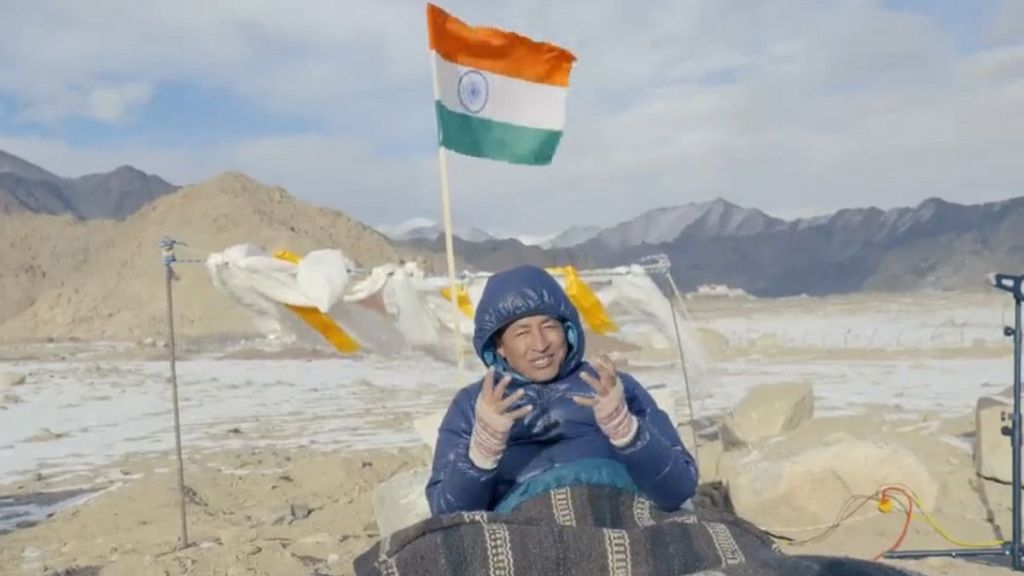
In the heart of Leh, Ladakh, a significant movement is unfolding, led by the renowned climate activist and innovator, Sonam Wangchuk. Known for his groundbreaking work in education and sustainable development, Wangchuk has embarked on a hunger strike with a deeply rooted cause – the demand for statehood for Ladakh and its inclusion in the Sixth Schedule of the Constitution.
This protest isn’t just a demonstration of dissent; it’s a clarion call to the Indian government to fulfill its promises to the people of Ladakh. On the 21st day of his ‘climate fast,’ Wangchuk, looking frail but determined, released video messages appealing directly to Prime Minister Narendra Modi. The message was clear: Ladakhis should wield their voting power with caution, bearing the nation’s interest at heart.
Wangchuk’s strike comes on the heels of stalled discussions between representatives of Leh’s Apex Body and the Kargil Democratic Alliance (KDA) with the central government. Both groups have been at the forefront of the agitation, demanding not just statehood but also autonomy through the Sixth Schedule, which allows for the administration of tribal areas via autonomous district councils.
Why is this movement significant? Following the abrogation of Article 370, Ladakh was designated a Union Territory without a legislature, a move that sparked controversy over democratic rights and representation. Wangchuk’s protest underscores the importance of local governance and the need for Ladakh’s people to have a say in their administration, especially given its strategic border location.
Wangchuk’s message resonates beyond Ladakh. It’s a reminder of the power of the ballot and the role of citizens as kingmakers in a democracy. The call to action is for more than just the government to listen; it’s for the people to remember their power and use it wisely.
As this movement gains momentum, it’s crucial to remember that at its core, it’s about ensuring that Ladakh can chart its own course, reflective of its people’s aspirations and needs. The government’s responsiveness and swift decision-making can build trust and demonstrate a commitment to addressing the unique challenges faced by border states like Ladakh.
In solidarity with Sonam Wangchuk, we must recognize the importance of this moment. It’s more than a fight for statehood; it’s a quest for empowerment, democracy, and the right to self-determination. The hope is that this hunger strike will not only bring about the desired political change but also inspire a broader discourse on governance, autonomy, and the power of peaceful protest.
 Dr. Kiran Kakade (Ph.D.,LL.M.,MCA,MBA(HR))