
Title: Unveiling the Management Wisdom: Lessons from Ravana’s Ten Heads by Dr. Kiran Kakade

Introduction

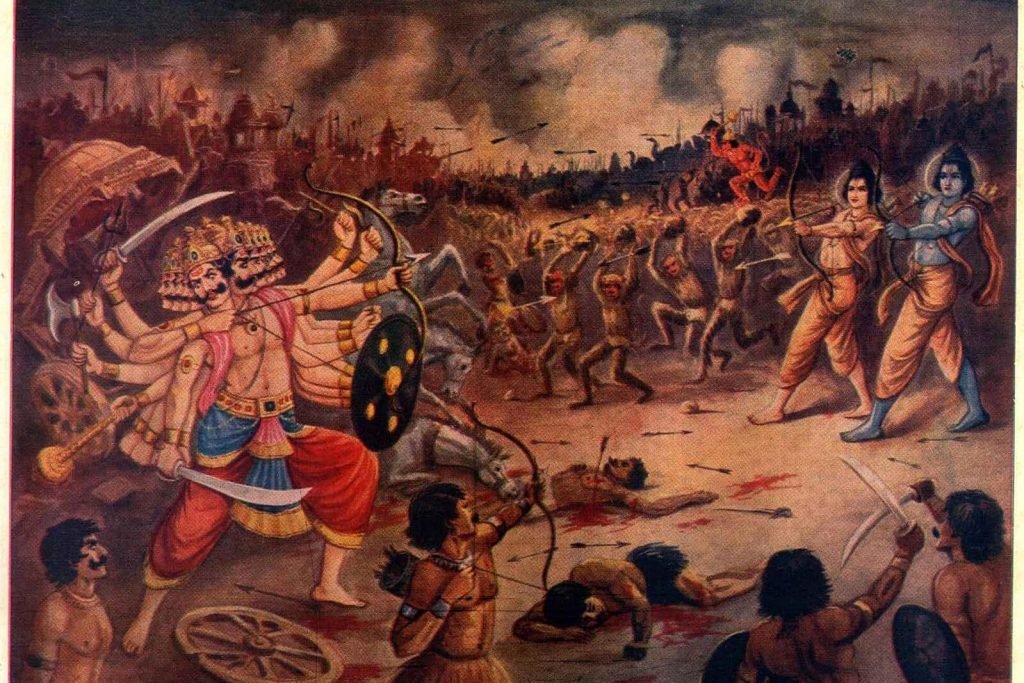
Dussehra, the festival that commemorates the victory of Lord Rama over the demon king Ravana, offers profound lessons in management and self-improvement. Beyond its mythological significance, the ten heads of Ravana symbolize ten qualities or vices associated with an unchecked desire for power and control. Let’s delve into these qualities and explore the management lessons they impart.

  1. Kama (Lust): Ravana’s insatiable desire for power and possessions led to his downfall. In management, excessive greed or lust for power can blind decision-makers and lead to unethical actions. The lesson here is to maintain ethical and balanced ambition.
  2. Krodha (Anger): When desires are not met, anger often follows. In the corporate world, uncontrolled anger can harm relationships, teamwork, and decision-making. Effective leaders must manage their emotions and practice restraint.
  3. Moha (Delusion): Overwhelming desires can lead to delusion. In management, making decisions based on emotions rather than facts and logic can result in costly mistakes. A clear and rational approach is essential.
  4. Lobha (Greed): Excessive greed can lead to unethical practices, risking the reputation and sustainability of a business. Successful management requires a focus on sustainable growth rather than quick gains.
  5. Mada (Pride): Ravana’s pride in his own abilities blinded him to his limitations. In management, arrogance can lead to poor decision-making and a lack of adaptability. Humility is key to sustainable leadership.
  6. Maatsarya (Envy): Envy can breed negativity in the workplace. Effective leaders promote a culture of collaboration, recognizing the success of others as an opportunity for growth, not a threat.
  7. Buddhi (Intellect): While intellect is crucial, it must be directed towards ethical and sustainable solutions. In management, intellect should be used to solve problems and drive innovation rather than manipulate others.
  8. Manas (Mind): A scattered mind can lead to a lack of focus. Effective management requires clarity of purpose and the ability to prioritize tasks and goals.
  9. Chitta (Will): In management, a strong will is necessary for achieving objectives. However, it should be tempered by ethical principles and a focus on long-term sustainability.
  10. Ahamkara (Ego): Ego can hinder collaboration and growth. Effective leaders cultivate self-awareness and focus on the collective success of their teams and organizations.

In Conclusion

Dussehra teaches us that unchecked desires for power and control can lead to the downfall of even the mightiest. These ten qualities associated with Ravana’s heads serve as reminders to individuals in management and leadership positions. The key to success lies in recognizing and controlling these vices, maintaining ethical values, and fostering an environment of collaboration and growth. By heeding these lessons, modern managers can not only achieve professional success but also lead with integrity and empathy.

Title: Afghanistan’s Victory Over Pakistan in the World Cup: More Than Just a Cricket Match Win by Dr. Kiran Kakade

Source: https://images.app.goo.gl

Introduction

Cricket, often termed as a gentleman’s game, has a unique ability to transcend boundaries and bring nations together. But every now and then, it delivers a moment that goes beyond the pitch, runs, and wickets. One such extraordinary moment was Afghanistan’s victory over Pakistan in the Cricket World Cup – a win that meant more than just adding a point on the tournament table.

A Triumph of Courage and Resilience

Afghanistan’s cricket journey has been nothing short of inspirational. Emerging from the rubble of war, the team’s rise to the international stage reflects the resilience of a nation determined to rebuild itself. The victory over Pakistan symbolized the triumph of a war-torn nation’s spirit, courage, and unwavering resolve.

A Unifying Force

Cricket has the power to unite people across borders. Afghanistan’s win brought together Afghans from all walks of life, irrespective of tribal, ethnic, or regional divisions. It showcased the potential of sports to bridge gaps and foster unity.

Inspiring the Youth

The victory against Pakistan inspired a generation of young Afghan cricketers. It demonstrated that with hard work, dedication, and belief, even the most daunting challenges can be overcome. The win inspired countless Afghan children to pick up a cricket bat and dream big.

A Diplomatic Victory

Beyond the boundaries of the cricket field, the match had a diplomatic significance. It fostered a unique camaraderie between Afghanistan and Pakistan, two neighboring countries with complex relations. Cricket served as a medium to improve diplomatic ties and promote people-to-people interactions.

A Global Message

Afghanistan’s victory resonated globally. It showed that the underdog can triumph, that even the most adverse circumstances cannot deter a determined soul. It sent a powerful message of hope to those facing struggles and adversity worldwide.

Conclusion

Afghanistan’s win over Pakistan in the Cricket World Cup was indeed much more than just a cricket match win. It was a symbol of courage, resilience, unity, and inspiration. This victory showed that cricket, beyond being a sport, can serve as a source of strength, hope, and diplomacy, transcending the boundaries that often divide us. It was a reminder that in the game of life, the most remarkable victories are achieved when we rise above the challenges and stand together in solidarity.

📚 Book Announcement 🤖🏛️

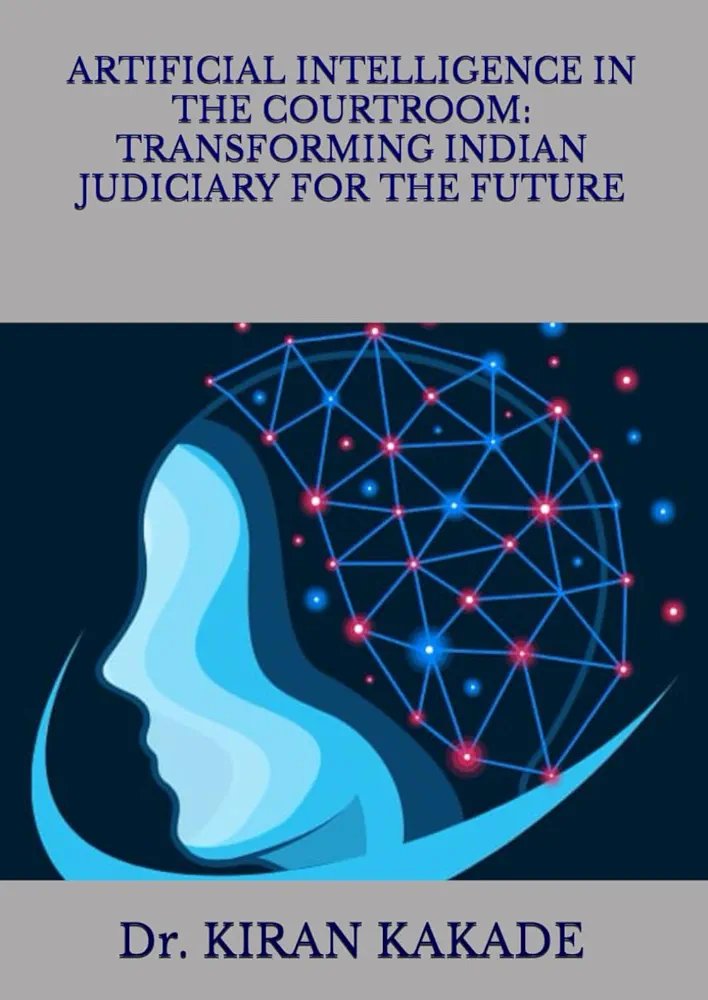
We’re excited to introduce “ARTIFICIAL INTELLIGENCE IN THE COURTROOM: TRANSFORMING INDIAN JUDICIARY FOR THE FUTURE” by Dr. Kiran Kakade.

ISBN-13: 979-8864639535

Step into the future of Indian law with Dr. Kakade’s pioneering work on AI in the courtroom. Explore the transformative potential of AI technology in our legal system. Don’t miss this insightful journey! 📖🚀 #AIinCourtroom #IndianJudiciary #LegalInnovation

ARTIFICIAL INTELLIGENCE IN THE COURTROOM: TRANSFORMING INDIAN JUDICIARY FOR THE FUTURE https://a.co/d/aI5qpsf

Title: Upholding Integrity in Research: Exposing the Fake Publication Nexus in India by Dr. Kiran Kakade

Source: https://images.app.goo.gl

In the pursuit of academic excellence, it is essential to maintain the highest standards of integrity and ethics. As a member of the academic community, I feel compelled to shed light on the growing issue of fake publications and unethical practices in research, particularly in India. It is my hope that this blog will serve as a cautionary tale and a call to action for fellow researchers and scholars.

For over a decade, I have witnessed various incidents that have shaken my faith in the integrity of academic research. Faculty members, driven by personal gain or professional advancement, have compromised their moral values by engaging in deceptive practices such as purchasing authorship or submitting low-quality research to dated journals. These incidents have raised questions about the state of academic research in our country.

I would like to share a personal experience that has left a lasting impact on me. I submitted two high-quality research papers to a conference organized by a reputed management Institute in Pune. I paid a conference fee of 3,000 INR with the assurance of Scopus publication. To my surprise, my paper, which had received the Best Research Paper Award, was later rejected due to alleged quality issues. The organizers then presented me with an offer: to publish my paper in the UGC CARE list, I needed to pay an additional 5,000 INR, and for Scopus publication, an astonishing 13,000 INR. Despite my paper’s quality and the recognition it had received, I reluctantly paid the 13,000 INR.

However, my ordeal did not end there. I waited for five months for the publication process, only to discover that there were unresolved issues. I reached out to the organizing committee, who informed me that the review process was ongoing. Finally, they published my paper in a special edition that was not indexed in any database. I had wasted nine months of my time, 16,000 INR of my hard-earned money, a quality research paper, and endured significant mental harassment.

Regrettably, my experience is not an isolated incident. It’s emblematic of the widespread issues plaguing India’s academic research landscape. I must also share another disheartening case: during an NBA accreditation visit to a top private university in Bangalore, it was discovered that out of 128 Scopus-indexed research papers, only six were genuine. The remainder were published in paid clone journals.

This is the disconcerting reality of today’s academic research business in India. It raises fundamental questions about the country’s path to development and growth in research and development.

We must collectively take a stand against these unethical practices, prioritizing research quality and integrity over personal gain. By sharing our experiences and exposing the fake publication nexus, we can work together to instigate positive change and restore the credibility of academic research in India.

Our academic community can choose to uphold honesty, transparency, and the pursuit of genuine contributions to knowledge. Let’s unite to create a brighter future for academia in India, where trust and integrity are the cornerstones of our research endeavors

This is the grim reality of today’s academic research business in India. It raises a fundamental question: how can India progress as a developed country, and how can we thrive in research and development when unethical practices are so deeply ingrained in our academic system?

It is crucial for us, as members of the academic community, to take a stand against these unethical practices. We must prioritize the quality and integrity of our research over personal gain or institutional pressure. By sharing our experiences and exposing the fake publication nexus, we can work together to bring about positive change and restore the credibility of academic research in India. It is time for us to collectively raise our voices and demand a more ethical and transparent research environment.

Let’s embark on a journey to preserve the sanctity of research and create a brighter future for academia in India, one built on trust, honesty, and genuine contributions to knowledge.

Title: The Global Chessboard: A New Angle on World Politics and the Israel-Hamas Conflict by Dr. Kiran Kakade

Introduction:

World politics is a complex interplay of interests, strategies, and alliances. A fresh perspective emerges when we connect the dots between seemingly disparate events. The ongoing conflict between Israel and Hamas may seem far removed from the Russia-Ukraine crisis that erupted two years earlier. Still, they are interconnected pieces on the global chessboard of geopolitics.

The Russian-Ukrainian Conflict and Western Involvement:

In 2014, the Russian-Ukrainian conflict became a focal point for Western countries, who rallied behind Ukraine in the face of Russian aggression. This was a strategic move to counterbalance Russia’s influence in Eastern Europe. The West’s involvement was a clear demonstration of their commitment to protecting Ukraine’s sovereignty.

Hamas and Israel: A Proxy War:

Fast forward to the Israel-Hamas conflict. At first glance, it appears to be a familiar, cyclic struggle between Israel and a Palestinian militant organization. However, when we dive deeper into the geopolitical strategies at play, we see a broader picture.

Hamas, a relatively small militant group, launched an unprecedented attack on Israel with over 5,000 rockets. Their objective was not merely to provoke a harsh Israeli response but to draw the attention of Arab countries into the conflict. This move indirectly shifted focus from the Russia-Ukraine crisis to the Middle East.

Russia’s Interest in the Middle East:

One might wonder about Russia’s interest in this regional conflict. The key lies in its ties to Arab countries. Russia has been expanding its influence in the Middle East, and its support for Palestine against Israel is one way to solidify these connections.

Beyond Russia, other global players are carefully navigating these turbulent waters. North Korea and China have interests in the region, although they maintain a cautious stance, not directly involving themselves in the conflict.

China’s Complex Role:

China’s role is particularly intriguing. In the late 1960s and 70s, the People’s Liberation Army of China supported Palestine. However, as Israel gained importance with U.S. backing, China also supported Israel’s existence. The United Nations played a pivotal role in the Israel-Palestine issue, leading to land distribution between the two nations.

Superpower Chess: Russia and the U.S.:

These two seemingly isolated conflicts, Russia-Ukraine and Israel-Hamas, highlight the indirect involvement of Russia and the United States. These superpowers are effectively engaged in a global chess match, leveraging the resources and alliances of other countries to further their interests.

India’s Strategic Diplomacy:

India has made a unique and strategic move by supporting Israel against terrorism while also backing Palestine’s claim to their land. This stance illustrates India’s intent to maintain a balanced position in the global power struggle. India is keen to nurture its relationships with Arab countries and European nations, creating a bridge between seemingly conflicting interests.

Conclusion:

The Russia-Ukraine conflict and the Israel-Hamas war represent two fronts in a broader global power struggle. Russia and the U.S. are the principal actors, orchestrating moves on this complex geopolitical chessboard. As nations like India seek to balance their diplomatic relationships, and others like China keep their cards close to their chest, the world of world politics becomes increasingly intricate and interconnected. These connections underscore the importance of examining the global political landscape from a fresh perspective, revealing hidden dimensions of power and strategy.

Title: Remembering Dr. APJ Abdul Kalam on His Birth Anniversary: The Missile Man, My True Inspiration

Introduction

Dr. APJ Abdul Kalam, lovingly known as the “Missile Man of India,” was not just a scientist but an inspiration for countless individuals across the nation and beyond. As we commemorate his birth anniversary, let’s take a moment to reflect on the incredible life and legacy of this visionary, whose journey continues to inspire us.

The Humble Beginnings

Born on October 15, 1931, in Rameswaram, Tamil Nadu, Dr. Kalam’s early life was marked by modesty and simplicity. He hailed from a humble background, and his family’s values instilled in him the virtues of hard work, perseverance, and dedication.

A Dreamer with Wings of Fire

Dr. Kalam’s journey from a small town to becoming a renowned scientist and the 11th President of India is nothing short of a remarkable tale. He often recounted how he used to watch birds in his childhood and dream of soaring into the skies. This fascination with flight sowed the seeds of his passion for aeronautics and space exploration.

The ‘Missile Man’ of India

Dr. Kalam’s contribution to India’s defense and space programs is legendary. He was a key figure in the development of indigenous missile technology, leading to the successful launch of Prithvi and Agni missiles. His vision and dedication in this field earned him the title of the “Missile Man.”

His Leadership at ISRO

Dr. Kalam’s association with the Indian Space Research Organization (ISRO) was marked by groundbreaking achievements. His work on the Satellite Launch Vehicle (SLV) project and the development of satellite technology was instrumental in propelling India into the league of spacefaring nations.

A People’s President

In 2002, Dr. Kalam assumed the role of the President of India. During his tenure, he sought to connect with the people, especially the youth. His interactions with students, often encouraging them to dream big and work hard, had a profound impact on young minds across the country. He exemplified the idea that the highest office in the land could be both prestigious and approachable.

A Teacher Forever

Despite his numerous accomplishments, Dr. Kalam considered himself a teacher above all. He once remarked, “I would like to be remembered as a teacher.” In his post-presidential years, he continued to inspire and mentor young minds, emphasizing the importance of education and scientific research.

Legacy of Inspiration

Dr. APJ Abdul Kalam’s life and words continue to resonate with people of all ages. His dedication to science, his love for teaching, and his vision of a developed and self-reliant India have left an indelible mark. His famous quote, “Dream, dream, dream. Dreams transform into thoughts, and thoughts result in action,” serves as a guiding light for those pursuing their aspirations.

Conclusion

On his birth anniversary, we fondly remember Dr. APJ Abdul Kalam, the Missile Man, and a true inspiration to countless individuals. His life is a testament to what one can achieve through unwavering dedication, tireless effort, and a steadfast commitment to one’s dreams. His legacy lives on, inspiring generations to strive for excellence and make a positive impact on the world.

Title: India’s Space Odyssey: From Cryogenic Engine Challenge to Global Recognition by Dr. Kiran Kakade

“Sell Your Technology to us,NASA said – ISRO Chief Somnath (Source: The Times of India)

Introduction:


In the realm of space exploration, India has carved a niche for itself with remarkable achievements. One such moment of pride was when the United States showed interest in India’s low-cost space technology. This demand for India’s expertise signified the nation’s growth in the space race. In this blog, we delve into this historic journey, the challenges faced, and the ultimate triumph of ISRO in developing the Cryogenic engine.

The Quest for Efficient Fuel:
To understand the significance of India’s Cryogenic engine technology, we need to appreciate the need for efficient rocket fuel. Traditional solid propellent fuel, akin to the fuel in our cars, is heavy and limits the rocket’s payload capacity, leading to high costs. India sought a solution, and it came in the form of the Cryogenic engine.

The Russian Connection:
In 1991, ISRO inked an agreement with Russia’s Glavkosmos for the technology transfer of the Cryogenic engine. This powerful engine used liquid hydrogen and oxygen, offering fuel efficiency and a lighter weight. The United States watched closely, realizing the potential for India to become a major player in rocket and satellite launches.

US Objections and a Thrilling Transfer:
The United States, under the Missile Technology Control Regime (MTCR), objected to the technology transfer. ISRO and Glavkosmos devised a Plan B – outsourcing the engine’s manufacturing to Kerala Hi-tech Industries Limited (KELTEC) to circumvent MTCR restrictions. This clever maneuver ensured that technically it was not a violation of the MTCR.

The Espionage Game:
As the Cryogenic engine technology transfer progressed, American spies in Russia were on high alert. The USA realized the threat India’s progress posed to NASA’s business opportunities. The arrest and torture of Nambi Narayanan, a key figure in the Cryogenic engine project, revealed the extent of espionage in this space race.

The Turning Point:
In 1997, prominent scientists and public figures, along with former Chief Election Commissioner T.N. Seshan, wrote a joint letter to the government, denouncing the espionage charges against Nambi Narayanan and his deputy, Sasi Kumaran, as fabricated. Despite the ordeal, Nambi Narayanan did not implicate higher-ups at ISRO, preventing the organization’s collapse.

India’s Indomitable Spirit:
The truth eventually came to light, leading to the acquittal of Nambi Narayanan and Sasi Kumaran. ISRO faced the challenge of developing the Cryogenic engine indigenously. The necessity to do so, given the circumstances, became the driving force behind India’s indomitable spirit in space technology.

India’s Triumph:
ISRO successfully developed the Cryogenic engine, and India’s space program soared to new heights. It launched several GSLV rockets, carrying satellites from India and various other countries into orbit at a fraction of NASA’s cost. India also sent a spacecraft to Mars at a mere quarter of the cost of comparable missions by the USA.

Conclusion:
India’s remarkable journey from being embroiled in international espionage to becoming a global space powerhouse is a testament to the nation’s resilience, determination, and scientific prowess. This tale of triumph against all odds is a source of pride and inspiration, emphasizing that in the pursuit of knowledge and exploration, truth and resilience always prevail.

Sathyameva Jayathe. Jai Hind.

Title: Israel’s Exceptional Patriotism: What Sets the IDF Apart by Dr. Kiran Kakade

Source:https://www.tasnimnews.com

Introduction:
Patriotism, attitude, and perception towards one’s country play a significant role in shaping the identity and spirit of a nation’s armed forces. Israel’s army, the Israel Defense Forces (IDF), stands out from the rest of the world’s military institutions due to the unique way Israelis perceive their country. In this blog, we will explore the factors that set the IDF apart and compare it to the historical and cultural context in India to understand the differences in attitudes toward patriotism.

The Israeli Perspective:
Israelis have a profound connection to their homeland that extends beyond geographical boundaries. For them, Israel is not just a piece of land; it is their mother, their identity, and the very essence of their existence. The idea that without their country, there is no existence of the citizen, reflects a deep-rooted sentiment in Israeli culture. This belief drives a strong sense of responsibility to protect their motherland.

Every Israeli, regardless of their occupation, sees themselves as a soldier and a child of their country. This shared sense of duty and commitment to safeguarding their homeland is a cornerstone of Israeli society. The IDF is not just a military organization; it’s a reflection of the nation’s collective determination to preserve its existence.

Historical and Cultural Context:
Comparing this attitude to India’s historical and cultural context offers an interesting perspective. India, like Israel, has a rich history of patriotism and a deep sense of attachment to the land. However, over the centuries, the Indian subcontinent has experienced various foreign invasions, colonial rule, and, as mentioned, divisions among religious and caste lines.

The British colonial rule played a significant role in creating divisions among the Indian populace. The “divide and rule” policy sowed the seeds of communalism, leading to a dominant focus on religion over national identity in some cases. This division somewhat eroded the sense of shared patriotism that once characterized Indian society.

The Distinctive Patriotism of the IDF:
The Israel Defense Forces’ exceptional patriotism is a testament to the nation’s unique history and the constant threats it faces. The ethos of the IDF is deeply intertwined with the idea that every citizen is a protector of their homeland. This sense of duty and responsibility is a powerful unifying force in Israel.

Conclusion:
Israel’s IDF stands out from the rest of the world’s armies due to its exceptional attitude, perception, and patriotism toward the country. The strong belief that Israel is more than just a piece of land, that it is their very existence, sets the IDF apart. Understanding this unique perspective sheds light on the remarkable commitment of Israelis to protect their motherland.

While India shares a history of deep-rooted patriotism, historical events have shaped its perception differently. Overcoming divisions and rekindling the spirit of a united and strong nation remains a goal for many in India. Both nations serve as examples of how patriotism and national identity can evolve over time, influenced by history, culture, and external factors.

Title: Navigating Hiring Biases: How Organizations Make Inclusive Decisions by Dr. Kiran Kakade

Source: https://otomeyt.ai

In today’s competitive job market, organizations are tasked with the critical responsibility of selecting the right candidates to join their teams. But how do they make these decisions, and more importantly, how do they ensure that they are free from bias? This blog explores the multifaceted world of hiring, delving into the strategies organizations employ to mitigate unconscious biases and make inclusive hiring decisions.

Defining the Hiring Challenge

The hiring process can be fraught with unconscious biases, which often lead to inequities in the workplace. These biases may manifest in various forms, such as gender bias, age bias, or even biases based on health conditions. To address these challenges, organizations have implemented a range of strategies and practices.

Objective Criteria: The Foundation of Fair Hiring

At the core of every successful hiring process lies a foundation of objective criteria. Organizations strive to identify the essential qualifications, skills, and experience required for a given role. By focusing on these factors, they reduce the influence of subjective biases.

Structured Interviews: Leveling the Playing Field

One effective way to minimize bias is through structured interviews. In these interviews, all candidates are asked the same set of standardized questions. This practice ensures that each candidate is evaluated based on consistent criteria, reducing the potential for bias to creep into the decision-making process.

Blind Recruitment: Removing Personal Data

To counteract biases related to gender, age, or other personal characteristics, organizations have embraced blind recruitment. This practice involves removing personal information (such as names, gender, and age) from application materials. Hiring decisions are made solely based on qualifications and experience.

Diverse Hiring Panels: Multiple Perspectives

Diversity isn’t just a goal in hiring; it’s also a means to mitigate bias. Many organizations ensure that their hiring panels comprise individuals from diverse backgrounds. These panel members bring varied perspectives to the evaluation process, helping to identify and minimize bias.

Data-Driven Insights: HR as a Valuable Resource

HR data plays a crucial role in addressing biases. It is often used to identify patterns and potential biases in the hiring process. By analyzing this data, organizations can make data-driven decisions and refine their strategies.

Continuous Training: Raising Awareness

Awareness is key to combating unconscious biases. Organizations invest in training programs that raise awareness among employees involved in the hiring process. These programs educate them about common biases and how to address them effectively.

Inclusive Language and Job Descriptions

Inclusive language in job descriptions is another vital component of bias mitigation. Organizations aim to attract a diverse pool of candidates by using language that focuses on qualifications rather than personal characteristics.

Handling Health-Related Concerns: Sensitivity and Legal Compliance

When it comes to evaluating candidates with health concerns, organizations prioritize sensitivity and adhere to legal guidelines. Health-related biases should not influence hiring decisions, and accommodations should be made where necessary.

A Multifaceted Approach

Mitigating unconscious biases in hiring is an ongoing journey. Organizations employ a combination of strategies, cultural changes, and data analysis to foster diversity, equity, and inclusion in their teams. This approach reflects a commitment to making hiring decisions that are truly based on merit and qualifications, rather than personal characteristics.

In conclusion, the decision of who to hire and why is a complex process, and organizations must navigate a minefield of unconscious biases to make fair and inclusive choices. By implementing the strategies mentioned above, organizations move closer to achieving their goals of equitable and diverse workplaces.

Title: Bridging the Gap: How AI-Powered Strategies Are Redefining Job Interviews by Dr. Kiran Kakade

Source:https://www.jobillico.com

In an age where technology continually redefines the boundaries of human potential, job candidates are embracing AI-driven strategies to excel in AI-based interviews. The competitive job market demands innovation and adaptability, and job seekers are increasingly relying on AI interview practice tools to harness the power of technology, familiarize themselves with its nuances, and optimize their responses for AI algorithms.

AI: A Catalyst, Not a Replacement

First and foremost, it’s important to emphasize that artificial intelligence should not be perceived as a replacement for human intelligence. Instead, it serves as a potent tool to amplify human creativity and cleverness. In the context of interviews, AI acts as a supportive partner, helping candidates refine their skills and refine their strategies.

The Evolution of Recruitment Through AI

In today’s hyper-competitive job market, technology is revolutionizing the recruitment process. Companies are incorporating automation and machine learning to enhance their hiring procedures. This infusion of technology is aimed at making the hiring process more efficient and effective, creating a win-win situation for both employers and job seekers.

Candidates Embracing AI for Success

But it’s not just companies that are capitalizing on AI. Job seekers have recognized the potential of AI tools and are increasingly integrating them into their job-seeking strategies. From optimizing their resumes to excelling in interviews, simulating real-world scenarios, and crafting a comprehensive strategy for success, candidates are leveraging AI across the entire employment spectrum.

The Game-Changer: AI Interview Practice Tools

One of the most groundbreaking applications of AI for job seekers is the use of AI interview practice tools. These platforms create a simulated interview environment where candidates can rehearse and refine their responses. The AI algorithms behind these tools analyze speech patterns, tone, and content to offer constructive feedback.

This means that candidates can not only prepare for the most common interview questions but also fine-tune their responses to meet the preferences of AI algorithms. This level of preparation was previously inconceivable, underscoring the transformative potential of AI in helping candidates articulate their qualifications effectively.

A Dynamic Synergy: Human Drive and AI Technology

What makes this trend truly fascinating is the dynamic synergy between human ambition and AI technology. AI empowers candidates, but in turn, candidates are driving AI innovation, strategically using it to their advantage. This blurs the lines between applicant and algorithm, reshaping traditional concepts of the job-seeking process.

In conclusion, the integration of AI into job interviews is not a replacement for human abilities, but rather a powerful augmentation. It enables candidates to reach new heights in their job-seeking journey, delivering a competitive advantage in the process. As we navigate this intriguing blend of human determination and AI innovation, it becomes evident that candidates are increasingly recognizing the potential of AI-driven strategies in securing their desired positions.