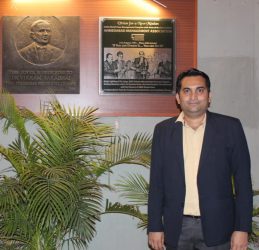
Dr. Kiran S. Kakade is a distinguished figure in the fields of Management, Technology, and Law, renowned for his consulting and training expertise. With a specialization in ERP Solutions, Industrial Relations, HR Technology, Legal Technology, and Learning and Development, he boasts an impressive career spanning 13 years. Dr. Kakade has made significant contributions to academia and industry, notably at esteemed institutions like TISS, TIMSR, GNIMS, and MIT World Peace University.
His academic journey is characterized by a strong focus on the application of Artificial Intelligence in HR and Law. Dr. Kakade's enthusiasm for knowledge dissemination is evident through his participation in numerous National and International conferences, Faculty Development Programs, Workshops, and Seminars. His accomplishments extend to the realm of intellectual property, holding 6 patents and having authored over 50 research papers published in esteemed ABDC and Scopus publications.
Dr. Kakade's commitment to education is highlighted by his dedicated teaching and his proactive role in nurturing students' holistic development on campus. His versatile skill set includes research, training, industrial relations, and the design of assessment and development tools. Additionally, he excels in ERP consultation, and his involvement in accreditation bodies like NBA and NAAC showcases his dedication to quality education.
In essence, Dr. Kiran S. Kakade's impactful contributions, diverse expertise, and passion for continuous learning have left an indelible mark in the realms of Management, Technology, and Legal domains.
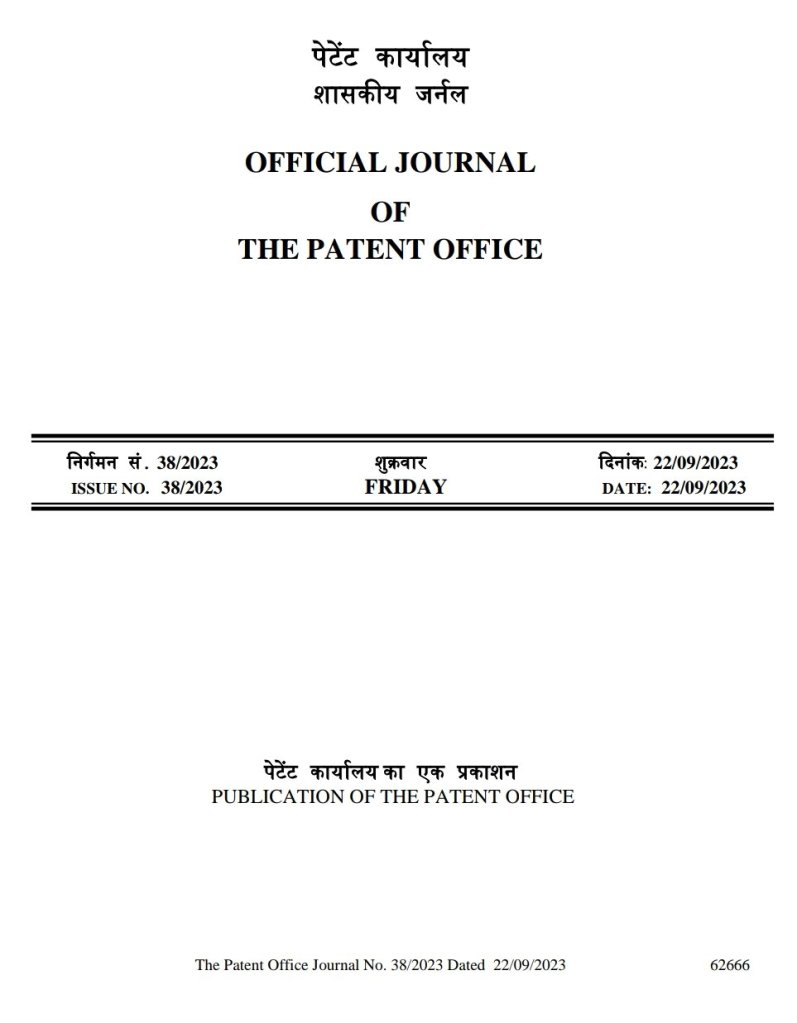
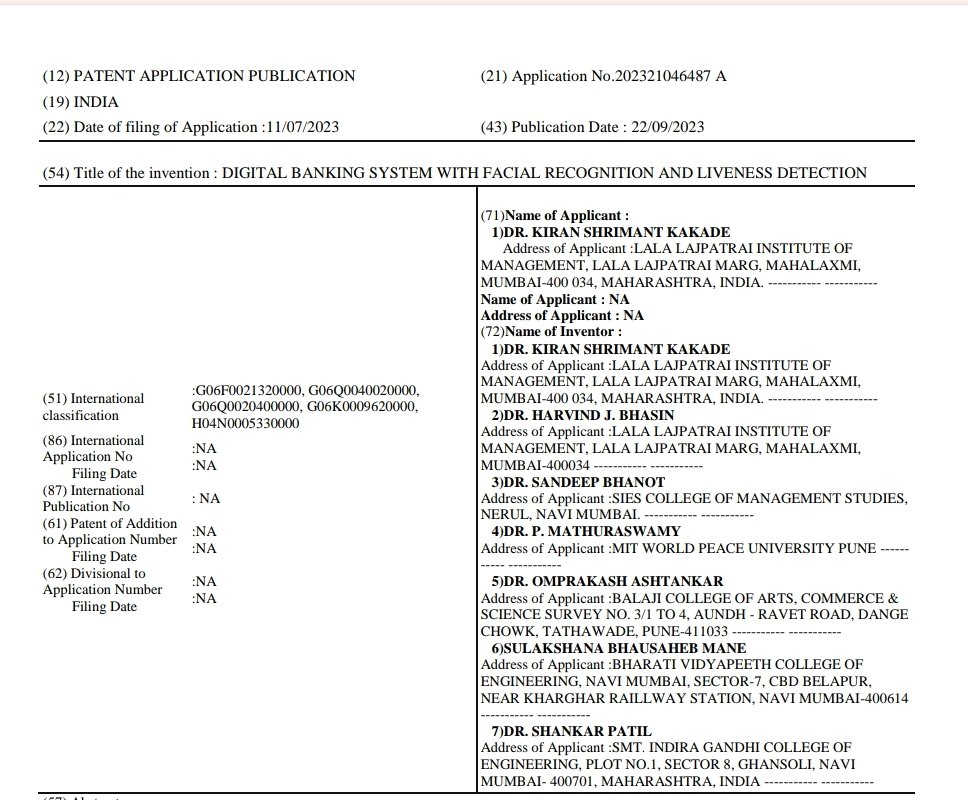
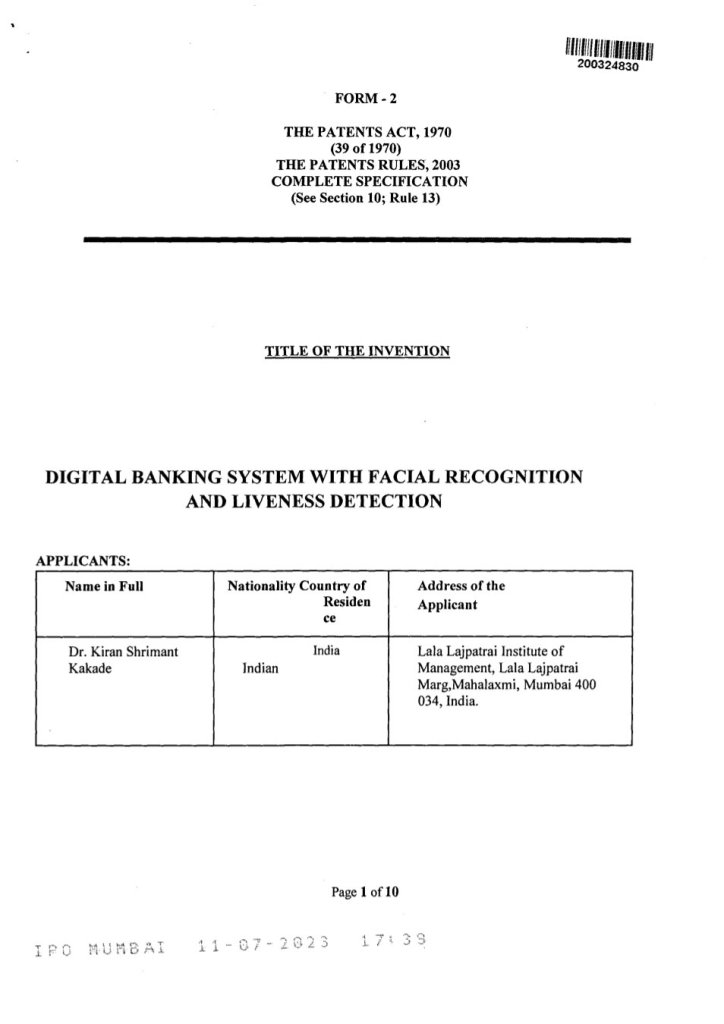
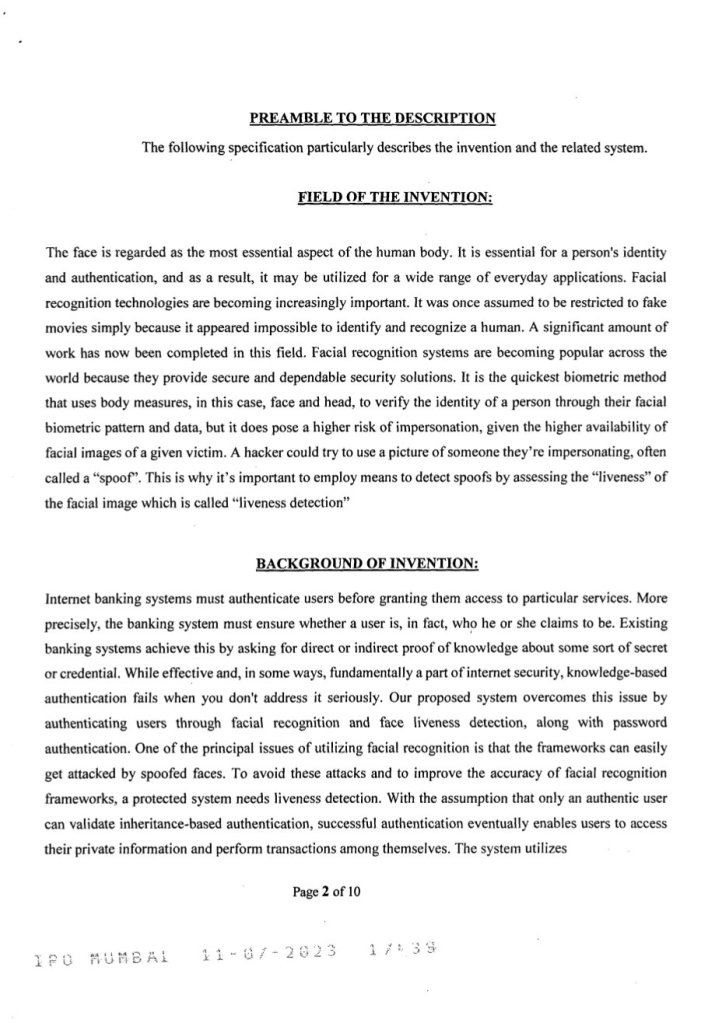
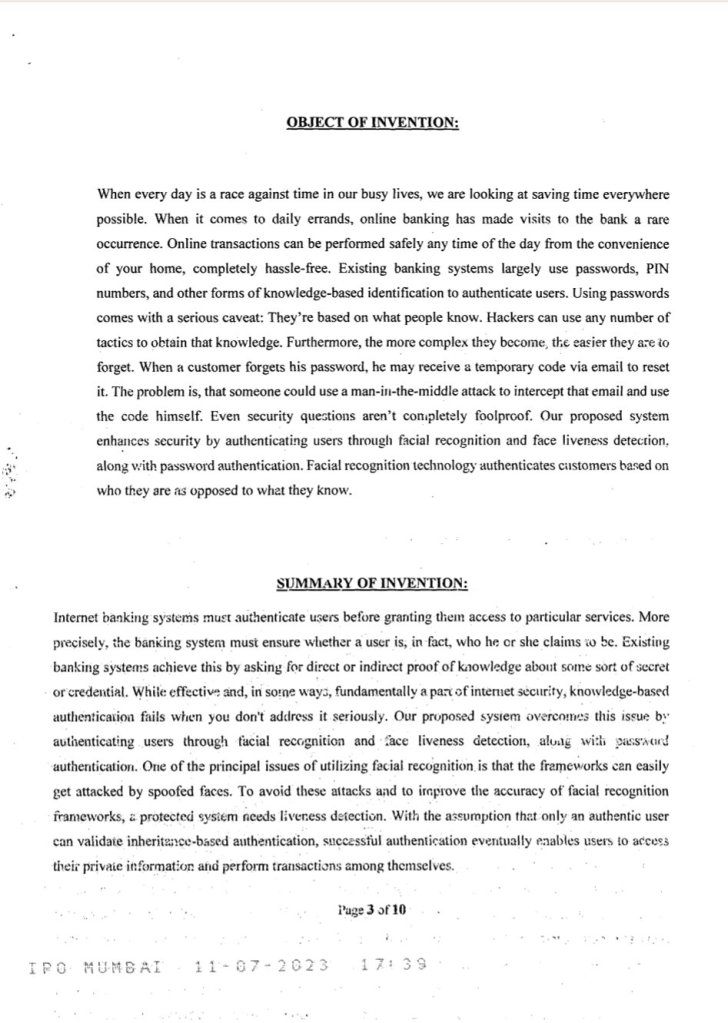
In today’s digital world, security is paramount, especially in internet banking. Traditional authentication methods have their limitations, but we’re taking a giant leap forward. 🚀
Our revolutionary system combines facial recognition, face liveness detection, and password authentication to ensure that users are who they claim to be. 🤳🔐 No more worries about spoofed faces or compromised security!
With this innovation, we’re transforming the way we secure online banking, making it safer and more efficient. 🛡️💰
I’m incredibly proud of this achievement and excited about the positive impact it will have on digital finance. Stay tuned for more updates on the future of banking security! 🌐💼 #DigitalBanking #Innovation #SecurityMatters
The ongoing dispute between India and Canada has taken center stage in recent months, raising concerns about its potential ramifications on trade relations and Canada’s inclusion in Indo-Pacific institutions. This diplomatic standoff emerged following Canadian Prime Minister Justin Trudeau’s accusations of Indian involvement in the death of Hardeep Singh Nijjar, a Canadian citizen and Khalistani terrorist. In this blog, we will delve into the key aspects of this dispute and explore its implications on global politics.
The Accusations and Response:
The disagreement between India and Canada reached a critical point when Prime Minister Trudeau voiced suspicions regarding India’s involvement in the death of Nijjar, which occurred in British Columbia on June 18. India swiftly dismissed these accusations as “absurd” and “motivated.” In retaliation, India expelled a senior Canadian diplomat, escalating tensions between the two nations.
Trade Implications:
One of the immediate consequences of this dispute is its potential impact on trade relations. Negotiations for the Early Progress Trade Agreement (EPTA) between Canada and India have been put on hold. Both countries have announced the suspension of trade talks, with Canadian Trade Minister Mary Ng postponing a planned trade mission to New Delhi indefinitely. This disruption in trade negotiations could have detrimental effects on economic ties between Canada and India.
Immigration Concerns:
Another critical aspect to consider is the flow of Indian immigrants to Canada. Indian immigrants constitute nearly one in five of all recent immigrants to Canada, contributing significantly to the country’s population growth. A deterioration in relations with India could result in a reduction of Indian immigration to Canada, potentially impacting the nation’s demographic landscape.
Impact on Indo-Pacific Institutions:
Beyond trade and immigration, this dispute could hinder Canada’s aspirations to join the network of Indo-Pacific institutions. Regional allies may be cautious about angering the Indian government, and India itself could block Canadian membership in certain groups due to its influence and power in the region. Canada’s ability to strengthen its position in the Indo-Pacific could be hampered by this diplomatic rift.
Conclusion:
The India-Canada dispute, fueled by accusations and diplomatic actions, has the potential to disrupt trade relations, impact immigration patterns, and hinder Canada’s ambitions in Indo-Pacific institutions. As both nations navigate the complexities of this dispute, the world watches closely, recognizing the broader implications it holds for global politics and alliances in an ever-changing geopolitical landscape.
In today’s rapidly evolving digital world, the exchange of positive energy through digital platforms has become a powerful force in shaping our lives. While the concept of the law of attraction has been met with skepticism and debate, its influence on our digital interactions cannot be denied. In this blog, we’ll explore how we can use digital platforms to harness and share positive energy, even in the face of scientific skepticism.
Understanding the Law of Attraction
The law of attraction is a belief rooted in New Thought spirituality, asserting that our thoughts, whether positive or negative, can manifest corresponding experiences in our lives. While it lacks empirical scientific evidence, many individuals find value in its principles. Advocates of the law of attraction often emphasize cognitive reframing techniques, affirmations, and creative visualization to replace negative thoughts with positive ones. The key idea is that by aligning our thoughts and emotions positively, we can attract positive experiences.
Digital Platforms as Catalysts for Positive Energy
Social Media: Social media platforms are a primary channel for the exchange of positive energy. Sharing inspirational quotes, success stories, and acts of kindness can uplift and motivate others.
Online Communities: Niche online communities centered around personal growth, spirituality, and positivity serve as digital spaces where individuals can connect, share their experiences, and support one another.
Video Content: YouTube and other video-sharing platforms are filled with content that promotes positivity, self-improvement, and mindfulness. Videos on meditation, gratitude, and motivation can be potent sources of positive energy.
Mental Health Apps: There is a growing market for mental health and wellness apps that use the principles of the law of attraction to help users develop a positive mindset, reduce stress, and boost self-esteem.
Practical Ways to Exchange Positive Energy Digitally
Daily Affirmations: Posting daily affirmations on your social media or sharing them in online communities can inspire others to adopt a positive mindset.
Live Streaming: Use live streaming on platforms like Instagram or Facebook to share your experiences, gratitude practices, or motivational talks in real-time.
Collaborative Projects: Engage in collaborative digital projects that promote positivity. This could include creating a blog, podcast, or social media campaign focused on spreading optimism.
Virtual Workshops: Host virtual workshops or webinars where you can teach others how to apply the principles of the law of attraction in their lives.
Addressing Skepticism
It’s important to acknowledge the skepticism surrounding the law of attraction, as it lacks scientific backing. However, while it may not have empirical evidence, many people have reported positive changes in their lives through its practices. Whether or not one believes in its metaphysical aspects, the focus on positivity, gratitude, and self-improvement can lead to a more fulfilling and optimistic life.
In conclusion, the digital age has given us unprecedented opportunities to exchange positive energy with a global audience. The law of attraction, despite its controversy, offers valuable principles that can be applied in our digital interactions to create a more positive and empowering online community. By embracing these practices, we can contribute to a more optimistic and supportive digital world, regardless of the scientific debate surrounding them.
Life is an intricate dance of opportunities, challenges, and experiences. Often, we find ourselves yearning for something – be it success, happiness, love, or personal growth – and wondering why it seems elusive. The secret lies in understanding that everything that belongs to us will come to us when we create the capacity to receive it. In this blog, we will explore this profound concept and learn how to harness its power to manifest our desires and dreams.
The Law of Attraction:
At the heart of this idea is the Law of Attraction. This universal law suggests that like attracts like, meaning the energy you emit into the world attracts similar energy back to you. In essence, you become a magnet for the things you focus on and the emotions you project. To receive what you desire, you must align your energy and intentions with your goals.
Self-Reflection and Clarity:
To create the capacity to receive what we desire, we must first gain clarity about our goals and aspirations. Self-reflection is a powerful tool in this journey. By taking the time to understand what we truly want and why, we set the stage for aligning our energy with our desires.
Positive Visualization:
Visualization is a potent technique to create the capacity for receiving. Imagine yourself already in possession of what you desire. Feel the emotions associated with it. Visualization programs your subconscious mind to believe in the possibility of achieving your goals, making it more likely to attract them into your life.
Cultivate a Growth Mindset:
A growth mindset is essential to expand your capacity to receive. Embrace challenges and setbacks as opportunities for growth. When you view obstacles as stepping stones on your path, you open yourself up to the lessons and experiences needed to reach your goals.
Gratitude and Appreciation:
Expressing gratitude for what you already have creates a positive flow of energy. It sends a message to the universe that you are appreciative and ready to receive more. The more you appreciate, the more you’ll attract.
Taking Inspired Action:
Creating the capacity to receive isn’t just about wishing and waiting. It involves taking inspired action toward your goals. Opportunities often present themselves when you’re actively working toward your dreams.
Letting Go of Resistance:
Resistance, often born from fear, doubt, or negative beliefs, can block the flow of what you desire. Practice letting go of these limiting beliefs and trust that the universe is conspiring to bring you what’s meant for you.
Conclusion:
Everything comes to us that belongs to us when we create the capacity to receive it. This powerful truth invites us to take responsibility for our thoughts, emotions, and actions. By aligning our energy with our desires, cultivating a growth mindset, and expressing gratitude, we become magnets for the opportunities and experiences that lead us toward our goals. So, embrace the journey, have faith in your path, and remember that you have the power to create the life you desire.
In an interconnected world where boundaries are increasingly porous and threats come in various forms, a nation’s sovereignty is a cornerstone of its identity and security. While military might and diplomatic prowess are essential, a strong and intelligent agency plays a pivotal role in safeguarding a country’s sovereignty, especially on foreign soil. In this blog, we will delve into the importance of a robust intelligence agency in protecting a nation’s sovereignty in foreign lands.
Gathering Critical Information
Intelligence agencies are tasked with gathering vital information about foreign governments, organizations, and individuals that may pose a threat or influence a nation’s interests. This information ranges from political developments and military activities to economic policies and technological advancements. By staying ahead in the intelligence game, a nation can make informed decisions to protect its sovereignty.
Counterterrorism and National Security
One of the primary functions of an intelligence agency is to counter terrorism and safeguard national security. Terrorist organizations often operate across borders, making it imperative for intelligence agencies to collaborate internationally to neutralize threats before they can undermine a nation’s sovereignty. Timely and accurate intelligence can help prevent terrorist attacks and maintain stability.
Protecting Economic Interests
Economic espionage is a growing concern in the global arena. Foreign actors may attempt to steal intellectual property, trade secrets, or engage in economic sabotage that threatens a nation’s economic sovereignty. Intelligence agencies play a role in identifying and countering these threats, ensuring the protection of a country’s economic interests.
Maintaining Diplomatic Leverage
Diplomacy and intelligence often go hand in hand. An intelligence agency can provide valuable insights into the intentions and capabilities of foreign nations, which can be leveraged during diplomatic negotiations. This intelligence advantage enhances a nation’s ability to protect its interests and sovereignty in the complex web of international relations.
Cybersecurity and Digital Sovereignty
In today’s digital age, cybersecurity is a critical component of sovereignty. Intelligence agencies are at the forefront of identifying cyber threats from foreign state actors, hacktivists, and criminal organizations. By thwarting cyberattacks and ensuring the integrity of critical digital infrastructure, intelligence agencies help preserve a nation’s digital sovereignty.
Crisis Management and Response
Intelligence agencies play a crucial role in crisis management and response, whether it’s a natural disaster or a geopolitical crisis. Timely intelligence can help a nation prepare for and respond to emergencies, safeguarding the lives of its citizens and its standing on the global stage.
Strategic Alliances and Cooperation
To protect its sovereignty effectively, a nation’s intelligence agency often relies on cooperation with foreign counterparts. Sharing intelligence with allies enhances a country’s security posture and bolsters its diplomatic efforts. Strong relationships with other nations’ intelligence agencies are a valuable asset in safeguarding sovereignty abroad.
Conclusion
A strong intelligence agency is not just a tool for surveillance; it is a shield that protects a nation’s sovereignty on foreign soil. In an era of complex geopolitical challenges and global interconnectedness, the role of intelligence agencies has become more critical than ever. By gathering critical information, countering threats, and facilitating diplomatic efforts, these agencies are essential in preserving a nation’s sovereignty and safeguarding its interests in a dynamic world.
In a momentous event that captured the spirit of a new India, Prime Minister Narendra Modi inaugurated the new Parliament building in New Delhi on a significant day, Ganesh Chaturthi. With resounding pride and optimism, he hailed this architectural marvel as a reflection of India’s burgeoning aspirations, emphasizing its potential to empower the underprivileged and propel India towards becoming a developed nation that inspires the world.
A Monument of Progress:
The new Parliament building is more than just a structure; it symbolizes the dreams and hopes of India’s 1.4 billion people. It stands as a testament to the unwavering determination of a nation on the cusp of transformation. Its modern design and facilities underscore the need for progress and the ability to adapt to the changing needs of India’s growing population.
Empowering the Marginalized:
At the heart of this new Parliament’s purpose is the empowerment of India’s poor and marginalized communities. Prime Minister Modi reiterated that every decision made within its chambers would contribute to poverty alleviation and the upliftment of those who have been historically disadvantaged. This commitment to inclusive development is a cornerstone of India’s democratic values.
A Fusion of Tradition and Innovation:
The new Parliament building is a blend of tradition and innovation. Its architectural design marries India’s rich heritage with modernity, symbolizing the coexistence of the old and the new. The digital gallery dedicated to the 60,000 workers who contributed to its construction pays tribute to their invaluable efforts.
India’s Global Role:
Prime Minister Modi emphasized that India’s development is intertwined with global progress. This new Parliament building sends a powerful message to the world, signaling India’s commitment to becoming a developed nation. It showcases India’s potential to inspire other nations on their journey towards progress and development.
Conclusion:
The inauguration of India’s new Parliament building on Ganesh Chaturthi signifies a significant milestone in India’s evolution towards a brighter future. It encapsulates the dreams and aspirations of a nation poised for change, with a clear focus on inclusivity and the eradication of poverty. This iconic structure not only embodies the harmonious blend of tradition and modernity but also reaffirms India’s role as a global leader in the 21st century. As India advances, the new Parliament building will continue to serve as a beacon of hope, progress, and inclusive development for all its citizens, ultimately steering the nation towards its goal of becoming a developed, self-reliant, and inspiring India.
In recent years, the Metaverse has transcended its status as a buzzword, evolving into a transformative force in various fields, including Learning and Development (L&D). This article explores how the Metaverse is reshaping the landscape of self-paced training, virtual collaboration, and immersive learning experiences.
Self-Paced Training in the Metaverse
One of the most exciting prospects in the Metaverse is the ability to engage in self-paced training. Learners can enter virtual environments tailored to their specific needs, where they have the freedom to explore, interact, and learn at their own pace. These environments offer an array of possibilities, from historical reenactments to intricate simulations of complex tasks.
Breakout Rooms and Virtual Interactions
In the Metaverse, learners aren’t confined to static online courses. Instead, they can participate in dynamic breakout rooms and engage in real-time discussions with peers and instructors. This fosters a sense of community and collaboration, transcending the limitations of traditional online learning.
Seamless Mobility with Image Codes and QR Codes
The integration of image codes and QR codes adds a layer of convenience to Metaverse-based L&D. Learners can use their smartphones to instantly access virtual tours of the office or specific training scenarios. What’s more, their digital profiles remain consistent, providing a unified experience across different learning platforms.
Practical Skill Development in Virtual Environments
The Metaverse enables learners to practice and refine their skills in realistic scenarios mirroring their actual job roles. This immersive approach to training allows them to receive valuable feedback from managers and mentors, facilitating continuous improvement.
Real-World Applications
Beyond individual learning experiences, the Metaverse offers real-world applications for L&D. Teams spread across different geographical locations can participate in lifelike project debriefings, sharing insights and lessons learned as if they were in the same room. Certification and recertification processes can also be enhanced through Metaverse-based assessments and continuous upskilling.
Parting Thoughts
While Metaverse-enabled eLearning has progressed well beyond the realm of a passing trend, its true potential is still unfolding. The incorporation of advanced technologies like Augmented Reality (AR) and Virtual Reality (VR) for immersive training scenarios makes a compelling case for its adoption. Learning-focused organizations, especially those with remote or hybrid workforces, should consider how the Metaverse can revolutionize their training programs.
In conclusion, the Metaverse represents a new paradigm for learning and development. Its ability to provide immersive, interactive, and collaborative learning experiences has the potential to redefine how we acquire knowledge and skills. As the Metaverse continues to evolve, it’s essential for L&D teams to stay ahead of the curve and explore its diverse applications in shaping the future of learning. Embrace the Metaverse, and unlock a world of endless learning possibilities.
The Bhagavad Gita’s timeless wisdom extends far beyond its spiritual context, offering profound insights for effective management and leadership. Chapter 3 of the Gita, known as Karma Yoga, is a rich source of lessons on wisdom, desire management, and leadership principles. In this blog, we will extract key management lessons from the teachings of Bhagavad Gita Chapter 3.
Lesson 1: The Role of Desires in Decision-Making The Gita underscores that desires conceal our wisdom, which resides in our intellect. By categorizing desires into three types (Tamasic, Rajasic, and Sattvic), the text provides valuable lessons for decision-makers:
Tamasic Desires: These deeply ingrained desires, such as addiction, can cloud judgment and hinder wise decision-making. In management, recognizing and addressing these issues within the organization is essential.
Rajasic Desires: Transient desires driven by greed can lead to impulsive decisions. Effective leaders must encourage a focus on long-term goals rather than immediate gains.
Sattvic Desires: These desires, aligned with higher ideals, enable clear thinking. Leaders should foster a work culture where employees are motivated by a sense of purpose and values.
Lesson 2: Identifying Desire Residences Krishna explains that desires reside in the senses, mind, and intellect. For leaders, understanding where desires originate within the team is crucial. The intellect, being the most potent, requires special attention to ensure rational decision-making free from personal biases.
Lesson 3: Taming Desires through Sense Control The Gita advises controlling desires at the sensory level before they infiltrate the intellect. This can be applied in management by promoting emotional intelligence among team members. Employees can be trained to manage emotions and impulses, thus making rational decisions even under pressure.
Lesson 4: Levels of Awareness The hierarchy of awareness outlined in the Gita highlights the importance of transcending material aspects. In management, this means encouraging employees to view their roles within the broader context of the organization’s mission and vision, fostering a sense of purpose.
Lesson 5: Karma Yoga and Effective Leadership The Gita’s concept of Karma Yoga advocates selfless action performed for the greater good. Effective leaders can apply this by inspiring employees to focus on the organization’s mission and work selflessly for its success. This approach can lead to a workforce that is motivated by a shared purpose, transcending personal desires and ambitions.
Lesson 6: Leading with Knowledge and Detachment Krishna emphasizes that leaders should lead with knowledge and detachment. This means making decisions based on rational analysis and not being swayed by personal likes or dislikes. Leaders must set an example of objectivity and fairness in their decision-making processes.
Lesson 7: Conquering the Enemy – Lust Krishna identifies lust as the enemy that impels improper actions. In a leadership context, lust can be equated to unbridled ambition or selfish motives. Effective leaders should encourage team members to regulate their desires, prioritize ethical conduct, and focus on serving the greater good.
Lesson 8: The Power of Sacrifice (Yajna) The Gita discusses the concept of Yajna, which involves selfless sacrifice and duties performed for the welfare of all. Leaders should promote a culture of collaboration and collective responsibility within their teams, where individuals willingly contribute to the common goals and objectives.
Conclusion:
Bhagavad Gita Chapter 3 offers invaluable management lessons on wisdom, desire control, and effective leadership. By understanding the role of desires in decision-making, identifying their origins, and applying the principles of Karma Yoga, leaders can create a work environment where employees are motivated by a shared purpose and ethical values. Leading with knowledge, detachment, and a focus on the greater good can ultimately result in more effective and ethical leadership, leading to organizational success and harmony.
In the ever-evolving digital landscape, Human Resource Management (HRM) stands at a pivotal crossroads. It must navigate the intersection of technology and organizational growth while grappling with a set of futuristic challenges. The dynamic nature of the tech-driven business environment demands that HRM embrace change management and integrate advancements like Artificial Intelligence (AI) and Big Data to optimize productivity, streamline communication, and understand workforce dynamics better. This blog explores the transformative journey HRM is embarking upon and how it’s shaping the future of work.
Embracing Technology for Workforce Optimization
AI and Big Data for Workforce Insights: HRM has evolved from traditional practices to data-driven decision-making. AI and Big Data help HR professionals analyze vast amounts of employee data to gain insights into performance, employee sentiment, and trends. Predictive analytics enables HR teams to forecast future workforce needs and proactively address potential issues.
Remote Work and the Gig Economy: The rise of remote work and the gig economy presents new challenges for HR. It’s crucial to manage and engage a geographically dispersed and diverse workforce. HR must adapt policies, communication strategies, and benefits to cater to remote and contract workers.
Upskilling and Reskilling for the Future
E-Learning Platforms: Continuous learning is essential in a rapidly changing technological landscape. HRM deploys cutting-edge e-learning platforms that offer personalized training and development opportunities to employees. These platforms enable employees to upskill and reskill on-demand, fostering a culture of learning within the organization.
Virtual Reality Training: To provide immersive and hands-on training experiences, HRM is turning to virtual reality (VR). VR training sessions allow employees to practice skills in a safe and controlled environment, improving retention and proficiency.
Revolutionizing Recruitment with AI
AI-Driven Candidate Matching: HRM leverages AI algorithms to match candidates with job requirements more effectively. This not only saves time but also improves the quality of hires by identifying candidates whose skills and personality align with the company culture.
Predictive Analytics in Hiring: Predictive analytics is used to forecast candidates’ future performance based on their past achievements and behavioral patterns. This helps HR make informed decisions when hiring for critical roles.
Complex Talent Retention Strategies
Personalized Career Pathways: HRM recognizes that one size does not fit all when it comes to career development. Personalized career pathways allow employees to chart their own course within the organization, promoting engagement and retention.
Work-Life Balance and Well-Being Programs: In a tech-driven world, employee well-being extends beyond the physical. HRM is integrating telehealth platforms and digital mental health solutions to support employees’ overall wellness.
Diversity, Inclusion, and Global Collaboration
Minimizing Bias in Recruitment: Leveraging technology to minimize unconscious biases during recruitment is a priority. AI-powered tools can help remove bias from job descriptions, resume screening, and interview processes.
Virtual Workspaces: HRM is fostering global collaboration by creating virtual workspaces that transcend geographical boundaries. These digital platforms facilitate seamless communication and collaboration among diverse teams.
Conclusion
In this tech-forward era, HRM’s role is not just to adapt but to pioneer transformative strategies that resonate with the future workforce. Embracing technology, upskilling, reimagining recruitment, and prioritizing diversity and inclusion are integral to HRM’s mission. As HR professionals continue.
In the ever-evolving digital landscape, Human Resource Management (HRM) stands at a pivotal crossroads. It must navigate the intersection of technology and organizational growth while grappling with a set of futuristic challenges. The dynamic nature of the tech-driven business environment demands that HRM embrace change management and integrate advancements like Artificial Intelligence (AI) and Big Data to optimize productivity, streamline communication, and understand workforce dynamics better. This blog explores the transformative journey HRM is embarking upon and how it’s shaping the future of work.
Embracing Technology for Workforce Optimization
AI and Big Data for Workforce Insights: HRM has evolved from traditional practices to data-driven decision-making. AI and Big Data help HR professionals analyze vast amounts of employee data to gain insights into performance, employee sentiment, and trends. Predictive analytics enables HR teams to forecast future workforce needs and proactively address potential issues.
Remote Work and the Gig Economy: The rise of remote work and the gig economy presents new challenges for HR. It’s crucial to manage and engage a geographically dispersed and diverse workforce. HR must adapt policies, communication strategies, and benefits to cater to remote and contract workers.
Upskilling and Reskilling for the Future
E-Learning Platforms: Continuous learning is essential in a rapidly changing technological landscape. HRM deploys cutting-edge e-learning platforms that offer personalized training and development opportunities to employees. These platforms enable employees to upskill and reskill on-demand, fostering a culture of learning within the organization.
Virtual Reality Training: To provide immersive and hands-on training experiences, HRM is turning to virtual reality (VR). VR training sessions allow employees to practice skills in a safe and controlled environment, improving retention and proficiency.
Revolutionizing Recruitment with AI
AI-Driven Candidate Matching: HRM leverages AI algorithms to match candidates with job requirements more effectively. This not only saves time but also improves the quality of hires by identifying candidates whose skills and personality align with the company culture.
Predictive Analytics in Hiring: Predictive analytics is used to forecast candidates’ future performance based on their past achievements and behavioral patterns. This helps HR make informed decisions when hiring for critical roles.
Complex Talent Retention Strategies
Personalized Career Pathways: HRM recognizes that one size does not fit all when it comes to career development. Personalized career pathways allow employees to chart their own course within the organization, promoting engagement and retention.
Work-Life Balance and Well-Being Programs: In a tech-driven world, employee well-being extends beyond the physical. HRM is integrating telehealth platforms and digital mental health solutions to support employees’ overall wellness.
Diversity, Inclusion, and Global Collaboration
Minimizing Bias in Recruitment: Leveraging technology to minimize unconscious biases during recruitment is a priority. AI-powered tools can help remove bias from job descriptions, resume screening, and interview processes.
Virtual Workspaces: HRM is fostering global collaboration by creating virtual workspaces that transcend geographical boundaries. These digital platforms facilitate seamless communication and collaboration among diverse teams.
Conclusion
In this tech-forward era, HRM’s role is not just to adapt but to pioneer transformative strategies that resonate with the future workforce. Embracing technology, upskilling, reimagining recruitment, and prioritizing diversity and inclusion are integral to HRM’s mission. As HR professionals continue to embrace these advancements, they will undoubtedly play a crucial role in shaping the workplaces of tomorrow, where technology and humanity coexist harmoniously.












 Dr. Kiran Kakade (Ph.D.,LL.M.,MCA,MBA(HR))