

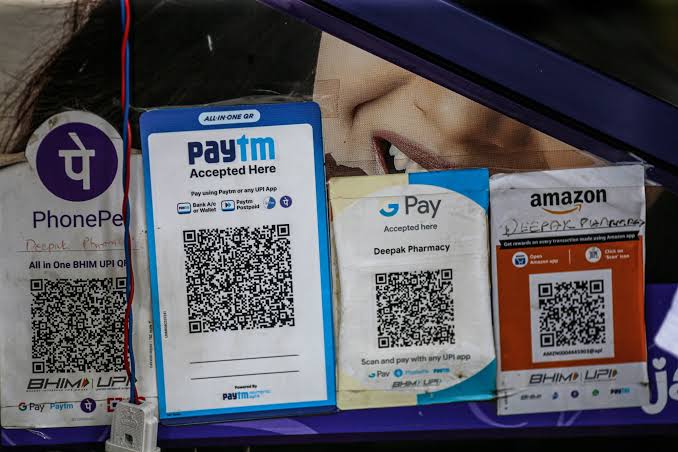
Source:- https://www.bloomberg.com
Introduction
In recent years, India has undergone a digital transformation that has not only reshaped its economy but has also had a profound impact on the world. At the heart of this transformation is the Unified Payments Interface (UPI), often referred to as Bharat’s ‘Digital Ashwamedha.’ UPI has revolutionized the way Indians transact, ushering in a new era of convenience and financial inclusion. But its influence extends far beyond India’s borders, with nations around the world adopting this remarkable payment system. This blog explores India’s UPI revolution and its global impact.
The Birth of a Digital Public Infrastructure
India’s journey towards becoming a digital payments powerhouse began with a strong foundation of what can be termed a “digital public infrastructure.” The government laid the groundwork, and a robust Public Private Partnership took shape to build upon it. This infrastructure paved the way for an extraordinary surge in digital transactions, surpassing the combined numbers of the United States, Britain, Germany, and France.
The value of instant digital transactions in India exceeded all expectations, becoming a vital part of daily life. It not only made everyday transactions more convenient but also extended access to banking services like credit and savings to millions of Indians. Furthermore, it expanded the reach of government programs and tax collection, leading Prime Minister Narendra Modi to describe the digital payment ecosystem as a “free public good” that has fundamentally transformed governance, financial inclusion, and the quality of life in India.
The Three Pillars of Transformation
At the core of India’s digital revolution are the three pillars of the JAM trinity: Jan Dhan Accounts, Aadhar, and Mobile. These pillars have completely redefined the country’s economic ecosystem.
- Jan Dhan Accounts (PM Jan Dhan Yojana): Launched to ensure financial inclusion, this initiative aimed to provide every adult Indian with access to a bank account. As of 2022, over 46 crore bank accounts have been opened, with a significant portion belonging to women and residents of rural and semi-urban areas.
- Aadhar: Aadhar transformed identity services in India. It introduced biometric identification that became a crucial enabler for institutions like banks and telecom companies. With over 1.3 billion IDs issued, Aadhar streamlined the creation of bank accounts and became the bedrock of the instant payment system.
- Mobile: India’s telecom sector experienced a digital innovation renaissance, thanks to increased smartphone penetration and affordable internet access. The entry of a disruptive private company in 2016 led to a 95% drop in data costs, providing every Indian with affordable internet access. This, in turn, fueled the growth of e-commerce, food delivery, and digital content consumption. Importantly, it made digital payment systems accessible even in the remotest corners of the country.
The Emergence of UPI
With mobile companies enabling internet access and smartphones becoming ubiquitous, India’s payments landscape underwent a paradigm shift. This shift culminated in the creation of the Unified Payments Interface (UPI), a public-private partnership led by the National Payments Corporation of India (NPCI). UPI offered an interoperable platform that combined services from hundreds of banks and mobile payment apps, all with no transaction fees.
FinTech companies, banks, and telecom operators embraced UPI, further driving its growth by deploying QR code systems at merchant point-of-sale terminals. Additionally, government initiatives, such as demonetization and social distancing measures during the pandemic, accelerated the adoption of digital payments.
Balancing Privacy and Innovation
A crucial aspect of India’s digital payment success story is the balance it has struck between privacy and innovation. The government ensured that individuals retain control over their data and must provide consent for every transaction. This approach has built trust in the system.
Behavioral Nudges and Innovation
To encourage people to shift from cash to digital payments, innovative approaches were taken. Small voice boxes provided by payment apps at snack carts and tea stalls announced the amount received with each transaction, helping to bridge the trust gap among merchants accustomed to cash transactions. Furthermore, changing consumer preferences in India, driven by rising disposable incomes, led to the “premiumization” trend, where consumers were willing to pay more for premium products and services. Finance product innovations, such as phone loans, made premium smartphones accessible to a broader audience.
Global Impact of India’s UPI Revolution
India’s dominance in the digital payments space reverberates globally. The UPI platform has been adopted by countries like Bhutan, Singapore, UAE, Oman, Nepal, Bahrain, France, United Kingdom, Malaysia, and others. These international partnerships, facilitated by the National Payments Corporation of India, International Payments Limited (NIPL), have expanded the reach of India’s digital payment systems.
Conclusion
India’s digital payment revolution, fueled by UPI, has not only transformed the country’s economy but also inspired nations worldwide. It showcases the power of rapid technological innovation and how it can catalyze economic growth in developing countries. The success of the JAM trinity, coupled with the robustness of the digital payment infrastructure, has created a powerful ecosystem that has revolutionized business, entrepreneurship, and consumer behavior. India’s digital payment journey is a testament to the possibilities of behavioral change through innovative nudges, and it serves as a beacon of inspiration for the world’s economies looking to leapfrog into the digital age.













 Dr. Kiran Kakade (Ph.D.,LL.M.,MCA,MBA(HR))