Are We Living Inside a Black Hole? A Cosmic Mystery Unfolds by Dr. Kiran Kakade

Source: https://images.app.goo.gl/epXLfjqyEm6QyPdP8

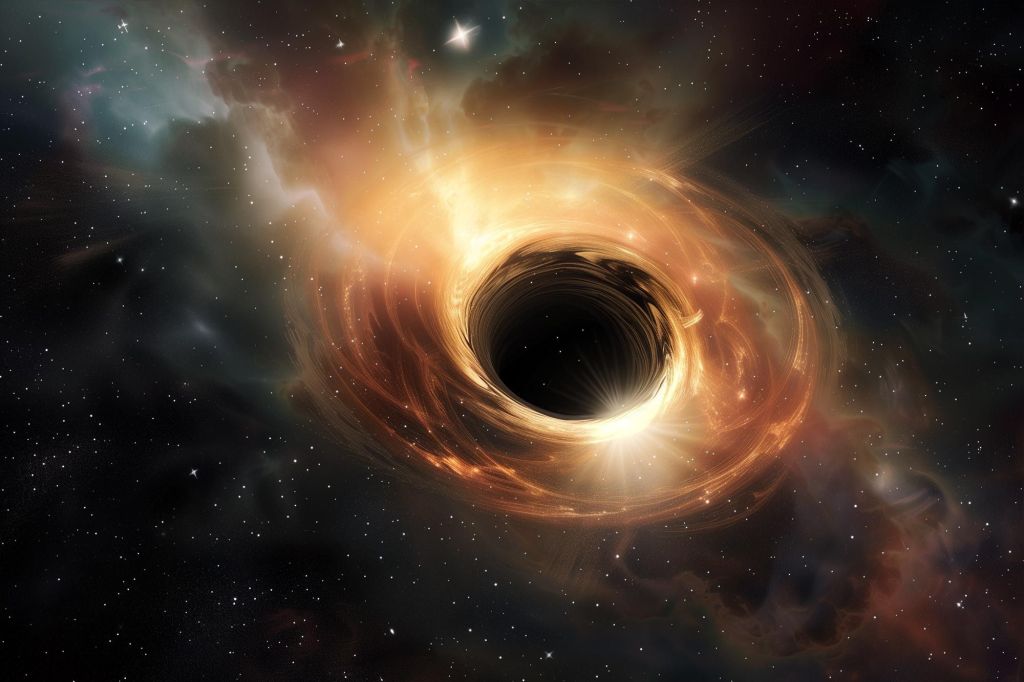
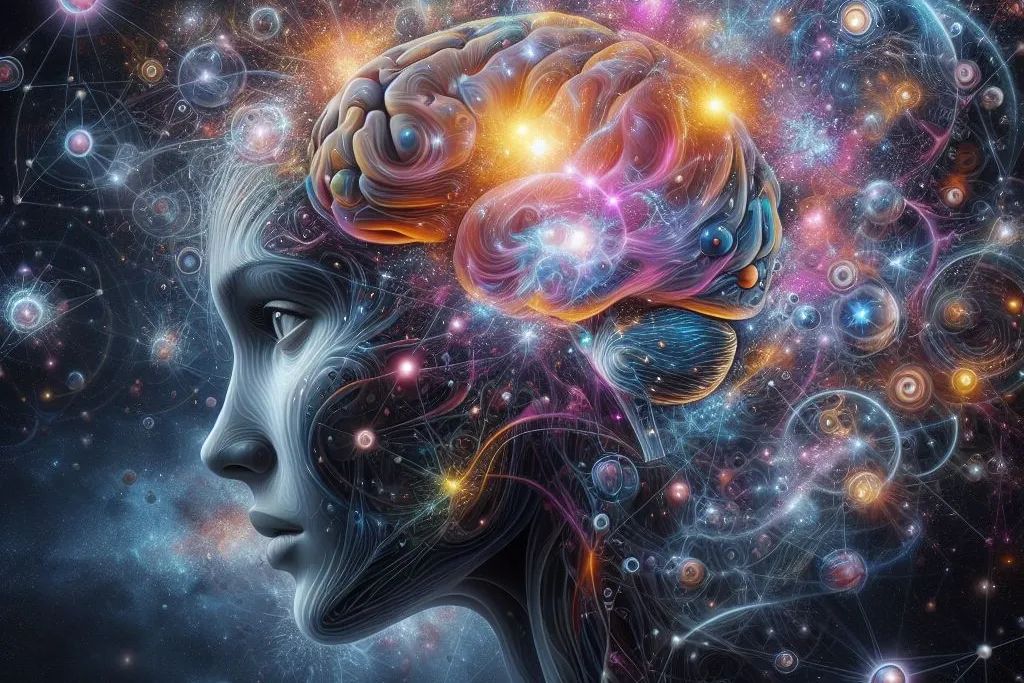
A groundbreaking study using the James Webb Space Telescope (JWST) has revealed a strange cosmic pattern that challenges our fundamental understanding of the universe. Researchers at Kansas State University analyzed 263 distant galaxies and found that a surprising majority rotate in the same direction. This unexpected discovery has sparked a bold and controversial idea: Could our universe be inside a black hole?

The Cosmic Rotation Mystery

Traditionally, galaxies should be randomly oriented, with no clear preference for clockwise or counterclockwise rotation. However, the study found that 60% of the galaxies rotate clockwise, while only 40% rotate counterclockwise relative to the Milky Way. This imbalance suggests that the universe itself might have a preferred direction of rotation, which contradicts the widely accepted view that the universe is isotropic (having no special direction).

This finding has led scientists to revisit an old but fascinating idea: Black Hole Cosmology.

Black Hole Cosmology: A Universe Within a Universe?

The idea that our universe exists inside a black hole isn’t new. Raj Kumar Pathria and I. J. Good first introduced this concept, also known as Schwarzschild cosmology. It proposes that:

  • The event horizon of a black hole might actually be the boundary of our observable universe.
  • Everything we see could be the interior of a black hole within a larger parent universe.
  • Every black hole we observe could be a doorway to another “baby universe”, suggesting a multiverse connected through black holes.

The Implications: A New Perspective on the Cosmos

If this theory holds, it could have far-reaching implications for our understanding of space, time, and even the possibility of parallel universes. It could explain:

  • Why our universe appears to have an expansion limit (similar to the event horizon of a black hole).
  • The mystery of dark energy—perhaps the “pull” of another universe is influencing ours.
  • Whether time behaves differently inside a black hole, which could impact theories on time travel and cosmic evolution.

What’s Next?

This discovery raises more questions than answers. Could the universe’s rotation be a remnant of a larger cosmic structure? Does this suggest a deeper connection between black holes and the fabric of reality? While the idea of living inside a black hole may seem far-fetched, ongoing research with telescopes like JWST could bring us closer to unlocking the secrets of our cosmic origins.

One thing is certain: the universe is far stranger than we ever imagined.

Kaliyuga, Maya, and the Illusion of Reality in the Age of Information Manipulation by Dr. Kiran Kakade

We live in an era where reality is increasingly shaped by digital information, manipulated data, and artificial intelligence. According to Hindu philosophy, Kaliyuga is the age of ignorance, deception, and material obsession—a time when truth is hidden behind layers of illusion (Maya). Interestingly, this aligns with modern concerns about misinformation, deepfakes, and the illusion of truth in the digital world.

Could it be that Kaliyuga and Maya, as described in the Bhagavad Gita, are manifesting today through manipulated data and information technology? Let’s explore how ancient wisdom connects with the challenges of our digital age.


1. Kaliyuga: The Age of Deception

In Hindu scriptures, Kaliyuga is the last of the four ages (Yugas) in the cosmic cycle. It is described as a time of moral decay, falsehood, and spiritual ignorance. The Bhagavad Gita warns that in this era, people will be easily deceived, materialistic, and disconnected from true knowledge.

How Does This Relate to Information Technology?

We are surrounded by an ocean of data, yet much of it is manipulated, filtered, or distorted. The rise of fake news, propaganda, and AI-generated content has made it harder than ever to distinguish truth from illusion.

In the Bhagavad Gita, Krishna emphasizes the importance of self-awareness and discernment to avoid falling into illusion. Today, this could mean developing critical thinking and digital literacy to navigate the modern world.


2. Maya: The Grand Illusion and Digital Reality

The concept of Maya in Hindu philosophy refers to the illusion that traps individuals in a false perception of reality. In the Bhagavad Gita, Krishna explains that people are deluded by appearances, unable to see the eternal truth.

Today, Maya manifests in digital form:

  • Social media creates illusionary lifestyles, making people believe in a reality that doesn’t exist.
  • Deepfakes and AI-generated content blur the line between real and fake.
  • Manipulated data influences public opinion, shaping false narratives.

Krishna’s message to Arjuna is clear: detach from illusions and seek higher wisdom. In today’s context, this means questioning the information we consume and seeking deeper understanding.


3. Information as the New Reality: The Power of Manipulated Data

In the Bhagavad Gita, Krishna says:

“As the wise see, the unreal has no existence, and the real never ceases to be.” (BG 2.16)

But in the digital world, what is real?

With the rise of big data, artificial intelligence, and machine learning, information itself has become the new reality. Data can be manipulated to create false perceptions, control opinions, and alter decision-making.

The Dangers of Manipulated Data in Kaliyuga

  • Surveillance and Data Control: Governments and corporations track online behavior, influencing choices without individuals realizing it.
  • AI and Algorithm Bias: Search engines and social media filter information, showing only what aligns with pre-existing beliefs.
  • Digital Propaganda: Political and corporate interests use manipulated data to shape public perception.

Krishna advises Arjuna to seek knowledge that is unchanging and eternal. In today’s world, this means questioning information, verifying sources, and seeking wisdom beyond digital distractions.


4. Escaping the Digital Maya: Lessons from the Bhagavad Gita

The Bhagavad Gita provides a framework for navigating illusions, which can be applied to our digital era. Here are three key takeaways:

1. Develop Discernment (Viveka)

Krishna emphasizes the importance of discerning truth from illusion. In today’s world, this means:

  • Fact-checking before believing or sharing information.
  • Recognizing biased content and hidden agendas.
  • Understanding that digital reality is often curated and manipulated.

2. Detach from Digital Overload (Vairagya)

The Bhagavad Gita teaches detachment from material distractions. Similarly, in the digital world, we can:

  • Limit screen time and social media usage.
  • Avoid digital addiction and unnecessary content consumption.
  • Focus on real-life experiences rather than virtual illusions.

3. Seek Higher Knowledge (Jnana Yoga)

Krishna encourages seeking eternal wisdom, which applies today as:

  • Learning beyond algorithms—reading books, engaging in deep study.
  • Following spiritual practices to stay connected to truth.
  • Using technology wisely, rather than letting it control us.

Conclusion: Waking Up from the Digital Illusion

The Bhagavad Gita warns about Maya (illusion), and Kaliyuga is described as an age of deception and confusion. In the modern world, these concepts manifest through manipulated data, misinformation, and digital distractions.

However, Krishna’s teachings provide a solution: awareness, discernment, and detachment from illusion. Just as Arjuna had to rise above confusion to see the truth, we too must look beyond digital Maya and seek genuine wisdom.

In a world of manipulated information, the greatest question remains:

Will we wake up and see the truth—or remain trapped in the illusion?

Bhagavad Gita vs. Simulation Theory: Is Reality an Illusion?

The nature of reality has long been a subject of debate among philosophers, scientists, and spiritual seekers. The Bhagavad Gita, a revered Hindu scripture, and modern simulation theory, as explored by physicist Thomas Campbell, both suggest that the physical world might not be as “real” as it appears. But how do these perspectives compare? Could they be pointing toward the same fundamental truth using different languages—one spiritual and the other scientific?

Let’s explore how the Bhagavad Gita’s philosophy aligns with the idea that reality is an illusion, much like a simulation.


1. The Illusion of Reality: Maya vs. Simulation Theory

In Hindu philosophy, the concept of Maya (illusion) suggests that the material world is not ultimate reality. According to the Bhagavad Gita, our senses perceive a temporary, ever-changing world, but beyond it lies a higher, eternal reality—the spiritual realm.

Similarly, Campbell’s simulation theory proposes that the universe functions like a computer simulation, where reality is not inherently physical but rather a digitally generated experience. His research, based on the double-slit experiment, suggests that matter behaves differently when observed—implying that consciousness plays a role in shaping reality.

Both perspectives challenge the assumption that our physical world is “absolute” reality. Instead, they propose that reality is shaped by a deeper, unseen force—whether divine (as in the Bhagavad Gita) or digital (as in simulation theory).


2. The Role of Consciousness: Atman vs. the Observer

The Bhagavad Gita teaches that consciousness (Atman) is the true self, distinct from the temporary physical body. Krishna explains to Arjuna that the soul is eternal, unchanging, and not affected by the material world.

Simulation theory similarly emphasizes the role of the observer. Campbell suggests that our consciousness interacts with a data-driven universe, determining what we perceive. This aligns with the “participatory universe” concept in quantum physics, where reality only exists when observed.

This raises an important question: If we are living in a simulation, then who (or what) is running it?


3. The Creator: Krishna vs. the Programmer

In the Bhagavad Gita, Krishna declares:

“I am the source of all spiritual and material worlds. Everything emanates from Me.” (BG 10.8)

If the universe is a simulation, there must be a creator—a force or intelligence designing the system. While Campbell’s work doesn’t define who or what that might be, many interpretations of simulation theory suggest that a higher intelligence—whether an advanced civilization or a cosmic consciousness—designed our reality.

Could Krishna be the “programmer” of reality, creating an interactive world for soul evolution?


4. The Purpose of Life: Dharma vs. the Goal of the Simulation

The Bhagavad Gita teaches that life has a purpose (Dharma)—each individual has a duty aligned with their nature. Krishna advises Arjuna to perform his duty without attachment, as true fulfillment comes from realizing the eternal self.

If the universe is a simulation, then what is its purpose? Campbell suggests that reality is a learning platform where consciousness evolves. Some scientists speculate that our world is designed to test or refine intelligence, much like characters in a virtual reality game learning and growing.

This suggests an interesting parallel: If our world is a simulation, then waking up to reality—whether through spiritual enlightenment or scientific discovery—could be the key to understanding our true existence.


Conclusion: Different Paths, Same Truth?

The Bhagavad Gita and simulation theory come from different traditions—one ancient and spiritual, the other modern and scientific. Yet, they both question the nature of reality, the role of consciousness, and the existence of a higher intelligence.

  • The Bhagavad Gita teaches that reality is Maya, and true knowledge comes from realizing one’s eternal self.
  • Simulation theory suggests that reality is digital, and understanding its nature could reveal what lies beyond.

If we take both ideas seriously, they point to the same fundamental truth: What we see as “reality” is not the ultimate truth. There is something beyond.

So, are we living in a simulation or trapped in Maya? Either way, the key question remains:

How do we wake up?

How to Choose a Statistical Test by Dr Kiran Kakade

Choosing the right statistical test is crucial for analyzing data accurately and drawing meaningful conclusions. The decision depends on several factors, including the type of dependent and independent variables, the number of groups being compared, and the distribution of data.


1. Understanding the Variables

Before choosing a test, it’s essential to identify the following:

  • Dependent Variable (Outcome Variable): The variable you are measuring or predicting.
  • Independent Variable (Predictor Variable): The variable you manipulate or use to explain changes in the dependent variable.

The dependent variable can be continuous (e.g., height, weight, income) or categorical (e.g., gender, disease status, satisfaction level).


2. Choosing a Test for Continuous Dependent Variables

A. One Continuous Independent Variable

  • Assessing a Relationship:
    • Parametric Test: Pearson’s correlation (if data is normally distributed).
    • Non-Parametric Test: Spearman’s correlation (if data is not normally distributed).
  • Predicting a Dependent Variable:
    • Simple Linear Regression (after checking residuals for normality).

B. Two or More Continuous Independent Variables

  • Multiple Regression: Used when multiple predictors influence the dependent variable.

C. One Categorical Independent Variable

  • Comparing Two Independent (Unmatched) Groups:
    • Parametric Test: Independent samples t-test (if normally distributed).
    • Non-Parametric Test: Mann-Whitney test (if not normally distributed).
  • Comparing More Than Two Groups:
    • Parametric Test: One-way ANOVA (for normal data).
    • Non-Parametric Test: Kruskal-Wallis test (for non-normal data).
  • Repeated Measures (More Than One Observation Per Subject):
    • For Two Groups:
      • Parametric Test: Paired t-test.
      • Non-Parametric Test: Wilcoxon signed-rank test.
    • For More Than Two Groups:
      • Parametric Test: Repeated measures ANOVA.
      • Non-Parametric Test: Friedman test.

D. Two or More Categorical Independent Variables

  • Factorial ANOVA: Used when two or more categorical independent variables are involved.
  • Factorial Repeated Measures ANOVA: Applied when repeated measures exist within groups.

E. Two or More Categorical and Continuous Variables

  • Multiple Regression: Used when independent variables include both continuous and categorical variables.
  • ANCOVA (Analysis of Covariance): Applied when controlling for a continuous covariate.

3. Choosing a Test for Categorical Dependent Variables

A. One Categorical Independent Variable

  • Contingency Table Analysis:
    • Chi-Square Test: Determines the relationship between categorical variables.
    • Fisher’s Exact Test: Used for small sample sizes in 2×2 tables.

B. Categorical Dependent Variable with Two Outcomes

  • Prediction of Dependent Variable:
    • Logistic Regression: Used for binary (yes/no, success/failure) outcomes.

4. Special Considerations for Ordinal Data

  • If the dependent variable has many levels, it can be treated as a non-parametric continuous variable.
  • If the independent variable is ordinal, non-parametric tests are typically preferred.
  • If both the dependent and independent variables have small groups, they may be treated as normal.

Final Thoughts

Selecting the right statistical test ensures accurate analysis and valid conclusions. Here’s a quick summary of how to make the right choice:

  1. Identify the type of dependent variable (continuous or categorical).
  2. Determine the number and type of independent variables (continuous or categorical).
  3. Check for normality to decide between parametric and non-parametric tests.
  4. Use the appropriate test based on the number of groups and observations.

This structured approach helps researchers and analysts choose the best statistical test for their data, ensuring reliable and meaningful results.

Understanding Ayurvedic Time Cycles: The Yāma System and Doshas by Dr Kiran Kakade

Source: Siddhanta Knowledge Foundation & UGC Capacity building  program(IKS)

Introduction

Ayurveda, the ancient Indian system of medicine, emphasizes the importance of aligning daily activities with natural rhythms to maintain health and harmony. The image depicts a time cycle divided into different Yāmas (time periods), each governed by specific deities, gunas (qualities), and doshas (biological energies).

This concept is deeply rooted in Ayurveda and Vedantic philosophy, offering insights into optimal times for various activities like eating, sleeping, working, and meditating. Let’s explore this cycle in detail.


The Ayurvedic Time Cycle and Yāmas

A day is divided into six Yāmas, each lasting four hours. These periods are associated with a specific energy (Sattva, Rajas, Tamas), a dominant dosha (Vata, Pitta, Kapha), and a deity representing its influence.

1. Sarasvati Yāma (00:00 – 06:00 hrs) – Vata & Sattva

  • Dominant Dosha: Vata (Air & Ether)
  • Guna (Quality): Sattva (Purity, Knowledge)
  • Deity: Goddess Sarasvati – the deity of wisdom, learning, and creativity.
  • Significance: This is the most auspicious time for spiritual practices, meditation, and deep study. The mind is fresh, and energy flows freely.

2. Śrī Yāma (06:00 – 10:00 hrs) – Kapha & Sattva

  • Dominant Dosha: Kapha (Water & Earth)
  • Guna: Sattva
  • Deity: Goddess Lakshmi – symbolizing prosperity and balance.
  • Significance: Best time for physical activity, yoga, and starting the day’s work. The body’s metabolism is slow, so light food is recommended.

3. Jyeṣṭhā Yāma (10:00 – 14:00 hrs) – Pitta & Rajas

  • Dominant Dosha: Pitta (Fire & Water)
  • Guna: Rajas (Action, Passion)
  • Deity: Jyeshtha Devi – associated with transformation and activity.
  • Significance: The digestive fire (Agni) is at its peak, making it the best time for the main meal of the day. Mental and physical productivity are highest.

4. Pārvatī Yāma (14:00 – 18:00 hrs) – Vata & Tamas

  • Dominant Dosha: Vata
  • Guna: Tamas (Inertia, Stability)
  • Deity: Goddess Parvati – representing grace and strength.
  • Significance: Energy begins to wane. This is a good time for creative activities, learning, and light meals. Avoid excessive exertion.

5. Durgā Yāma (18:00 – 22:00 hrs) – Kapha & Tamas

  • Dominant Dosha: Kapha
  • Guna: Tamas
  • Deity: Goddess Durga – symbolizing protection and resilience.
  • Significance: Ideal for winding down, having a light dinner, and engaging in calming activities like meditation or family time. Avoid heavy meals and excessive stimulation.

6. Kāli Yāma (22:00 – 00:00 hrs) – Rajas & Tamas

  • Dominant Dosha: Rajas
  • Guna: Tamas
  • Deity: Goddess Kali – the force of destruction and transformation.
  • Significance: The body’s repair mechanisms are activated. Late-night activity disrupts health, so this is the best time for sleep.

Key Takeaways from the Ayurvedic Time Cycle

  1. Wake up early (before 6 AM) to align with the Sattvic Vata time for clarity and spiritual growth.
  2. Eat the largest meal between 10 AM – 2 PM when Pitta dominates and digestion is strongest.
  3. Avoid late-night work and eating as it disrupts natural bodily rhythms.
  4. Engage in creative activities in the afternoon, when Vata is high.
  5. Practice relaxation in the evening with calming activities to prepare for sleep.

Modern Applications of Ayurvedic Time Management

Even in today’s fast-paced world, we can incorporate these ancient wisdom principles:

  • Work Efficiency: Aligning tasks with natural energy cycles improves focus and productivity.
  • Diet & Digestion: Eating according to Pitta hours enhances metabolism and prevents lifestyle diseases.
  • Sleep Optimization: Sleeping during Tamas hours (10 PM – 6 AM) supports mental and physical rejuvenation.
  • Spiritual Growth: Early morning meditation aligns with Sattva for enhanced peace and clarity.

Conclusion

The Ayurvedic Yāma system offers a profound understanding of time, energy, and well-being. By aligning daily routines with nature’s cycles, we can enhance productivity, maintain good health, and achieve inner harmony.

Embracing this wisdom allows us to live a balanced and fulfilling life, just as our ancestors envisioned.

Exotic Matter and Soul Consciousness

The interplay between physics and metaphysics has long intrigued scientists and spiritual seekers alike. One of the most fascinating concepts linking these two domains is the idea of exotic matter and its possible connection to human consciousness, particularly the Kundalini energy described in ancient Indian wisdom.

Exotic Matter: The Only Opponent of Gravity

In classical physics, matter is affected by gravity—it gets pulled inward, compressed, or even destroyed under immense gravitational forces, such as those near black holes. However, exotic matter behaves differently. Unlike normal matter, exotic matter possesses negative energy density and moves against the pull of gravity rather than succumbing to it. This property makes it a crucial theoretical element in models of wormholes, time travel, and space-time manipulation in Einstein’s relativity.

In a way, exotic matter represents an anomaly in nature, something that does not conform to the usual rules of space-time and gravity. This is where we can draw a parallel with consciousness and spiritual evolution.

Kundalini Shakti: The Exotic Matter of the Human System

Indian spiritual traditions describe the Kundalini Shakti as an inherent energy that lies dormant at the base of the spine. The main objective of human existence, according to this philosophy, is to awaken and elevate this energy through different spiritual practices. This awakened Kundalini is believed to rise upwards, moving against the natural downward pull of worldly attachments and material existence.

Much like exotic matter defies gravitational pull, Kundalini energy defies the materialistic forces of human life. It moves in the opposite direction, from the base of the spine to the crown, ultimately leading to higher states of consciousness and transcendence.

A Scientific-Spiritual Connection: Time Travel Through Consciousness

Einstein’s theories of relativity allow for time dilation and, under certain conditions, even time travel—especially through the use of exotic matter to stabilize wormholes. If exotic matter is necessary for moving beyond conventional space-time, could Kundalini energy be the internal exotic matter that allows the human consciousness to transcend dimensions?

Many mystics and yogis describe experiences of timelessness, out-of-body experiences, and even travel into higher realms of existence when their Kundalini is awakened. This suggests that soul consciousness may not be bound by linear time and three-dimensional space—similar to how exotic matter enables a departure from conventional physics.

Theoretical Implications and Future Exploration

  1. Gravity and Spiritual Resistance: Just as exotic matter resists gravity, Kundalini resists the gravitational pull of ignorance, ego, and material desires, allowing consciousness to ascend to a higher plane.
  2. Time Travel through Meditation: Many spiritual texts suggest that enlightened beings can experience past, present, and future simultaneously, mirroring the way exotic matter theoretically enables time loops or wormholes.
  3. Quantum Consciousness: Some scientists argue that consciousness itself may operate on quantum principles. If so, Kundalini awakening might be a process of aligning human consciousness with quantum reality, where time and space behave differently.

Conclusion: A Journey Beyond Dimensions

Exotic matter and Kundalini energy seem to share a deep metaphysical correlation. While one allows for physical travel beyond space-time, the other facilitates spiritual travel beyond dimensions of ordinary perception. Perhaps, by understanding one, we may unlock the secrets of the other—bridging the gap between ancient wisdom and modern physics.

Could it be that true time travel is not just a technological feat but a conscious evolution? If so, the awakening of Kundalini may be the key to unlocking the next stage of human potential—a journey not just through time, but beyond it.

Time: The Fourth Dimension That Binds Us

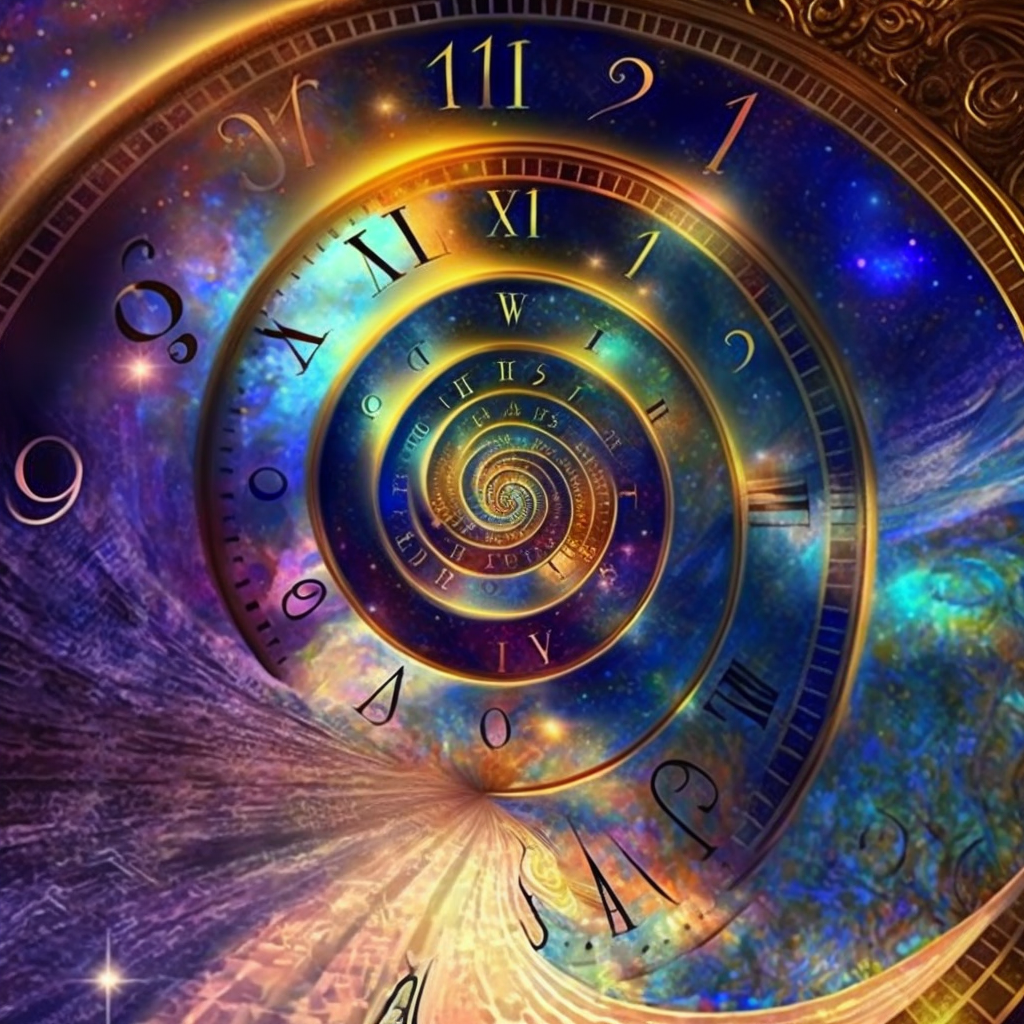
We live in a three-dimensional world, experiencing height, width, and depth in everything around us. Yet, there is another dimension that governs our lives—time. Unlike the spatial dimensions, we cannot move freely through time. It flows forward relentlessly, shaping our experiences and defining our existence.

But what is time, really? Is it merely the ticking of a clock, or is it something far more fundamental?

The Illusion of Time

Unlike space, where we can move in any direction, time appears to move in only one—forward. We remember the past but cannot revisit it. We anticipate the future but cannot reach it ahead of time. We are passengers in a current that never stops.

However, physics suggests that our experience of time may be an illusion. Einstein’s theory of relativity shows that time is not absolute—it slows down in strong gravitational fields and speeds up where gravity is weaker. This means that time is not an independent force but an effect of gravity itself.

On Earth, time feels steady because of the planet’s gravitational pull. But near a massive black hole, where gravity is intense, time slows down drastically. Someone standing near such a gravitational giant would age much slower than someone far away. In a sense, time is just a distortion of perception, molded by the fabric of space and gravity.

Breaking Free from the Fourth Dimension

If time binds us to the three-dimensional world, is it possible to escape it? If we could step outside time, we might perceive reality differently—perhaps even glimpse a fifth dimension or beyond.

Imagine viewing your entire life as a book, where every moment exists simultaneously—past, present, and future, all visible at once. A higher-dimensional being might perceive us this way, seeing our entire existence in a single glance.

To break free from time, we would need to escape the forces that make it move for us—gravity, motion, and even consciousness as we know it. Could there be a realm beyond time, where past and future are meaningless concepts? If such a realm exists, could our consciousness transcend time and exist beyond the fourth dimension?

The Concept of Negative Time

We often think of time as a forward-moving arrow, but some theoretical concepts suggest the possibility of negative time—a state where time moves backward or behaves unpredictably. In quantum physics, certain particles seem to behave as if they travel back in time. Could it be that time, as we perceive it, is just one version of reality?

If negative time exists, could there be a way to access it? Would it allow us to revisit the past, alter events, or experience existence in a completely new way? Or is negative time just another illusion created by our limited perception?

Are We More Than Just Time-Bound Beings?

If time is a construct shaped by gravity and perception, what does that mean for our consciousness? Are we merely beings moving through time, or do we possess an essence that transcends it?

Perhaps, in deep meditation, dreams, or moments of heightened awareness, we step momentarily beyond time’s grasp. Maybe our true nature is not bound by the ticking of the clock but exists beyond the fourth dimension—free from the illusion of past and future.

The journey to understanding time is also a journey to understanding ourselves. Are we mere travelers in a fleeting present, or are we something greater, beyond the limits of time itself?

The Three Fundamental Powers of the Universe

Throughout history, human civilizations have sought to understand the fundamental forces that govern existence. Many ancient traditions, including Hindu philosophy and modern science, point toward three primary aspects that form the foundation of reality. These triadic principles manifest in various forms, from cosmic deities to the smallest atomic particles.


1. The Cosmic Trinity: Brahma, Vishnu, and Shiva

Hinduism describes the universe as a play of three fundamental cosmic forces:

  • Brahma (The Creator) – The force that brings creation into existence.
  • Vishnu (The Preserver) – The sustaining power that maintains order and balance.
  • Shiva (The Destroyer/Transformer) – The force of transformation and renewal, essential for the cycle of rebirth.

These three deities represent the eternal cycle of creation, preservation, and destruction, which is necessary for the dynamism of the cosmos. Just as nature continuously undergoes birth, growth, decay, and renewal, these divine principles ensure the universe’s flow and evolution.


2. The Universal Duality: Purusha, Prakriti, and Stri Tattva

In Sankhya philosophy, existence is understood through:

  • Purusha (The Supreme Consciousness) – The formless, eternal observer, often associated with the masculine principle.
  • Prakriti (The Creative Energy) – The dynamic force that manifests everything, often linked with the feminine principle.
  • Stri Tattva (The Feminine Essence) – The energy of manifestation and transformation, considered the divine womb of all creation.

The interaction between Purusha and Prakriti gives rise to the material world, while Stri Tattva embodies the creative and nurturing force within it. This eternal play of consciousness and energy mirrors the balance needed for existence, action, and evolution in both the spiritual and material realms.


3. The Atomic Trinity: Proton, Electron, and Neutron

Science reveals that the fundamental building blocks of all matter follow a similar triadic structure:

  • Proton (Positive Charge) – Represents stability and structure, similar to Vishnu.
  • Electron (Negative Charge) – Represents movement and dynamism, akin to Shiva.
  • Neutron (Neutral Charge) – Acts as a balancing force, much like Brahma.

This scientific parallel shows how even at the microscopic level, the fundamental structure of the universe echoes ancient wisdom. The way atoms interact, form elements, and shape everything around us reflects the cosmic dance of creation, preservation, and transformation.


4. The Three Components of Human Existence: Material Body, Chitta (Mind), and Atma (Soul)

The essence of human life is also composed of three core elements:

  • Material Body (Sharira) – The physical vessel that interacts with the external world.
  • Chitta (Mind and Consciousness) – The mental and emotional layer that processes experiences.
  • Atma (Soul) – The eternal essence that transcends physical existence.

This trinity reflects our journey through life, from bodily experiences to mental evolution, and ultimately, to spiritual realization. Just as the universe functions through three fundamental forces, so does human life—balancing the needs of the body, the thoughts of the mind, and the eternal journey of the soul.


Conclusion: The Unity of the Threefold Reality

From Hindu cosmology to atomic science, from spiritual philosophy to human existence, everything in the universe seems to follow a threefold pattern. These trios—Brahma, Vishnu, Shiva; Purusha, Prakriti, Stri Tattva; Proton, Electron, Neutron; and Body, Mind, Soul—show that all creation, whether spiritual or material, is governed by a harmonious balance of three forces.

Understanding these interconnected triads helps us recognize the profound unity underlying existence, guiding us toward a life of balance, awareness, and enlightenment. By integrating this wisdom into our lives, we can harmonize with the cosmic rhythms and align ourselves with the fundamental truths of the universe.

Purusha Tattva, Prakriti Tattva, and Stri Tattva in Spiritual Philosophy

In Indian philosophy and spirituality, the concepts of Purusha Tattva, Prakriti Tattva, and Stri Tattva hold profound significance. They are fundamental principles that help us understand the nature of existence, consciousness, and creation. These concepts are deeply rooted in Samkhya philosophy, Vedanta, and Tantric traditions. Let’s explore each of these in detail.

1. Purusha Tattva – The Principle of Pure Consciousness

Purusha (पुरुष) in Sanskrit means the cosmic being or pure consciousness. It is considered the unchanging, eternal, and passive witness of all creation. In Samkhya philosophy, Purusha is:

  • Nirguna (without attributes) – It has no qualities or characteristics.
  • Akarta (non-doer) – It does not engage in any action but remains a silent observer.
  • Nitya (eternal) – It is beyond time, birth, and death.
  • Chetana (pure consciousness) – It is the source of awareness but does not interact with the material world.

Purusha represents Shiva in Shaivism and the transcendental self in Vedanta. It is only through the association with Prakriti that creation, movement, and experience occur.

2. Prakriti Tattva – The Principle of Nature & Creation

Prakriti (प्रकृति) means nature or the dynamic creative force of existence. Unlike Purusha, Prakriti is:

  • Saguna (with attributes) – It has qualities like sattva (purity), rajas (activity), and tamas (inertia).
  • Karta (doer/creator) – It is responsible for all changes and transformations.
  • Temporal (bound by time) – It undergoes constant modifications.

Prakriti is the energy of creation that gives form and function to everything in the universe. In Hindu traditions:

  • Shakti in Tantra and Shaivism is considered the active form of Prakriti.
  • Maya in Vedanta is Prakriti’s illusionary aspect that veils the true self (Atman).

When Purusha and Prakriti unite, the universe manifests. Without Prakriti, Purusha remains inert, and without Purusha, Prakriti lacks meaning.

3. Stri Tattva – The Divine Feminine Energy

Stri Tattva (स्त्री तत्व) represents the essence of femininity, which is deeply linked to Shakti, creation, and nurturing energy. Stri (woman) is not just a gendered concept but a cosmic principle that embodies:

  • Creativity (Janani Shakti) – The power to create and give birth, both physically and spiritually.
  • Compassion (Karuna Shakti) – The energy of love, care, and nurturing.
  • Transformation (Maha Kali Shakti) – The ability to change, destroy ignorance, and bring wisdom.

In Hindu traditions, Devi, Durga, Lakshmi, Saraswati, and Kali are manifestations of Stri Tattva, each representing different aspects of feminine energy.

The Interplay of Purusha, Prakriti, and Stri Tattva

  • Purusha is the seed, Prakriti is the soil, and Stri Tattva is the nurturing force that brings life into being.
  • Purusha is awareness, Prakriti is the material world, and Stri Tattva is the force that sustains and transforms.
  • Purusha represents stillness, Prakriti represents movement, and Stri Tattva represents creation.

Together, these three principles form the foundation of existence and explain the mysteries of the universe, consciousness, and the divine balance between masculine and feminine energies.

Conclusion

Understanding Purusha Tattva, Prakriti Tattva, and Stri Tattva allows us to recognize the deeper harmony in life. While Purusha is the unchanging reality, Prakriti is the ever-changing nature, and Stri Tattva is the power that binds them together to manifest life. Recognizing these energies in our spiritual journey helps us attain balance, wisdom, and inner harmony.

HR Manager Faces Criminal Charges for Terminating an Employee – Supreme Court Steps In

Can an Employment Dispute Be Coloured as a Criminal Offence?

In a recent case, the Supreme Court clarified whether an employment dispute can be framed as a criminal offence. The ruling highlights the fine line between civil and criminal liability in workplace conflicts.

Background

An employee of Juniper Networks India Pvt. Ltd. alleged that she was harassed, coerced into resigning, and wrongfully terminated by her employer. She claimed that the HR Manager:

  • Forced her to resign under threat of dismissal,
  • Confiscated her personal belongings, and
  • Had security forcibly remove her from the premises.

She filed a First Information Report (FIR) against the HR Manager and another senior employee, accusing them of physical and verbal harassment, intimidation, and confiscation of intellectual property.

Legal Proceedings – High Court & Supreme Court

Employer’s Challenge in the Karnataka High Court

The HR Manager and a senior employee filed petitions under Section 482 of the Criminal Procedure Code (Cr.PC), seeking to quash the criminal proceedings against them.

However, the Karnataka High Court refused to interfere, stating that the allegations prima facie constituted criminal offences.

Dissatisfied with this ruling, the employer appealed to the Supreme Court.

Arguments Before the Supreme Court

Employer’s Stand

  • The FIR and charge sheet lacked essential ingredients of criminal offences.
  • The dispute was civil in nature, but the criminal process was being misused to pressurize them.

Employee’s Stand

  • The employer’s actions constituted harassment, intimidation, and coercion.
  • The HR Manager confiscated her laptop containing intellectual property.
  • She was forcibly evicted from the office.

Supreme Court’s Decision

The Supreme Court quashed the criminal proceedings against the HR Manager and senior employee, ruling that:

  • The ingredients of the alleged criminal offences were not prima facie made out.
  • There were discrepancies in the complaint, FIR, and charge sheet.
  • The dispute was essentially civil in nature and should be dealt with in a labour court.

Key Takeaway

This ruling reaffirms the distinction between civil and criminal disputes in employment matters. While termination and workplace disputes should typically be resolved through labour courts, some employees attempt to frame these issues as criminal cases by adding allegations of harassment or intimidation.

The Supreme Court’s judgment protects employers from unwarranted criminal prosecution while ensuring that genuine labour disputes can be addressed through appropriate legal forums. Employers facing similar legal challenges can seek relief from higher courts to quash unfounded criminal proceedings.