
Title: Unraveling the Mahabharata Within: A Journey into the Depths of Human Consciousness by Dr Kiran Kakade

Source: https://images.app.goo.gl/MW6gLWYJKCAJMgLy8

In the epic tale of Mahabharata, the intricate web of relationships and battles unfolds a profound metaphor for the human psyche. As we delve into the narrative, we find that Mahabharata is not just a story of a kingdom at war; it is a reflection of the internal struggle within each one of us.

Dhritarashtra: The Blind King, The Blind Brain

At the helm of this internal kingdom sits Dhritarashtra, the blind king, representing the blind brain within us. Dhritarashtra never reacts to the information he receives; he simply lets it flow, much like how our brains absorb vast amounts of information, processing only a fraction of it based on personal interests.

Kauravas: The 100 Emotions

In this inner kingdom, the 100 Kauravas symbolize the myriad emotions and feelings that control our blind brains. They influence our decisions, often steering us away from rationality. Just as Dhritarashtra comes under the influence of these emotions, our blind brains are subject to the sway of our myriad feelings.

Pandavas: The 5 Senses

According to the teachings of the Geeta, the 5 Pandavas are akin to our 5 senses. To conquer the 100 negative emotions (Kauravas), one needs the guidance of these senses. Draupadi, the common purpose binding the Pandavas, signifies the need for a unified purpose to bind our senses and navigate through the chaos of emotions.

Krishna: The Consciousness that Guides

In the grand tapestry of Mahabharata, Krishna emerges as the symbol of consciousness. Krishna guides the senses, the brain, and the purpose, illustrating the role of consciousness in navigating the intricate paths of life. It is the guiding force that harmonizes the internal elements of our being.

Karna: The Ego’s Dominance

As we reflect on the characters of Mahabharata, Karna represents the ego within us. When allowed to dominate, the ego becomes destructive, potentially leading to our downfall. Balancing and taming the ego is crucial for maintaining harmony within.

In the labyrinth of Mahabharata lies a timeless lesson – the battle within. Understanding the dynamics between Dhritarashtra, the Kauravas, the Pandavas, Krishna, and Karna unveils a roadmap for self-awareness and introspection. It prompts us to ask: How can we harmonize our senses, purpose, and consciousness to triumph over the chaos within?

Source: Harish Trivedi’s LinkedIn Post

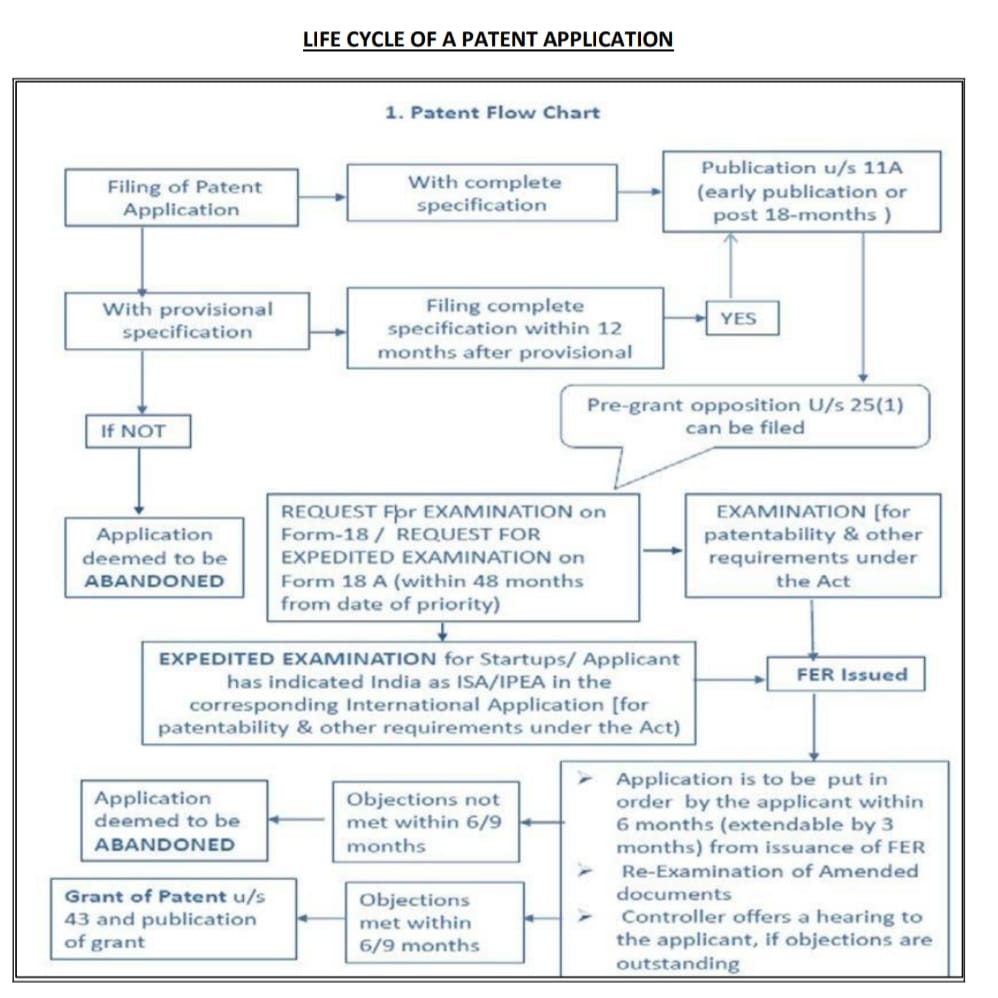
Patent Registration Process in India: From Application to Publication by Dr. Kiran Kakade

Introduction

Patents, as a cornerstone of intellectual property rights, play a pivotal role in protecting innovation. In India, the process of securing patent rights is governed by the Indian Patent Act of 1970. This blog aims to unravel the intricacies of the patent registration procedure in India, delving into each step and shedding light on the timeframes involved.

Source : https://ipindia.gov.in/

Step 1: Patent Search

The journey commences with a crucial step – the Patent Search. This initial exploration, conducted globally, serves to determine the novelty of the invention. It sets the foundation for the entire patent registration process.

Step 2: Drafting Patent Specification

Following exhaustive searches, the specification of the invention takes shape in a techno-legal language. Whether with or without inventor’s claims, this document encapsulates the essence of the invention. A provisional specification lacks claims, while a complete specification provides a detailed disclosure.

Step 3: Patent Application Filing

The filing process kicks off after drafting the Patent Specification. Patent Applications can be provisional or complete, serving distinct purposes. Six different types of Patent Application forms cater to specific needs, ranging from an ordinary application for Indian protection to PCT International applications for global coverage.

Step 4: Patent Publication for Public Opposition

After completing the patent application process, the patent undergoes publication. This occurs 18 months from the filing date or priority date, opening the door for public scrutiny. This phase allows the public to raise valid objections to the patent.

Step 5: Requesting Patent Examination

Examination is initiated upon filing a request, mandatory within 48 months of the filing date or priority date. The patent examiner scrutinizes the application, issuing an examination report with objections. A timely response, within 12 months, marks the patent prosecution phase.

Step 6: Grant of a Patent

Successful navigation through objections leads to the final phase – the grant of Patent Registration. However, if the examiner remains unsatisfied, rejection prompts a revisit of the entire patent procedure in India.

Conclusion

Understanding the intricacies of the patent registration journey empowers inventors and innovators. It provides valuable insights into the timeframes associated with each phase, fostering a strategic approach to securing intellectual property rights in the dynamic landscape of innovation.

Title: Nurturing Emotional Well-being: A Guide to Better Emotion Management by Dr. Kiran Kakade


In the fast-paced landscape of today’s world, the ability to navigate and understand our emotions is crucial for personal growth and well-being. Here are key strategies to help you manage your emotions more effectively.

1. Diverse Mediums of Expression:

Expressing your emotions through various mediums can be a powerful tool for self-discovery and growth. Whether it’s journaling, talking to a trusted friend or therapist, or engaging in creative activities like painting or dancing, finding healthy outlets allows emotions to flow constructively. This not only aids in processing feelings but also contributes to a more holistic personal development.

2. Open Communication:

Bottling up emotions often leads to stress and strain on mental health. Open communication acts as a safety valve, preventing emotional pressure from reaching unhealthy levels. Whether you’re sharing your thoughts with a friend, a family member, or a mental health professional, the act of verbalizing emotions can provide relief and contribute to a healthier emotional release.

3. Developing Emotional Intelligence:

In a world that values not only intelligence quotient (IQ) but also emotional intelligence quotient (EQ), understanding and managing your emotions is key. Enhance your emotional intelligence by delving into self-awareness. Recognize your own emotions, understand their origins, and learn how to respond effectively.

4. Empathy for Others:

Emotional intelligence extends beyond self-awareness. Cultivate empathy to understand and resonate with the emotions of others. This not only strengthens your interpersonal relationships but also contributes to a more harmonious and compassionate community. Practicing empathy fosters a deeper connection with those around you, creating a supportive environment for emotional well-being.

5. Mindfulness Practices:

Incorporate mindfulness into your daily routine to stay present and attuned to your emotions. Mindful practices, such as meditation or deep-breathing exercises, can provide a calm space for introspection and emotional regulation. Regular mindfulness can positively impact your overall emotional resilience.

Conclusion:

Managing emotions is a lifelong journey that requires continuous self-reflection and growth. By expressing yourself through different mediums, fostering open communication, and developing emotional intelligence, you pave the way for a healthier emotional landscape. Remember, understanding and managing your emotions not only contributes to personal well-being but also creates a positive ripple effect in your relationships and interactions with the world.

“Unraveling the Threads: Indian Parliament Security Breach and the Call for Responsible Citizenship” by Dr. Kiran Kakade

Source: https://images.app.goo.gl/WnZf9K3wJFDzaCB9A

India, a democratic nation of 1.4 billion people, rests upon the pillars of citizen-elected governance. However, recent events surrounding the breach of parliamentary security call for a deeper reflection on the state of our democracy, particularly among the youth.

As we grapple with multifaceted issues such as farmer suicides, unemployment, health crises, and various social challenges, it becomes evident that the very fabric of our society is woven with threads of complexity. Population explosion is a contributing factor to these issues, urging us to explore democratic avenues for constructive protests and solutions.

For the youth, unemployment stands as a prominent concern in today’s generation. A critical analysis points to the inadequacies of the Indian education system, producing a workforce lacking the necessary skills for a diverse job market.

Social factors further compound this issue, with modern movies portraying extreme violence, influencing the youth’s perception of success and achievement. The desire to make a mark, whether positive or negative, becomes a driving force for action.

However, the recent breach of parliamentary security serves as a stark reminder that there are boundaries even in the pursuit of change. The Parliament, often considered the soul of our country, should be immune to such transgressions. An attack on it is not just a crime; it is an assault on the very essence of our nationhood.

Amidst these challenges, there is a silver lining in the ongoing reforms within the education system. These reforms aim to channel the creative minds of the youth towards innovation and the development of the country, steering them away from becoming pawns in someone’s political agenda.

Yet, the responsibility does not solely rest on the shoulders of the youth. Parents, teachers, and society must collectively guide and educate the younger generation about the consequences of their actions. The recent incident involving four youth underscores the need for a shared commitment to shaping responsible citizens.

In conclusion, as we declare our love for the country with a resounding “Jai Hind,” it is essential to uphold the sanctity of our democratic institutions. By fostering an environment that encourages responsible citizenship, we can collectively contribute to a stronger and more resilient India.

Title: Navigating the Leadership Journey: A Manager’s Evolution into a Leader by Dr. Kiran Kakade

Introduction:


The professional odyssey from manager to leader is a profound transformation that transcends the conventional boundaries of resource management. While a manager oversees resources, a leader orchestrates a symphony of both resources and people. This blog delves into the enriching journey of evolving from a manager to a true leader, exploring the nuances of managing not just tasks and assets, but the intricate dynamics of human interaction and inspiration.

The Managerial Realm: Balancing Resources:

  • Defining the role of a manager in optimizing and controlling resources.
  • Focusing on efficiency, processes, and achieving organizational objectives.

The Catalyst for Change: Recognizing Leadership Potential:

  • Identifying the shift from managing tasks to leading people.
  • Acknowledging the broader impact a leader has on individuals and teams.

Embracing the Human Element: Leadership Beyond Management:

  • Understanding that leadership extends beyond tasks to encompass human relationships.
  • Nurturing a leadership style that inspires, motivates, and guides the team.

Communication Mastery: Transmitting Vision and Values:

  • Developing effective communication skills to convey a compelling vision.
  • Ensuring transparency and fostering a culture of open dialogue.

Trust as the Cornerstone: Building Credibility and Connection:

  • Establishing trust through authenticity and consistency.
  • Recognizing that trust is the bridge connecting leaders and their teams.

Empowerment and Delegation: Unleashing Human Potential:

  • Delegating responsibilities and empowering team members.
  • Creating an environment that encourages creativity, initiative, and personal growth.

Leading by Example: Modeling Leadership Traits:

  • Exhibiting the values and behaviors expected from the team.
  • Serving as a role model for professionalism, resilience, and dedication.

Inspiring a Collective Vision: Aligning Goals and Aspirations:

  • Crafting a vision that resonates with the team’s aspirations.
  • Aligning individual goals with the broader organizational mission.

Decision-Making Evolution: Balancing Analytical and Human Factors:

  • Evolving decision-making from a focus on processes to considering human impact.
  • Balancing analytical thinking with empathy and understanding.

Cultivating a Leadership Culture: Sustaining the Transformation:

  • Instilling a culture of leadership within the organization.
  • Continuously adapting and learning to navigate the evolving landscape.

Conclusion:


The metamorphosis from a manager to a leader is a journey laden with self-discovery, empathy, and the art of harnessing human potential. By embracing the intricacies of leading both resources and people, individuals can transcend the traditional managerial role, leaving an indelible mark on their teams and organizations. This blog serves as a roadmap for those on the path of leadership evolution, emphasizing the profound impact leaders can have on both the professional landscape and the lives of those they guide.

Title: Unveiling Effective Retention Strategies for Generation Z in the Modern Workplace

In today’s dynamic work landscape, understanding and implementing tailored retention strategies is crucial, especially when it comes to the newest generation in the workforce – Generation Z. Born between the mid-1990s and early 2010s, Gen Z brings unique expectations and preferences to the table. Here’s a comprehensive guide on crafting a successful retention strategy that resonates with this generation.

1. Embrace Technological Integration

Generation Z grew up in a digital era. To retain their engagement, leverage cutting-edge technology in your workplace. This includes user-friendly collaboration tools, virtual communication platforms, and innovative project management systems. By fostering a tech-savvy environment, you demonstrate a commitment to their preferred work style.

2. Promote Work-Life Balance

Unlike previous generations, Gen Z places a high value on work-life balance. Encourage flexible work schedules, remote work options, and adequate vacation time. Emphasizing a healthy balance between professional and personal life not only boosts morale but also fosters long-term commitment.

3. Invest in Continuous Learning

Gen Z craves continuous learning and skill development. Implement robust training programs, mentorship initiatives, and opportunities for professional growth. Showcasing a commitment to their career development not only retains talent but also enhances overall organizational capability.

4. Cultivate a Diverse and Inclusive Culture

Diversity and inclusivity are integral for Gen Z. Establish a workplace culture that celebrates differences, promotes inclusivity, and values diverse perspectives. This not only fosters a positive work environment but also attracts and retains a generation that values social responsibility.

5. Recognition and Feedback Mechanisms

Gen Z desires frequent feedback and acknowledgment for their contributions. Implement regular performance reviews, recognize achievements publicly, and provide constructive feedback. A culture of recognition reinforces their sense of purpose and keeps them engaged.

6. Social Responsibility Initiatives

Gen Z is passionate about making a positive impact on society. Incorporate corporate social responsibility initiatives into your organizational framework. Engage in charitable activities, sustainability efforts, or community outreach programs. Aligning with their values enhances their loyalty to your company.

7. Transparent Communication

Open and transparent communication is crucial for Gen Z. Keep them informed about company goals, decisions, and changes. Establish channels for two-way communication, where employees feel heard and valued. Transparency builds trust, a key factor in retaining this generation.

8. Adaptability to Change

Gen Z is accustomed to rapid changes in technology and society. Foster an organizational culture that embraces change and innovation. Show flexibility in adapting to new trends and technologies, creating an environment where employees feel confident in the company’s future.

In conclusion, creating a retention strategy tailored for Generation Z involves a holistic approach that addresses their technological, cultural, and personal preferences. By aligning organizational practices with their values, companies can build a loyal and motivated workforce for the future.

Title: The Art of Karma Yoga: Witnessing Self on the Path to Liberation by Dr. Kiran Kakade

Image Source: https://images.app.goo.gl/HdoECWj4uqH4gDBt9

In the ancient philosophy of Yoga, Karma Yoga stands out as a path of selfless action and detachment from the fruits of one’s labor. Dive deeper into the essence of this transformative journey by exploring the profound concept of witnessing the self.

Understanding Karma Yoga

Karma Yoga, one of the paths outlined in the Bhagavad Gita, emphasizes performing actions with a selfless attitude and without attachment to the outcomes. Witnessing self in the context of Karma Yoga involves observing your thoughts, intentions, and actions without getting entangled in the ego-driven desire for personal gain.

The Power of Selfless Action

In the hustle and bustle of daily life, we often find ourselves caught up in the pursuit of success, recognition, and material gains. Karma Yoga teaches us to engage in our duties and responsibilities with a sense of duty, free from the bonds of desire. Witnessing self becomes a crucial aspect of this practice, allowing us to act from a place of inner clarity and detachment.

Witnessing Self: A Practice in Mindful Awareness

To witness oneself in the context of Karma Yoga, one must cultivate mindfulness. This involves observing thoughts, emotions, and actions as they arise, without judgment. The act of witnessing creates a space between stimulus and response, providing an opportunity for conscious, intentional action.

Detachment from Results

In the pursuit of witnessing self, detachment from the outcomes of our actions becomes paramount. Karma Yogis recognize that external results are beyond their control, and their focus shifts to the sincerity and selflessness of their efforts. This shift in perspective liberates the individual from the anxiety and stress often associated with success and failure.

Integrating Witnessing Self into Daily Life

Practical implementation of witnessing self involves regular self-reflection and mindfulness practices. Whether through meditation, journaling, or mindful activities, the goal is to foster a heightened awareness of your thoughts, actions, and their underlying motivations.

Breaking the Chains of Ego

Witnessing self in the realm of Karma Yoga is a powerful tool for breaking free from the shackles of ego. By relinquishing attachment to personal achievements, one can experience a profound sense of inner freedom and peace.

The Transformative Journey

In essence, Karma Yoga coupled with witnessing self is a transformative journey towards spiritual growth and self-realization. It’s about aligning actions with higher values, fostering a deep sense of interconnectedness, and realizing that true fulfillment lies beyond the pursuit of individual desires.

Conclusion

Embarking on the path of Karma Yoga by witnessing self is a profound and liberating journey. It calls for a shift in consciousness, from a self-centered approach to a selfless, mindful engagement with the world. As we navigate the complexities of life, may we find solace and purpose in the art of selfless action and the transformative power of witnessing the self.

Title: Embracing Choiceless Awareness: A Journey Within by Dr. Kiran Kakade

Image Source:https://theconversation.com/why-we-need-to-figure-out-a-theory-of-consciousness-93146

In our fast-paced lives, we are often bombarded with choices, decisions, and the constant need to make things happen. However, there exists a profound state of consciousness known as “Choiceless Awareness,” where the mind transcends the habitual pattern of decision-making and simply observes without attachment or judgment.

Understanding Choiceless Awareness

Choiceless Awareness is a state of mindfulness where one remains fully present in the current moment, accepting it without the influence of personal preferences or desires. It goes beyond the dichotomy of right and wrong, good and bad, allowing a deeper understanding of the unfolding reality.

Breaking Free from the Chains of Choice

In a world that constantly demands decisions, embracing choiceless awareness liberates us from the burdensome weight of choices. It doesn’t mean abandoning responsibility; rather, it invites a more intuitive and holistic approach to decision-making.

The Practice of Choiceless Awareness

Discovering choiceless awareness involves cultivating mindfulness through meditation, deep reflection, and being attuned to the present moment. It encourages a non-judgmental awareness of thoughts, emotions, and external stimuli, fostering a sense of inner peace.

Benefits of Choiceless Awareness

  1. Reduced Stress and Anxiety: By relinquishing the need to control every aspect of our lives, we alleviate the stress associated with decision-making.
  2. Enhanced Creativity: The open, receptive state of choiceless awareness allows creativity to flow effortlessly, unencumbered by preconceived notions.
  3. Improved Relationships: Embracing the present moment without judgment fosters more authentic connections with others, as it diminishes biases and expectations.

Challenges on the Path

While the concept of choiceless awareness may seem appealing, it’s not without challenges. The mind’s inclination towards habitual thinking and the societal emphasis on choice can make this journey challenging. However, with consistent practice, one can gradually shift towards a more liberated state of consciousness.

Integrating Choiceless Awareness into Daily Life

Incorporating choiceless awareness into everyday life involves small but intentional steps. These may include mindful breathing exercises, regular check-ins with your thoughts and emotions, and consciously choosing moments of non-judgmental observation.

Conclusion

Choiceless awareness is a transformative journey inward, away from the incessant noise of decision-making. By embracing the present moment without attachment to outcomes, we open ourselves to a richer, more fulfilling experience of life. It’s not about abandoning choice but about approaching it with a newfound wisdom that arises from a place of deep awareness.

Title: “Strategic Navigation in a VUCA Business World: Adapting to the Waves of Change” by Dr. Kiran Kakade

Source: https://images.app.goo.gl/nWsYiLDBWXrzAGDT8

As the year draws to a close, the corridors of corporate boardrooms are abuzz with discussions that echo the need for foresight and adaptability. The landscape of businesses today is characterized by volatility, uncertainty, complexity, and ambiguity (VUCA), requiring leaders to steer their organizations with strategic prowess. Crafting a strategic plan for the coming year has never been more critical, especially in the face of technological shifts and macroeconomic uncertainties.

1. Embracing the Transformative Impact of Generative AI

In a world where artificial intelligence is no longer confined to predictions but extends to actively shaping strategies, businesses are navigating the transformative impact of generative AI. Tech-first models take the spotlight, and strategic alliances with digital natives act as catalysts for innovation and resilience. The strategic landscape is evolving, and leaders must harness the potential of AI to predict, change, and implement strategies for both short and long terms.

2. Sustainability as a Strategic Imperative

Beyond being a mere buzzword, sustainability has become a strategic imperative. The planning horizon now extends far beyond immediate tasks, encompassing a comprehensive strategy aligned with Sustainable Development Goals (SDGs) and embracing Business Responsibility and Sustainability Reporting (BRSR). Organizations are committing to reshaping operations for net-zero goals, adopting sustainable supply chains, and integrating environmentally conscious practices into their core DNA.

3. Evolution of Talent Management Paradigm

The modern workforce demands a recalibration of the talent management paradigm. Prioritizing upskilling initiatives and championing a work-life balance are integral components, especially in the era of hybrid working. Strategic planning sessions now focus on innovative practices for talent retention, onboarding, and upskilling, recognizing that human capital development is not just a facet but integral to success.

4. Rapid Digitalization: Setting New Priorities

Strategic planning in the contemporary business environment involves setting new priorities aligned with rapid digitalization. The coming year will task business leaders with navigating the uncertain economic landscape through insight, innovation, and impactful strategies. Investment in emerging technologies becomes a linchpin for spearheading organizational goals, enhancing processes, capabilities, and delivery.

5. Holistic Approach to Strategic Planning

Strategic planning isn’t a rigid framework but an evolving plan, aligned with market dynamics. Cultivating a culture of perpetual learning and development becomes paramount, ensuring the workforce remains adaptable to future demands. The success of strategic planning is intricately tied to the resilience and skill diversity of the workforce, coupled with effective succession planning for organizational readiness.

6. Shrinking Time for Strategic Planning: Looking Beyond 5 Years

After navigating challenging years, C-suite leaders are expected to intensify their focus on long-term goals. Mitigating unforeseen risks and enhancing workflow will require an approach that involves looking beyond the traditional five-year planning cycle. The entire organization becomes a strategic asset, fueling growth and innovation.

In conclusion, today’s strategic vision is a tale of adaptability and foresight. Riding the waves of generative AI, embracing sustainability imperatives, and nurturing talent resilience, businesses are not merely shifting gears; they are evolving paradigms. Success is no longer a singular pursuit; it is an intricate combination of innovation, sustainability, and the untapped potential within the human workforce. As we step into the coming year, the strategic navigator’s compass is set to navigate the complexities of the ever-evolving business terrain.