๐Ÿง  The Psychology of Decision-Making: Between Free Will and Fear


Reflections through the Lens of the Bhagavad Gita

Written by Dr. Kiran Kakade

Every decision we make mirrors the silent tug-of-war between logic and emotion, between what we think we should do and what we feel compelled to do. While we often believe our choices stem from conscious reasoning, the Bhagavad Gita reminds us that deeper psychological forcesโ€”our fears, attachments, and inner conditioningโ€”shape our behavior more than we realize.

Krishna, guiding Arjuna on the battlefield of Kurukshetra, doesnโ€™t just offer a call to action. He reveals the inner battlefield of the human mind โ€” where reason and emotion, free will and fear, awareness and ignorance constantly collide.

This timeless teaching aligns closely with modern psychologyโ€™s understanding of decision-making, which unfolds across three interconnected layers: Decisions, Free Will, and Psychological Triggers.


1. Decisions: The Core of Human Agency

At first glance, a decision seems like a simple conscious act โ€” I choose this, not that.
But beneath that conscious surface lies a complex interplay between reason, emotion, and past conditioning.

The Bhagavad Gita (Chapter 2, Verse 47) provides a profound insight:

โ€œKarmanye vadhikaraste, ma phaleshu kadachana.โ€
โ€” โ€œYou have the right to perform your prescribed duties, but you are not entitled to the fruits of your actions.โ€

Krishna here reminds Arjuna that true decision-making arises not from attachment to outcomes (fear, desire, or reward) but from clarity of purpose and inner alignment.

In psychological terms, our choices often stem from two internal worlds:

  • The Inside World (Rational Thinking): Governed by logic, reasoning, and foresight โ€” where we deliberate, plan, and weigh consequences.
  • The Outside World (Irrational Thinking): Governed by emotion, bias, and social pressure โ€” where hidden fears and desires influence us unconsciously.

Free will exists in the space between these two โ€” the point where awareness meets instinct, and reason must negotiate with emotion.


2. Free Will: The Bridge Between Reason and Emotion

Free will is not absolute freedom; it is the capacity to choose with awareness. Itโ€™s where rationality and instinct meet โ€” sometimes harmoniously, often in conflict.

Krishnaโ€™s counsel to Arjuna in Gita 3.30 illuminates this beautifully:

โ€œMayi sarvani karmani sannyasya adhyaatma chetasaโ€ฆโ€
โ€” โ€œDedicate all actions to Me, with your mind centered in the Self, free from desire and ego.โ€

This verse captures the essence of self-regulated free will. When decisions arise from a centered mind โ€” one not hijacked by emotion or fear โ€” they reflect conscious choice, not compulsion.

In modern psychological terms:

  • When rational thinking dominates, we engage in active decision-making โ€” deliberate, logical, and self-aware.
  • When irrational forces prevail, we fall into reactive behavior โ€” driven by fear, desire, or social approval.

Thus, free will is less about doing โ€œwhatever we want,โ€ and more about choosing with clarity amidst the chaos of emotional triggers.


3. Psychological Triggers: The Hidden Forces Behind Behavior

Every individual carries emotional residues โ€” fears, unmet needs, and unhealed experiences โ€” that silently influence their choices.
These are our psychological triggers, shaping how we interpret the world around us.

Consider Gita 2.62โ€“63, which perfectly describes the psychological chain of decision distortion:

โ€œDhyayato vishayan pumsah sangas teshu upajayate;
Sangat sanjayate kamah, kamat krodho abhijayateโ€ฆโ€

โ€” โ€œWhile contemplating objects of the senses, attachment is born. From attachment arises desire, and from desire, anger.โ€

Krishna maps the psychological descent:

  • Thought โ†’ Attachment โ†’ Desire โ†’ Anger โ†’ Delusion โ†’ Loss of Memory โ†’ Destruction of Reason.

In essence, when emotion dominates thought, rational decision-making collapses.

Everyday Examples:

  • A person afraid of failure may overanalyze every choice, mistaking anxiety for rational caution.
  • One craving approval may agree to things that contradict their true intent.
  • Early criticism may later manifest as perfectionism or indecision โ€” subtle echoes of unhealed wounds.

Such patterns limit free will and cloud awareness, binding us to reaction rather than reflection.


4. The Loop of Analysis Paralysis and Irrational Fear

The Gita calls fear (bhaya) a major obstacle to self-realization.
Fear often disguises itself as โ€œrational concern,โ€ creating analysis paralysis โ€” a psychological loop where thought and anxiety feed on each other.

Krishna advises in Gita 4.10:

โ€œVita-raga-bhaya-krodhah man-maya mam upashritahโ€ฆโ€
โ€” โ€œFreed from attachment, fear, and anger, absorbed in Me, and taking refuge in Me, many have attained perfection.โ€

Fear of rejection, failure, or loss limits human potential. These fears make the rational mind a prisoner of its own imagination:

  • Fear of rejection stops us from forming meaningful relationships.
  • Fear of loss prevents us from taking opportunities.
  • Fear of judgment silences creative expression.

Such fears create mental cages โ€” boundaries we mistake for โ€œprudence.โ€


5. Reclaiming the Rational Mind: Regulating Emotions

The Gita doesnโ€™t teach the suppression of emotion โ€” it teaches integration.
Emotions are not enemies of logic; they are signals. Awareness transforms them from triggers into teachers.

Practical steps drawn from both psychology and the Gita:

  1. Awareness (Sakshi Bhava):
    Observe emotions without judgment. The Gitaโ€™s idea of โ€œwitness consciousnessโ€ (the Sakshi) helps us watch fear without being controlled by it.
  2. Pause Before Reaction:
    In Gita 6.5, Krishna says: โ€œUddhared atmanatmanamโ€ฆโ€
    โ€” โ€œLet a man lift himself by himself; let him not degrade himself.โ€
    The pause is the lift โ€” the moment awareness intervenes before impulse takes over.
  3. Reframe Fear:
    Shift from โ€œWhat if I fail?โ€ to โ€œWhat can I learn?โ€
    Every challenge becomes an opportunity for self-growth, not a threat to identity.
  4. Mindโ€“Body Alignment (Yoga):
    Mindfulness, meditation, or journaling harmonize emotion and thought. Krishna calls this โ€œYogaแธฅ karmasu kauล›alamโ€ (Gita 2.50) โ€” โ€œYoga is skill in action.โ€
    Emotional balance makes every action more skillful and conscious.

When emotion is regulated, free will expands โ€” and decisions align with deeper values, not unconscious fears.


๐ŸŒฑ Conclusion: The Dance Between Logic and Emotion

Human decision-making is a dance between logic and emotion, conscious will and unconscious influence.
The Bhagavad Gita doesnโ€™t ask us to reject emotion but to transcend identification with it โ€” to use emotion as fuel for awareness, not as a fog that blinds it.

Krishnaโ€™s ultimate teaching to Arjuna โ€” โ€œYogastha kuru karmaniโ€ (Gita 2.48) โ€”

โ€œPerform your duty, being steadfast in yoga, abandoning attachment, and remaining even-minded in success and failure.โ€

This is the psychology of true decision-making:
acting from calm awareness, not fear;
choosing from clarity, not compulsion.


โ˜€๏ธ The Sun in 12 Houses โ€” The Light of the Soul in Different Realms of Life


In astrology, the Sun represents our core identity, ego, and life purpose. It shines light wherever it is placed, illuminating that area of life. The house position of the Sun in your birth chart reveals where you express your true self, seek recognition, and find vitality.

Letโ€™s explore what it means when the Sun travels through each of the 12 houses โ€” from hidden depths to the public spotlight.


๐ŸŒ… Sun in the 1st House โ€“ โ€œI am Confident & Ambitiousโ€

When the Sun rises in the 1st house, it creates a personality that naturally attracts attention. You radiate leadership, ambition, and self-belief. Others look up to you, and your confidence becomes your signature. The challenge lies in balancing pride with humility.


๐Ÿ’ฐ Sun in the 2nd House โ€“ โ€œMy Family Has Goodwillโ€

This placement blesses you with a strong sense of self-worth and a desire to build wealth and legacy. You take pride in your values and in your familyโ€™s reputation. Financial independence is both your motivation and your strength.


โœ๏ธ Sun in the 3rd House โ€“ โ€œI am Self-Employedโ€

You shine through communication, writing, teaching, or entrepreneurship. The 3rd house Sun makes you courageous and action-oriented โ€” always ready to take initiative. You may prefer to work independently and be your own boss.


๐Ÿ  Sun in the 4th House โ€“ โ€œMy Mother is Strongโ€

The foundation of your life comes from strong family roots. Your mother or maternal figure plays a powerful role in shaping your confidence. Emotional security and a proud home environment fuel your success.


๐ŸŽจ Sun in the 5th House โ€“ โ€œI am Creative & Famousโ€

This is the house of expression, performance, and children. You are born to create โ€” whether through art, ideas, or leadership. People recognize your talent easily, and fame often follows. You shine brightest when following your passion.


โš”๏ธ Sun in the 6th House โ€“ โ€œI am a Fighter and Winnerโ€

This Sun thrives on challenges. You succeed through discipline, service, and the ability to overcome obstacles. Health, competition, and problem-solving define your path. Victory becomes sweeter after struggle.


๐Ÿ’ž Sun in the 7th House โ€“ โ€œMy Spouse is Bossyโ€

Partnerships mirror your own ego. You attract strong, ambitious partners who may challenge or inspire you. Relationships teach you balance, compromise, and mutual respect. The key is learning to share the spotlight.


๐Ÿ”ฎ Sun in the 8th House โ€“ โ€œI Have Hidden Skillsโ€

A mysterious and transformative placement, the 8th house Sun gives you deep insight, resilience, and a natural connection to the unseen. You may have psychic abilities or an instinct for research, healing, or finance. Power grows from within.


๐ŸŒ Sun in the 9th House โ€“ โ€œMy Father is Lucky for Meโ€

The Sun here blesses you with philosophical wisdom, higher education, and good fortune through your father or mentors. You love to explore, travel, and expand your mind. The world becomes your classroom.


๐Ÿ›๏ธ Sun in the 10th House โ€“ โ€œI Want Authority & Fameโ€

This is the Sunโ€™s most powerful position. You are driven to achieve, lead, and make a mark in the world. Recognition and authority come naturally. The challenge is maintaining integrity while climbing high.


๐ŸŽฉ Sun in the 11th House โ€“ โ€œI Have a Classy Circleโ€

You shine in social networks, organizations, and friendships. Influential people support your dreams, and you attract a circle of achievers. Your success often comes through collaboration and visionary ideas.


โœˆ๏ธ Sun in the 12th House โ€“ โ€œI am Happy at Foreignโ€

Here, the Sun seeks solitude, spirituality, and distant lands. You feel fulfilled away from your birthplace โ€” perhaps in foreign countries or peaceful retreats. The 12th-house Sun finds true light within, through introspection and compassion.


โ˜€๏ธ Conclusion: The Journey of the Sun Within You

Wherever your Sun is placed, it is your source of vitality and purpose. Each house gives a unique lens to express your light โ€” from personal confidence to universal compassion. When you understand your Sunโ€™s position, you unlock the secret to living authentically and radiantly.


Action Before Motivation: How Your Brain Rewards Effort

We often believe that motivation is the spark that ignites actionโ€”that we must first feel inspired before we can begin working toward a goal. Neuroscience, however, challenges this conventional wisdom. Research shows that our brains frequently reward effort after we start a task, rather than motivating us beforehand. In other words, waiting to โ€œfeel motivatedโ€ might be holding us back more than helping us.

The Science Behind Action and Reward

When you take the first step toward a goal, your brain releases dopamine, a neurotransmitter strongly associated with pleasure, learning, and reinforcement. Dopamine doesnโ€™t just make us feel good; it helps the brain link effort with reward. This feedback loop reinforces behaviors and makes it more likely that we continue pursuing a task.

Hereโ€™s the key insight: effort leads to reward, and reward fuels motivation. Motivation is not always the precursor to actionโ€”it can also be a byproduct of taking action. This flips the traditional productivity advice on its head: instead of waiting for motivation, action itself can generate it.

Bhagavad Gita on Action

This idea resonates deeply with the wisdom of the Bhagavad Gita, where Lord Krishna advises:

โ€œKarmanye vadhikaraste Ma Phaleshu Kadachana,
Ma Karma Phala Hetur Bhurmatey Sangostva Akarmaniโ€

(Bhagavad Gita 2.47)

Translation: โ€œYou have a right to perform your actions, but you are not entitled to the fruits of your actions. Never consider yourself to be the cause of the results of your activities, and never be attached to not doing your duty.โ€

In essence, the Gita encourages action without waiting for external reward or inner motivationโ€”focusing instead on consistent effort. Just like our brainโ€™s reward system, the benefits of action naturally follow when we engage sincerely with our tasks.

Why Starting Small Matters

One of the most powerful ways to leverage this principle is by breaking goals into manageable steps. Even tiny actions, when consistently performed, trigger dopamine release and build momentum. For example:

  • Writing just one paragraph of a report can lead to motivation to write more.
  • Doing a 5-minute workout can lead to a full 30-minute session.
  • Sorting one email can kickstart your productivity for the day.

The cumulative effect of these small steps can be enormous. By starting even when motivation feels absent, you create a natural cycle where effort breeds reward, and reward, in turn, fuels continued effort.

Transforming Your Approach to Goals

Understanding the brainโ€™s reward system allows us to rethink how we approach productivity:

  1. Stop waiting for inspiration โ€“ Start with any action, no matter how small.
  2. Focus on consistency, not intensity โ€“ Regular small actions compound into larger results.
  3. Celebrate progress โ€“ Recognizing small wins reinforces the brainโ€™s reward system.
  4. Trust the process โ€“ Motivation often follows action, not the other way around.

By embracing this mindset, you shift from a โ€œfeel-motivated-firstโ€ approach to an โ€œaction-firstโ€ strategy. Over time, this can lead to significant improvements in productivity, goal achievement, and even personal growth.

Final Thoughts

The next time you feel unmotivated, remember: movement precedes motivation. Start with one small step, take consistent action, and let your brainโ€™s natural reward system create the motivation you need. Progress doesnโ€™t wait for inspirationโ€”it creates it. And as the Bhagavad Gita reminds us, performing your duty and action itself is the true path, regardless of immediate results.


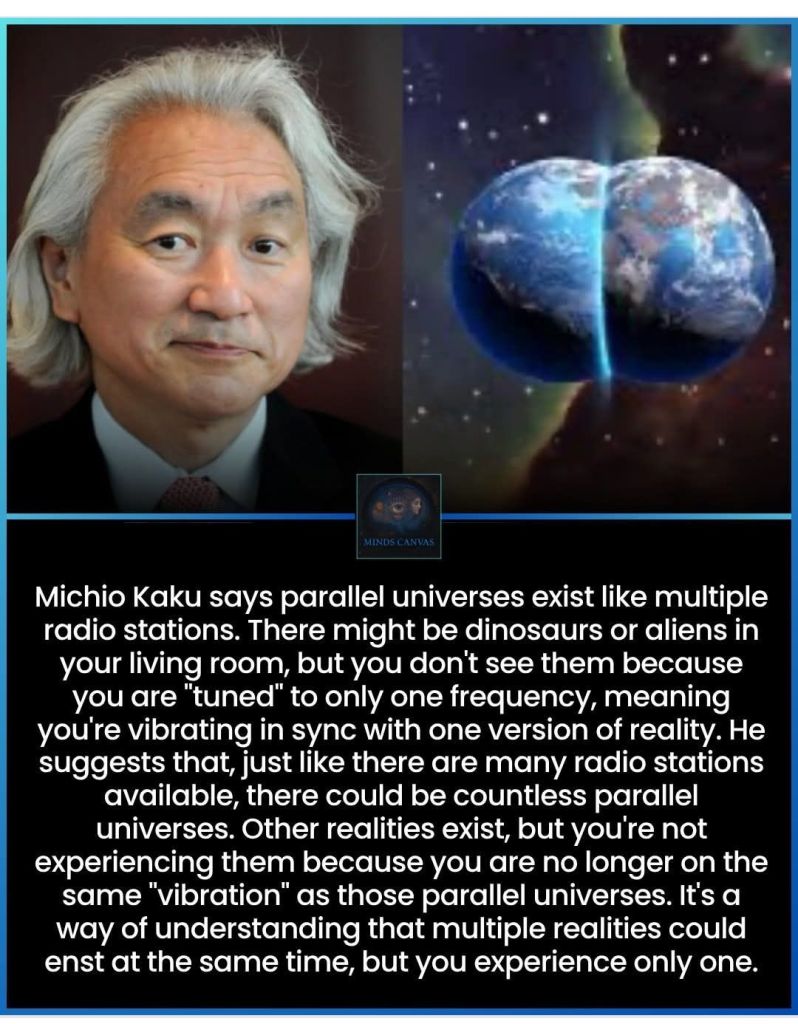
๐Ÿฆ• Dinosaurs Could Be in Your Living Room โ€” You Just Canโ€™t See Them

Source : https://www.facebook.com/share/16nBYQ8msV/

Imagine walking into your living room and sensingโ€ฆ something. A strange familiarity, a fleeting chill, or a feeling that you’re not alone. What if, at that very moment, dinosaurs are in the room โ€” not in bones or fossils, but alive and breathing in a reality you simply canโ€™t perceive?

Sounds wild? It might be closer to science than you think.

The Hidden Frequencies of Reality

Renowned theoretical physicist Michio Kaku offers a fascinating lens into this idea. He likens parallel universes to radio stations. All around you, countless frequencies are being broadcast. But your radio โ€“ your senses, your consciousness โ€“ is tuned to just one station. That doesn’t mean the others don’t exist. You’re just not vibrating at the right frequency to hear them.

Thatโ€™s the crux of his analogy: reality isnโ€™t singular. Itโ€™s layered, like invisible signals occupying the same space but tuned to different wavelengths. So yes, in theory, your room could also be a jungle โ€” filled with towering ferns and thundering Tyrannosaurs โ€” in another universe.

Welcome to the Multiverse

This idea isnโ€™t just poetic. Itโ€™s grounded in a serious, if speculative, branch of physics: quantum theory. According to the Many Worlds Interpretation, every choice you make โ€” every fork in the road โ€” spawns a new universe. One where you took the job. One where you didnโ€™t. One where the dinosaurs never went extinct.

All of these universes coexist. They donโ€™t overwrite one another โ€” they overlap.

Tuning In to Other Realities

Kaku takes it a step further. He proposes that each parallel universe exists at its own unique vibrational frequency. Our consciousness is โ€œlocked inโ€ to the one we’re attuned to โ€” much like your car stereo wonโ€™t suddenly play two stations at once.

So why donโ€™t we see these other worlds? Because weโ€™re simply not tuned in.

But what if we could? What if, through some future technology or evolved state of awareness, we could flip the dial and experience another layer of reality?

What If… You Already Have?

Ever walk into a room and feel a strange dรฉjร  vu? Sense a presence or feel that somethingโ€™s โ€œoffโ€? What if thatโ€™s not just your mind playing tricks โ€” but your reality brushing up against another? A bleed-through. A glitch in the Matrix. A moment where frequencies almost align.

The Science of the Fantastic

To be clear, these ideas remain on the edge of theoretical physics. Thereโ€™s no proof that parallel universes exist โ€” yet. But theyโ€™re not impossible, either. The math of quantum mechanics doesnโ€™t rule them out. In fact, many physicists believe theyโ€™re a logical consequence of how the quantum world works.

Itโ€™s a concept that stretches the limits of imagination โ€” and forces us to rethink what we know about existence.

Infinite Versions of You

If this theory holds any truth, itโ€™s not just dinosaurs that could be just out of reach. It’s you. Another you. The one who chased your dream, the one who made a different choice, the one who never got the chance.

All of them could be real โ€” just not in the frequency you’re experiencing now.


Final Thought: Reality May Be Bigger Than You Think

Next time you look around your living room, donโ€™t just see walls and furniture. Imagine the possibilities hidden behind the curtain of perception. Somewhere, layered over your reality, dinosaurs may still thunder across the land. And somewhere else, another version of you is watching them.

Reality isnโ€™t just what you see. It may be infinite โ€” and you’re only tuned to one station.


Your Future, Your Choice: What Quantum Physics and Your Mindset Say About Life


Image source: Internet

Have you ever caught yourself wondering:


1) What if I had made a different choice?
2) Is my future already written, or do I have the power to change it?


Your choices today shape your tomorrow“.


Quantum Science and the Power of the Present

“Quantum science suggests the existence of many possible futures for each moment of our lives. Each future lies in a state of rest until it is awakened by choices made in the present.”

Every moment you live holds countless possible futuresโ€”like seeds waiting to sprout. The one that grows depends on what you choose right now.

Youโ€™re never stuck. Youโ€™re not too late. Youโ€™re just one decision away from a different path.

1) Want to be healthier? Start by drinking more waterโ€”today.
2) Want to build confidence? Speak kindly to yourselfโ€”today.
3)Want to change your life? Make a new choiceโ€”right now.

๐Ÿ’ญ โ€œDonโ€™t wait for the future. Build it with what you do now.โ€


Every Choice Creates a New Universe

“According to quantum physics, every time you have two options and you choose one, the universe splits into two parts…”

This is the Many Worlds Theoryโ€”a mind-bending idea from quantum physics. It suggests that every decision creates a โ€œsplitโ€: one version of you goes one way, another version goes the other.

Imagine standing at a fork in the road:

  • In one world, you say โ€œyes.โ€
  • In another, you say โ€œno.โ€

It may sound like science fictionโ€”but even metaphorically, it holds truth:
Every choice is powerful. It doesnโ€™t just influence your futureโ€”it creates it.

๐Ÿ’ญ โ€œEach decision is a doorway. Open the one that feels true to you.โ€


Whatโ€™s In Your Control and Whatโ€™s Not

Hereโ€™s a gentle reminder that helps bring peace in a noisy world:

Out of Your Control:

  • The past
  • What others think or say
  • The future
  • Other peopleโ€™s actions

In Your Control:

  • How you speak
  • Who you spend time with
  • Your thoughts and mindset
  • How you treat others
  • How you respond

Itโ€™s not about ignoring the worldโ€”itโ€™s about not wasting your energy on what you canโ€™t change.
Instead, invest that energy into how you live, think, and respond.

๐Ÿ’ญ โ€œPeace begins when you stop chasing control outside and start taking charge inside.โ€


Youโ€™re More Powerful Than You Think

Letโ€™s connect the dots:

๐Ÿ”น Quantum science says many futures are waiting for you.
๐Ÿ”น Quantum physics says each choice creates a new reality.
๐Ÿ”น Mindfulness teaches us to focus on what we can control.

No matter your past. No matter the noise around you.
You get to choose your next thought. Your next word. Your next step.

And that is where your future begins.


โœจ Key Takeaways:

  1. The future isnโ€™t fixedโ€”itโ€™s shaped by your choices.
  2. Every decision opens a new path.
  3. You canโ€™t control everything, but you can control your actions and energy.
  4. You are the author of your own story.

๐ŸŒŸ โ€œSmall shifts in your thinking create big shifts in your reality.โ€


Attract What You Desire: The Power of Soulful Action


Have you ever wondered why chasing your dreams sometimes feels exhaustingโ€”like no matter how hard you run, your desires seem just out of reach? What if the true path to fulfillment isn’t through pursuit, but through attraction?

This isnโ€™t just spiritual fluffโ€”itโ€™s a powerful truth rooted in energy, karma, and aligned action. You donโ€™t need to chase the things you love. You need to attract them by becoming the kind of person who draws those things naturally. The secret lies in your soul energy, your karma, and your daily intentional actions.


Understanding the Energy of Attraction

Everything in existenceโ€”your body, your emotions, your thoughts, and even your goalsโ€”is made of energy. When your energy is scattered, clouded by doubt or desperation, it works against you. But when you align your inner state with your desires, you create a magnetic field around you.

This energy doesnโ€™t come from frantic effort. It comes from inner clarity, peace, and genuine intention. It’s not about how badly you want something; itโ€™s about how aligned your vibration is with that thing.


Manifestation: More Than Just a Wish

Most people believe that manifestation is just positive thinking or visualizing what you want. But real manifestation is much deeper than that. Itโ€™s a soulful process that involves:

  1. Concentration of soul energy
  2. Clear and focused intention
  3. Continuous action, or karma

This trinityโ€”energy, focus, and karmaโ€”is what transforms your inner vision into a physical reality.


Step 1: Concentrate Your Soul Energy

Your soul energy is the most authentic force within you. But in our chaotic world, this energy is often diffused across many distractionsโ€”social media, overthinking, fear, or external validation.

To manifest anything, you must reclaim and concentrate your soul energy. This happens through:

  • Meditation
  • Deep breathing
  • Self-reflection
  • Moments of stillness

When you calm your inner world, your energy becomes focused and powerfulโ€”ready to serve your higher purpose.


Step 2: Focus That Energy on Your Desire

Now that your energy is centered, it’s time to focus it on a clear, specific desire. Vague intentions like “I want to be successful” wonโ€™t work. You need clarity.

Ask yourself:

  • What exactly do I want?
  • Why do I want it?
  • How will it feel when I have it?

Visualize it. Feel it. See it already existing in your life. The clearer your desire, the more powerful your energy alignment becomes.


Step 3: Take Continuous Karma (Purposeful Action)

This is the part most people overlook. Manifestation is not magicโ€”it is movement.

Manifestation is only 1% of the journey. The remaining 99% is continuous karmaโ€”daily action taken in the direction of your goal. Not desperate action. Not unethical shortcuts. But positive, meaningful steps, taken with patience and faith.

If you do negative actions or bad karma to attract something, that thing will eventually bring negative energy into your life. How you attract something determines how it stays in your life.


Why the Law of Attraction Fails for Some

Many people try the Law of Attraction but get frustrated when it “doesn’t work.” They visualize, affirm, and meditateโ€”but see no results.

Why?

Because they stop at the wish. They forget the karma. The universe doesnโ€™t just respond to your thoughts; it responds to your alignmentโ€”which includes your energy, your intention, and your sustained effort.

Without action, energy fades. And without alignment, action becomes noise.


The Formula: Energy + Focus + Action

If you’re truly ready to transform your life, here’s the golden formula:

  • Start within. Connect with your soul energy.
  • Be precise. Set a clear, focused desire.
  • Act daily. Take aligned steps, no matter how small.

This simple but powerful equation changes everything. It takes you from passive wishing to active creationโ€”from struggling to thriving.


Final Thoughts: Donโ€™t Chase. Attract.

Stop chasing what you want. Instead, become the version of yourself who naturally attracts it.

Let your soulโ€™s energy guide your actions. Let your integrity, clarity, and love shape your karma. And rememberโ€”manifestation is the spark, but consistent action is the fire that transforms your dreams into reality.

Stay aligned. Stay focused. Stay persistent.

You already have the power within youโ€”now itโ€™s time to use it.


The Universal Timeline: Why Karma, Not Urgency, Defines Your Destiny

Have you ever looked up at the night sky and wondered how everything functions so perfectlyโ€”the planets in motion, the stars glowing, the Earth rotating with absolute precision? Every living and non-living entity in this vast universe has a defined structure, a specific role, and a preordained timeline.

Take the Earth, for example. It rotates around the Sun and spins on its own axis, following an unchanging cycle. Trees grow at their own pace. They do not bear fruit the moment a seed is planted. They need nurturingโ€”sunlight, water, time. Only after a certain period, when the season is right, do they blossom. The fruit appears not when the tree desires, but when nature deems it ready.

This cosmic pattern is not just limited to stars and treesโ€”it applies equally to human life.

Nature Respects Timelinesโ€”So Should We

We live in a world of instant gratification. Everyone wants everything now. A luxurious car, a big house, a perfect partner, a million-dollar bank balance. But hereโ€™s the truth: wanting is not enough. Neither is rushing.

You are also governed by a timelineโ€”an invisible clock aligned with your karma.

Your lifeโ€™s events unfold according to your prarabdha karma, which is the fruit of past actions already set in motion. You may want success at 20, but if your timeline says 30, it will happen at 30โ€”not a second earlier. No matter how desperately you wish for it, it wonโ€™t come before youโ€™re ready, just as a seed won’t become a tree overnight.

Karma Is the Key, Not Just Desire

While the Law of Attraction emphasizes intention and visualization, it must work hand-in-hand with Karma. Positive thoughts without righteous action are incomplete. Your current actions, your present karma, either strengthen your timeline or distort it.

If you act with integrity, compassion, and consistency, you empower your prarabdha. But if you engage in bad karmaโ€”deception, shortcuts, harm to othersโ€”you do more than just deviate. You rewrite your destiny, often with harsher consequences. A new timeline begins, one that may no longer include the blessings you were originally meant to receive.

Patience Isnโ€™t Weaknessโ€”Itโ€™s Wisdom

Imagine a mango tree trying to bear fruit in its first month of growth. It’s impossible. Similarly, itโ€™s foolish to think you can “get ahead” of your life plan through sheer impatience or manipulation. Life is not a race to be won. Itโ€™s a journey of evolution, where every step matters.

Trying to force outcomes before their time leads to frustration, poor decisions, and in many cases, spiritual setbacks.

Align, Donโ€™t Demand

So what should you do?

  • Do your karma with honesty and passion.
  • Trust your timelineโ€”the one written by your soul, not by society.
  • Flow with life, instead of resisting its rhythm.
  • And most importantly, do not be envious of othersโ€™ timelines. What is meant for them is not meant for you, and vice versa.

As the Bhagavad Gita wisely teaches:
โ€œYou have the right to perform your prescribed duties, but you are not entitled to the fruits of your actions.โ€

Final Reflection

You are not here to compete. You are here to complete the journey written for your soul. The universe doesnโ€™t rush. Trees donโ€™t rush. Planets donโ€™t rush. So why should you?

Stay grounded, act wisely, and let the universe do its partโ€”at the right time, in the right way. Because what is truly yours will come, and it will stay.


Understanding Research Gaps in Research

By Dr. Kiran Kakade

Introduction

Every impactful research study begins with a well-identified research gap. This seemingly simple concept is the cornerstone of academic innovation, offering a window into unanswered questions and unexplored territories. The diagram by Kumar DM (2020) provides a comprehensive visual journey through the layers of research gaps, demonstrating how to move from what is known to what is needed.

In this blog, weโ€™ll break down and analyze the visual to understand how to locate, interpret, and construct research gaps that contribute meaningfully to the academic body of knowledge.


1. The Core of the Research Gap

At the center of the diagram lies the โ€œResearch Gapโ€, flanked by two crucial components:

  • Past Knowledge (What is existing / Known)
  • Expected Knowledge (What is required / Unknown)

These two form the bedrock of a research gap. Research arises when what is known does not align with what is needed. The gap, then, is the bridge between the past and the potential.

Supporting this are:

  • Weakness of Past Findings: Every body of literature has limitationsโ€”outdated data, flawed methodologies, or superficial analysis.
  • Researcher’s Opportunity: These weaknesses present opportunities for researchers to dive in, investigate deeper, and present novel insights.

2. Types of Research Gaps Identified

The framework identifies twelve types of research gaps, grouped under the umbrella of โ€œknownโ€ and โ€œunknownโ€ aspects.

A. Known Area Gaps (Left Side)

These refer to limitations in what has already been studied:

  • Gap in Population โ€“ Are certain groups underrepresented?
  • Gap in Analysis โ€“ Were the methods or statistical tools insufficient or outdated?
  • Gap in Implication โ€“ Were the outcomes or practical applications overlooked?
  • Gap in Methods โ€“ Are there better or more appropriate methodologies available?

B. Unknown Area Gaps (Right Side)

These gaps address areas that are either ignored or not yet explored:

  • Gap in Concepts โ€“ Are there unexplored conceptual dimensions?
  • Gap in Perspectives โ€“ Are alternative viewpoints or interdisciplinary approaches missing?
  • Gap in Theory โ€“ Is there a lack of theoretical explanation or framework?
  • Gap in Methodology โ€“ Are innovative methods required to study the issue?

3. The Intersection: Where Gaps Create Opportunities

At the bottom center of the diagram lies the most fertile ground for research:

  • Where the Known Meets the Unknown

Here, inconsistencies, controversies, conflicts, and contradictions arise. These intersections are rich with potential, offering a space where scholarly debate can thrive and new theories can be born.


4. From Gaps to Frameworks

The final layer of the diagram emphasizes the evolution of thought:

  • From a Conceptual Frame (based on known literature)
  • To a New Theoretical Frame (driven by gap identification and research findings)

This journey is not linearโ€”itโ€™s cyclical and iterative. As you engage with your research, new gaps will emerge, challenging existing assumptions and pushing academic boundaries.


Conclusion: Why This Model Matters

Kumarโ€™s visual is not just a guideโ€”itโ€™s a strategic research compass. It reminds us that:

  • Research gaps are not just absences; they are strategic spaces for contribution.
  • A thorough literature review isnโ€™t about repetitionโ€”itโ€™s about spotting whatโ€™s missing.
  • The transformation from conceptual understanding to theoretical innovation is the hallmark of great research.

If you’re a student, scholar, or early-career researcher, this model should be pinned on your wall. Itโ€™s a powerful reminder that the world of knowledge is vast, but itโ€™s the gaps we fill that shape the future.


How to Write a Methodology Section: A Comprehensive Guide for Researchers

By Dr. Kiran Kakade

When crafting a research paper, thesis, or dissertation, the methodology section is your golden opportunity to explain how you conducted your studyโ€”and just as importantly, why you made those choices. It’s more than a technical summary; it’s a blueprint for reproducibility and a pillar of academic transparency. Whether you’re a student or a seasoned researcher, understanding how to write a clear and robust methodology is essential.

Letโ€™s break down each essential step in the process of writing an effective methodology section.


1. Provide an Overview

Start by introducing the purpose of your methodology. This part sets the stage for the reader by outlining:

  • The objective of your research.
  • The general approach or methods used: quantitative, qualitative, or mixed-methods.

Example:

“This section outlines the methods and procedures used to investigate the impact of AI on education using a mixed-methods approach.”

This gives your readers clarity on the overall structure and intent of your research design.


2. Explain the Research Design

Here, you define the framework of your study. Be explicit about:

  • The type of research (e.g., experimental, observational, correlational).
  • The scope (e.g., cross-sectional, longitudinal).

Example:

“A quantitative cross-sectional study design was adopted to analyze trends in AI-based learning systems.”

Clearly specifying your research design adds academic rigor and lets others follow or critique your methodological choices effectively.


3. Describe Data Collection Methods

This section is crucial for showing how you gathered your data. Be specific about:

  • Tools used: surveys, interviews, experiments, sensors.
  • Data sources: participants, datasets, case studies.
  • Sampling techniques: random, purposive, stratified, etc.
  • Justify why you selected these methods.

Example:

“Primary data was collected through structured online surveys distributed among 200 university professors. A random sampling technique ensured unbiased participant selection.”

This transparency builds trust and provides insight into the reliability of your data.


4. Explain the Procedure

Provide a step-by-step description of how the study was conducted:

  • What participants did.
  • Materials and technologies involved.
  • Instructions or tasks given.

Example:

“Participants were first provided with an orientation on the studyโ€™s purpose, followed by a 30-minute task to complete an AI-driven learning module.”

This detail makes your methodology reproducible by others, which is a cornerstone of good research.


5. Data Analysis

Now, dive into how you made sense of the data:

  • Statistical tools: SPSS, Python, R.
  • Techniques: regression, t-tests, thematic analysis.
  • Explain how you interpreted the data.

Example:

“Quantitative data were analyzed using Python for statistical analysis, including correlation and regression techniques. Qualitative responses were categorized through thematic analysis.”

This section demonstrates your analytical competence and shows how you arrived at your conclusions.


6. Mention Tools/Equipment

If relevant, list the software, devices, or algorithms used:

  • Software: MATLAB, NVivo, TensorFlow.
  • Experimental setups.
  • AI/ML algorithms.

Example:

“A CNN-based model was developed using TensorFlow to classify the collected medical images.”

Including tools helps other researchers replicate or build upon your work.


7. Address Validity and Reliability

Ensure the credibility of your research by addressing:

  • Reliability: Repetition of procedures for consistent results.
  • Validity: Whether the research truly measures what it claims.
  • Steps taken to minimize bias.

Example:

“The questionnaire was pre-tested with a small focus group to ensure clarity and reliability of responses.”

This step enhances the readerโ€™s confidence in your findings.


8. Highlight Limitations

A good methodology is transparent about its constraints. Acknowledge:

  • Sample size limitations.
  • Scope and context constraints.
  • Any methodological trade-offs.

Example:

“The sample size was limited to 200 participants due to resource constraints, which may affect the generalizability of findings.”

Admitting limitations doesnโ€™t weaken your research; it shows integrity and scientific maturity.


Final Thoughts

Writing the methodology section is more than just listing tools and techniques. It’s about telling the story of your researchโ€™s backboneโ€”why you chose the path you did, how you walked it, and what you encountered along the way. Following this structure ensures that your work is credible, replicable, and academically sound.

Use this guide as a checklist for your next research paper and let your methodology speak volumes about the quality of your work.


Career Roadmap for Youngsters: Learning, Applying, Leading, and Becoming an Entrepreneur

Building a successful career and eventually transitioning into entrepreneurship is a dream many young professionals aspire to achieve. However, this journey requires careful planning, determination, and a strategic approach to personal and professional growth. Here’s a detailed career roadmap designed to help youngsters develop their skills, create value, and ultimately achieve financial freedom through entrepreneurship.

Phase 1 (Years 1-5): Learn and Build a Strong Foundation

The initial years of your career are crucial for laying a solid foundation of skills, knowledge, and professional habits. During this phase:

Choose the Right Company: Select a company that prioritizes employee growth, fosters learning, and aligns with your career goals. Look for opportunities to work with mentors, participate in training programs, and take on challenging projects.

Focus on Learning: Absorb as much knowledge as possible. Understand industry trends, master technical and soft skills, and gain a holistic view of how the business operates.

Develop Professional Habits: Build a reputation for reliability, curiosity, and a strong work ethic. Networking and forming professional relationships will also set the stage for future opportunities.

Key Outcome: By the end of this phase, you should have a robust skill set and a clear understanding of your field.

Phase 2 (Years 6-10): Apply and Execute

With five years of experience under your belt, itโ€™s time to shift gears and start applying what youโ€™ve learned. This phase focuses on execution and delivering results.

Move Into Specialized Roles: Leverage your skills to take on roles that require expertise and decision-making. Aim to contribute significantly to your team and organization.

Showcase Your Value: Use this phase to demonstrate your ability to solve problems, manage projects, and drive results. This will establish your reputation as a high-impact professional.

Expand Your Network: Build deeper relationships with industry peers, leaders, and influencers. Networking during this phase can open doors to leadership roles and entrepreneurial opportunities.

Key Outcome: By the end of this phase, you should have practical experience, a proven track record, and a strong professional network.

Phase 3 (Years 11-15): Lead and Inspire

This phase marks the transition from individual contributor to leader. Itโ€™s about leveraging your knowledge and experience to inspire and guide others.

Take on Leadership Roles: Pursue positions that allow you to manage teams, drive strategy, and influence organizational direction. Leadership roles will hone your skills in people management, decision-making, and vision setting.

Mentor and Train Others: Share your knowledge and help others grow. Mentorship not only benefits your team but also strengthens your own understanding and leadership capabilities.

Refine Your Entrepreneurial Vision: Use this time to identify gaps in the market, develop innovative solutions, and build a blueprint for your future business.

Key Outcome: By the end of this phase, you should have leadership experience, a clear entrepreneurial vision, and the confidence to embark on your own venture.

Phase 4 (Year 16 and Beyond): Become an Entrepreneur

After 15 years of learning, applying, and leading, you are now equipped to start your entrepreneurial journey. Hereโ€™s how to make the leap:

1. Launch Your Venture: Use your industry expertise and leadership skills to create a business that addresses a specific need or problem.

2. Build a Strong Team: Train and empower your team so they can handle day-to-day operations effectively. This will free up your time to focus on strategic growth.

3. Achieve Financial Freedom: Set up systems and processes that generate consistent revenue while allowing you to work on your life goals and passions.

The Three-Step Framework: Learn, Apply, Lead

This roadmap revolves around the principle of continuous growth:

Learning (Years 1-5): Building a strong knowledge base.

Applying (Years 6-10): Gaining practical experience and refining skills.

Leading (Years 11-15): Guiding others and setting a vision.

When you follow this framework, your transition into entrepreneurship becomes seamless, as youโ€™ll have the expertise, network, and confidence needed to succeed.

Conclusion: A Path to Freedom and Fulfillment

The journey to becoming an entrepreneur isnโ€™t just about financial success; itโ€™s about creating a life where you can pursue your passions and make a meaningful impact. By dedicating your early career to learning, applying, and leading, youโ€™ll build a strong foundation that sets you up for entrepreneurial success.

Remember, the key to achieving your goals lies in consistent effort, adaptability, and a clear vision for your future. So, start your journey today, and take the first step toward building a fulfilling career and a life of financial freedom.