
Title: Redefining Employee Engagement in the Hybrid Workplace by Dr. Kiran Kakade

Source:- https://www.peoplematters.in

Introduction:


In the wake of the COVID-19 pandemic, the world of work underwent a transformation like never before. The traditional office setup was replaced with the hybrid workplace model, blurring the lines between physical and remote work. This shift has brought both opportunities and challenges, and one of the foremost challenges is redefining employee engagement. In this article, we will explore the key drivers and hurdles of employee engagement in this new reality and shed light on how organizations can foster a culture of collaboration, trust, and motivation among their hybrid teams.

The New World of Work:


The pandemic ushered in a new era of work where the conventional definition of a workplace has been rewritten. No longer is it limited to a physical location, and a workforce is not merely a group of individuals operating within the same time and space. The defining characteristic of this new world of work is its diversity. There is no one-size-fits-all solution or blueprint for success.

The Role of Technology:


In this dynamic landscape, technology has emerged as a digital equalizer, catering to the diverse needs of the hybrid workforce. Inclusion, well-being, flexibility, and accessibility have taken on new meanings, particularly when half of the workforce is operating from home, and the other half is in a physical location. Tech giants like Microsoft have played a pivotal role in designing technology experiences that empower individuals and organizations to excel, whether they are at home or in the office.

Fostering Human Connection:


Human connection and bonds among coworkers are fundamental to the workplace experience. Microsoft’s Work Trend Index Report 2022 highlights that employees are motivated to come to the office by the promise of socializing with colleagues and rebuilding team bonds. To create an environment where people willingly come into the office, organizations must invest in building social capital and strengthening team bonds. Technology plays a crucial role in facilitating these connections, regardless of where and when people work.

Investing in Learning:


In today’s rapidly evolving environment, investing in employee learning and development is paramount to an organization’s success. Research shows that when employees receive internal learning and development support, they are more likely to stay with their company. The message is clear: if people cannot learn, they leave. Every organization should foster a learning culture and provide opportunities for employees to upskill and reskill to stay competitive.

Balancing Productivity:


The return to the office has posed challenges for organizations, with both managers and employees grappling with questions of when and how work should be done. Productivity has become a point of concern, as leaders struggle to gauge whether their teams are truly productive in a hybrid work environment. This has given rise to what can be termed as “productivity paranoia.” To address this, there is a pressing need to redefine productivity and strike a balance between employee needs and organizational priorities.

Conclusion:


The hybrid workplace presents a unique set of challenges and opportunities for organizations. Redefining employee engagement in this new reality requires a holistic approach that leverages technology, fosters human connections, invests in learning, and balances productivity. As we continue to navigate this ever-evolving landscape, organizations that adapt and embrace these principles will thrive in the new world of work. The future of work is here, and it’s time to build a better world of work for everyone together.


Title: Embracing Generation Z: Characteristics and Work Ethics in the Modern Workplace by Dr. Kiran Kakade

Source:- https://www.knowledgecity.com

Introduction:
In the ever-evolving landscape of the modern workplace, businesses are constantly adapting to the needs and expectations of their employees. Just as we became familiar with the millennial generation, a new cohort is entering the workforce – Generation Z, or Gen Z. Born between 1995 and 2010, Gen Z is a generation that has grown up in a world shaped by technology and marked by significant economic challenges. To build a thriving work culture, it’s crucial to understand the distinctive characteristics and work ethics of Gen Z.

Who is Generation Z?
Gen Z, often referred to as zoomers, is the generation succeeding Generation Y (millennials). They are the children of Generation X and are commonly known as true digital natives. Growing up with easy access to the internet and mobile phones, Gen Z witnessed the impact of the 2008 recession on their families. They saw their parents lose jobs, families lose homes, and even grandparents rejoin the workforce to make ends meet. This unique upbringing has shaped their worldview and work-related expectations.

Key Generation Z Characteristics in the Workplace:

  1. Communication Preferences: Gen Z is incredibly tech-savvy, having grown up with smartphones in hand. While they are comfortable with digital communication like texting and messaging, studies show that they also value face-to-face interactions. They seek assurance in in-person communication, whether through Skype, Zoom, FaceTime, or other applications.
  2. Competitive Nature: Gen Z has absorbed the competitive spirit from growing up in a challenging environment. They actively seek feedback and thrive on healthy competition. Recognizing their hard work and fostering a culture of continuous feedback can be highly motivating for them.
  3. Desire for Security and Stability: Unlike some of their risk-taking predecessors, Gen Z is more risk-averse. They place a high value on job security and financial stability. Given their experiences with economic downturns, they tend to seek long-term associations with organizations that offer growth opportunities and skill development.
  4. Individual Contributors: Gen Z exhibits entrepreneurial traits and often prefers to work independently. While they can collaborate effectively in teams, they shine as individual contributors. Acknowledging their efforts and providing credit for their work can be a powerful motivator.
  5. Unique Work Expectations: Gen Z prioritizes remote work and flexibility, making these key expectations in their work environment. They also value transparency in the workplace, seeking opportunities for personal growth and productivity. Access to the latest tools and technologies is essential for optimizing their performance.
  6. Mobile-First Generation: Growing up in the age of mobile phones, Gen Z is more comfortable with mobile devices than traditional computers. They are tech-savvy, making mobile engagement strategies crucial for improving retention and productivity.
  7. Environmental Consciousness: Gen Z deeply cares about the environment and climate change. Career development under the banner of large organizations is not their sole focus. They value organizations committed to sustainability and have a strong belief in corporate social responsibility and diversity and inclusion initiatives.

How Gen Z’s Work Values Differ from Millennials:
Gen Z and millennials grew up in different environments, leading to variations in their work values:

  • Job Motivation: While millennials are often driven by purpose, Gen Z prioritizes money and job security.
  • Teamwork vs. Individualism: Millennials favor teamwork, but Gen Z, though comfortable in teams, seeks individual recognition and healthy competition.
  • Work-Life Balance: Gen Z values work-life balance, mental health, and peace of mind, seeking employers who offer health benefits.
  • Authenticity: Authenticity and transparency are vital to Gen Z. They value honest communication in the workplace.

Gen Z Characteristics and Work Ethics in Practice:
Contrary to the stereotype of being laid-back, Gen Z employees are focused and hardworking. A global survey reveals that they consider themselves the hardest working generation, even surpassing millennials. However, they face challenges entering a job market marked by global competition and uncertainty. Three key factors that upset Gen Z workers include being asked to work when they don’t want to, denied use of annual leave, and being asked to work back-to-back shifts.

Conclusion:
Generation Z is poised to make a significant impact as they enter the workforce. Their distinct characteristics and values require organizations to adapt, focusing on financial security, flexibility, and transparent communication. Embracing these traits will enable companies to attract and retain the best Gen Z talent, ensuring a promising future for both employees and businesses alike. As Gen Z sets the stage for the future of work, embracing their unique qualities will be key to success.

Title: AI in Recruitment: Transforming HR and Talent Acquisition by Dr.Kiran Kakade

Source:- https://www.linkedin.com

In the ever-evolving landscape of Human Resources and talent acquisition, the integration of AI and chatbot technologies is proving to be a game-changer. Sultan Saidov, co-founder and president of Beamery, a global human capital management SaaS firm with its AI language model platform TalentGPT, highlights the potential of AI to revolutionize the recruitment and retention experience for candidates and employees alike.

Historically, HR has been centered around processes rather than people, but Saidov prompts us to consider a fundamental question: “What does it take for companies to treat people like they treat their customers?” In an era where consumer experiences have become increasingly frictionless and personalized, the answer lies in shifting away from process-oriented systems and embracing AI to create more personalized interactions across the entire workforce.

A Personal Touch in Recruitment

Even amid challenges such as layoffs, return-to-office mandates, lower productivity, disengagement, and retention struggles, AI and chatbots offer solutions. These technologies can be seamlessly integrated into the employee journey, starting with job applications and recruitment. This move toward a more personable recruitment experience is crucial.

By leveraging AI and chatbots, companies can enhance the inclusivity of their recruitment process. Saidov points out that AI can promote inclusion by focusing on skills rather than educational backgrounds, helping match candidates with jobs that align with their abilities. It serves as a guide for disadvantaged workers, offering them opportunities to re-skill or upskill.

Moreover, these platforms increase transparency and empower employees to make informed choices about their careers. In essence, AI and chatbots not only provide a smoother recruitment process but also pave the way for real career development and inclusion within the company.

The Impact on Candidates and Employees

The impact of AI in recruitment extends beyond the initial hiring process. Candidates benefit from a more personalized and efficient experience, where AI-powered chatbots can answer questions, provide updates, and guide them through the application process. This not only streamlines the candidate experience but also leaves a positive impression of the company.

For employees, AI continues to play a vital role. Career pathways become clearer and more attainable, thanks to AI-driven recommendations and opportunities for skills enhancement. Employees are no longer confined to rigid, process-driven career trajectories but can explore options that align with their aspirations and abilities.

Conclusion

In the world of HR and talent acquisition, AI and chatbots are ushering in a new era of personalized, inclusive, and efficient experiences for candidates and employees. As companies shift their focus from processes to people, they are not only enhancing their recruitment efforts but also nurturing the professional growth of their workforce. In this transformative journey, AI is undoubtedly a game-changer, redefining how companies interact with and value their most important asset: their people.

Title: Management Lessons from Chapter 4 of the Bhagavad Gita

Image Source:- https://soundcloud.com

Introduction:


The Bhagavad Gita, often referred to as the Gita, is a sacred Hindu scripture that contains a wealth of spiritual and philosophical teachings. In Chapter 4 of the Gita, Lord Krishna imparts profound wisdom to Arjuna, touching upon essential concepts that hold relevance not only in the realm of spirituality but also in the world of management and leadership. This chapter delves into the significance of right action, sacrifice, and the pursuit of wisdom, providing valuable lessons for effective management practices.

The Transmission of Ancient Wisdom:
Krishna begins by revealing that he is transmitting an ancient teaching to Arjuna. This wisdom, although previously taught to gods and others, has become diluted and lost with time. This is a crucial lesson for managers – the importance of preserving and passing down institutional knowledge and best practices within an organization. Without this continuity, organizations can lose their way and become less effective.

The Eternal Nature of Leadership:
When Arjuna questions Krishna about the possibility of losing knowledge due to his birth being “countless eons later than the god of the sun,” Krishna clarifies that he is eternal and comes to earth in human form when righteousness falters and chaos threatens to prevail. This underscores the timeless nature of leadership and the need for leaders to emerge when their guidance is most needed, regardless of the era.

The Path of Right Action:
Krishna emphasizes the concept of “right action” or karma yoga. He asserts that God is in action through worship, and in this context, God is both the actor and the action. In management, this aligns with the idea that actions and decisions taken within an organization should be guided by righteousness and ethical considerations. Leaders must strive for actions that benefit not just the organization but society as a whole.

Sacrifice and Worship in Management:
The concept of sacrifice in the Gita, often referred to as “yajna,” is analogous to the idea of sacrifice in management. It represents the idea of selfless dedication and commitment to a higher purpose. In management, this translates into leaders making sacrifices for the greater good of the organization and its stakeholders.

The Pursuit of Wisdom:
Krishna contends that wisdom is the outcome of right action. This is a valuable lesson for managers who seek to continuously learn and evolve. Wisdom in management involves understanding the intricacies of the business, recognizing the truth beyond surface-level challenges, and making informed decisions that align with the organization’s goals and values.

The Role of a Wise Teacher:
Krishna highlights the importance of having a wise teacher as a guide. In the context of management, mentors and experienced leaders play a critical role in shaping the development of future leaders. Their guidance and insights can help emerging managers navigate complex challenges effectively.

Conclusion:
Chapter 4 of the Bhagavad Gita offers profound insights into management by emphasizing the significance of right action, sacrifice, and the pursuit of wisdom. These teachings remind us that effective management goes beyond mere tactical decisions; it involves aligning actions with values, seeking continuous growth, and being guided by ethical principles. Just as Krishna guided Arjuna, effective leaders in the world of management can inspire and lead their teams toward success by embodying these timeless lessons.

Title: Unlocking Success: How Key Performance Indicators (KPIs) Inspire and Drive Excellence by Dr Kiran Kakade

Image Source:- https://gbr.pepperdine.edu

Introduction

In today’s fast-paced business world, staying informed and inspired is key to achieving success. Whether you’re a business owner, manager, or employee, you need a way to measure progress and ensure that you’re on the right track. This is where Key Performance Indicators (KPIs) come into play. KPIs are valuable tools that not only keep people informed but also involved, interested, and inspired to excel in their roles. In this blog, we’ll explore the power of KPIs and how they can transform the way you work and drive success.

Understanding KPIs

Before we dive into the various ways KPIs can motivate and inspire, let’s clarify what KPIs are. Key Performance Indicators are quantifiable metrics or data points that organizations use to evaluate their success in achieving specific goals and objectives. These indicators vary depending on the industry, department, or role, but they all share a common purpose: to measure performance and provide insights into areas that need improvement.

  1. Keeping People Informed

One of the primary functions of KPIs is to keep everyone in an organization informed about the progress and performance of various aspects of the business. Whether you’re tracking sales revenue, website traffic, customer satisfaction, or employee productivity, KPIs provide a clear snapshot of how things are going. This transparency fosters a sense of trust among team members and ensures that everyone is on the same page.

  1. Keeping People Involved

KPIs go beyond passive information sharing; they actively involve individuals and teams in the pursuit of common goals. When employees understand the KPIs relevant to their roles and see how their efforts contribute to achieving those KPIs, they become more engaged and motivated. This involvement is crucial for fostering a sense of ownership and accountability.

  1. Keeping People Interested

Static, unchanging work can lead to boredom and disengagement. KPIs, on the other hand, introduce an element of dynamic progress tracking. Watching KPIs change and evolve over time can be highly stimulating. The desire to see positive results and meet targets keeps individuals interested and invested in their work. Moreover, KPIs can be adjusted and updated to align with evolving business strategies, ensuring that the work remains relevant and captivating.

  1. Keeping People Inspired

Inspiration often comes from the desire to achieve something meaningful. KPIs provide a clear sense of purpose by linking everyday tasks to broader organizational objectives. When employees see that their work directly contributes to achieving significant milestones, they feel inspired to go the extra mile. This inspiration can lead to innovation, creativity, and a commitment to excellence.

Conclusion

Key Performance Indicators are not just numbers on a dashboard; they are powerful tools that drive informed decision-making, involvement, interest, and inspiration within organizations. By implementing effective KPIs, businesses can foster a culture of continuous improvement, teamwork, and excellence. Whether you’re a leader striving to motivate your team or an individual seeking personal growth, KPIs are your compass for success in today’s competitive landscape. Embrace them, and watch as they keep you informed, involved, interested, and inspired on your journey to greatness.

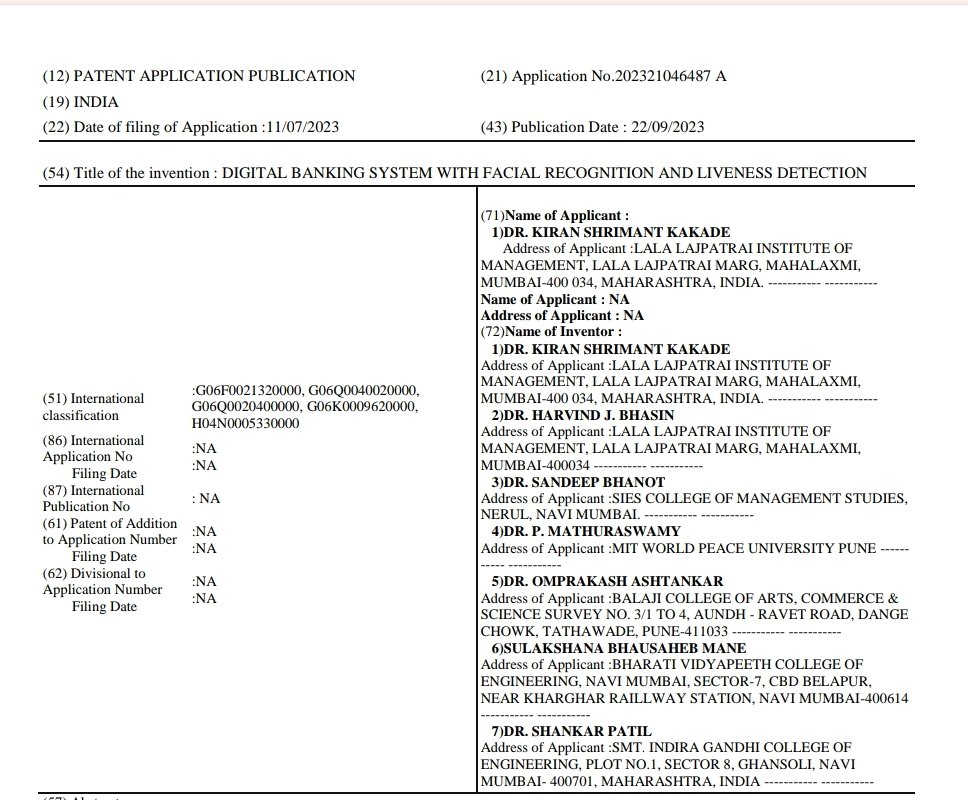
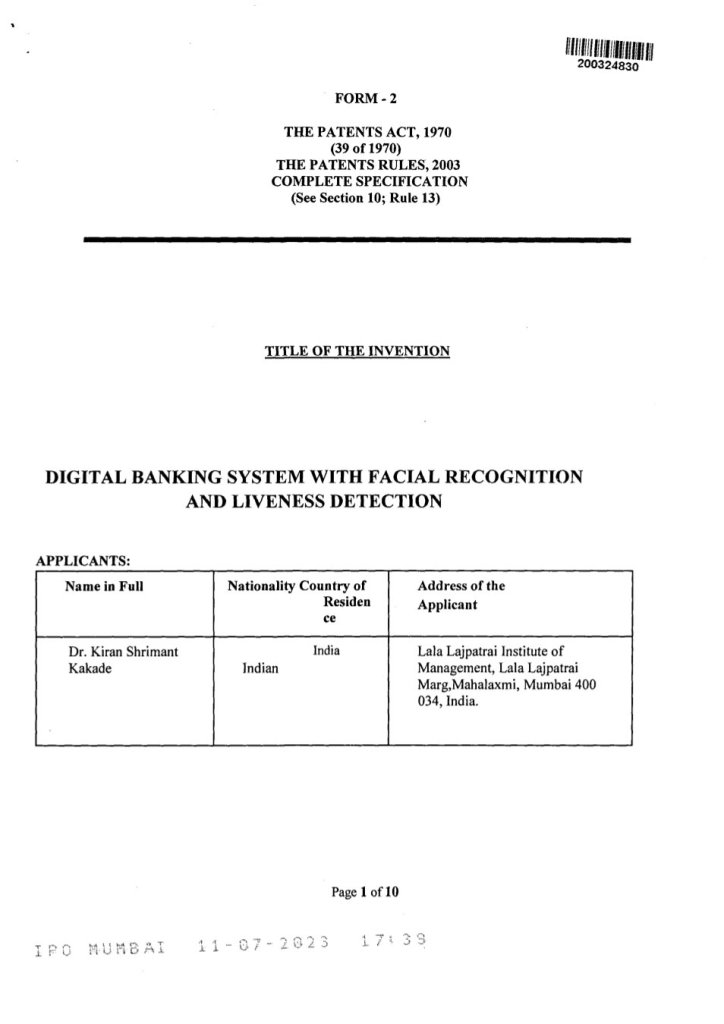
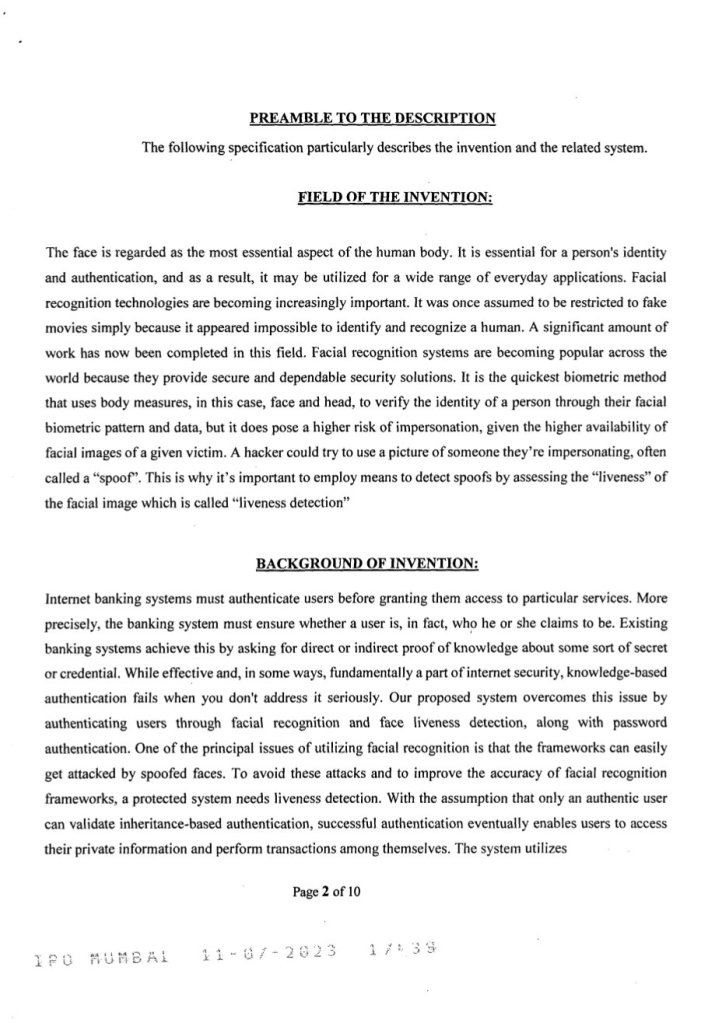
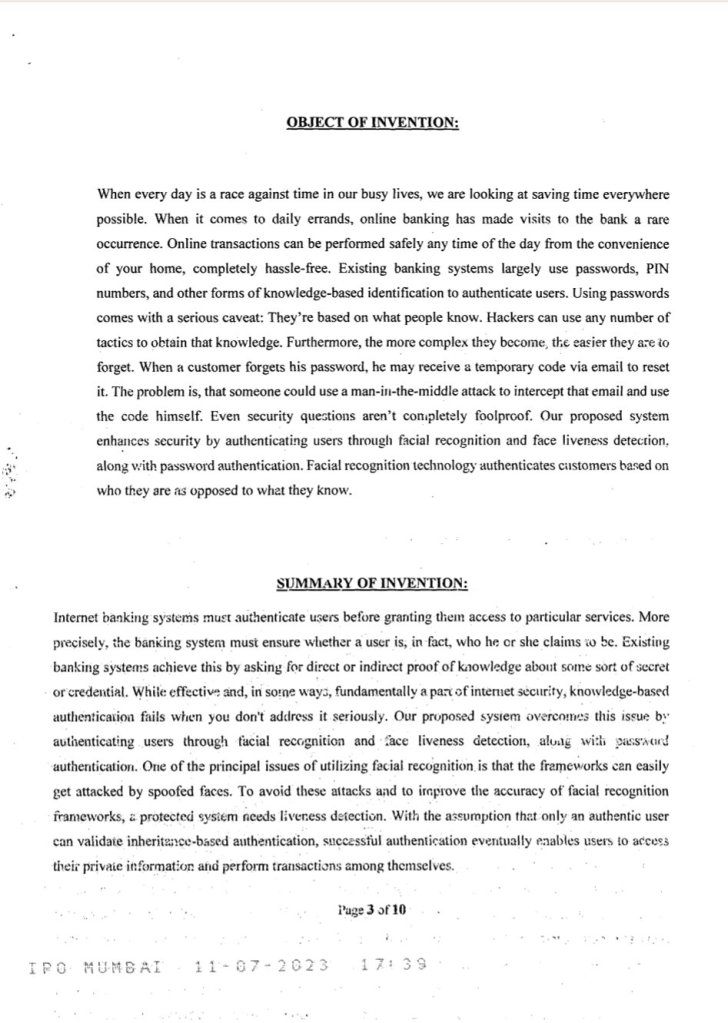
🎉 Exciting News! 🌟 I’m thrilled to announce the publication of my 7th patent: “DIGITAL BANKING SYSTEM WITH FACIAL RECOGNITION AND LIVENESS DETECTION.”

In today’s digital world, security is paramount, especially in internet banking. Traditional authentication methods have their limitations, but we’re taking a giant leap forward. 🚀

Our revolutionary system combines facial recognition, face liveness detection, and password authentication to ensure that users are who they claim to be. 🤳🔐 No more worries about spoofed faces or compromised security!

With this innovation, we’re transforming the way we secure online banking, making it safer and more efficient. 🛡️💰

I’m incredibly proud of this achievement and excited about the positive impact it will have on digital finance. Stay tuned for more updates on the future of banking security! 🌐💼 #DigitalBanking #Innovation #SecurityMatters

Title: India-Canada Dispute and Its Impact on World Politics by Dr Kiran Kakade

Image Source:- https://www.google.com/imgres

Introduction:

The ongoing dispute between India and Canada has taken center stage in recent months, raising concerns about its potential ramifications on trade relations and Canada’s inclusion in Indo-Pacific institutions. This diplomatic standoff emerged following Canadian Prime Minister Justin Trudeau’s accusations of Indian involvement in the death of Hardeep Singh Nijjar, a Canadian citizen and Khalistani terrorist. In this blog, we will delve into the key aspects of this dispute and explore its implications on global politics.

The Accusations and Response:

The disagreement between India and Canada reached a critical point when Prime Minister Trudeau voiced suspicions regarding India’s involvement in the death of Nijjar, which occurred in British Columbia on June 18. India swiftly dismissed these accusations as “absurd” and “motivated.” In retaliation, India expelled a senior Canadian diplomat, escalating tensions between the two nations.

Trade Implications:

One of the immediate consequences of this dispute is its potential impact on trade relations. Negotiations for the Early Progress Trade Agreement (EPTA) between Canada and India have been put on hold. Both countries have announced the suspension of trade talks, with Canadian Trade Minister Mary Ng postponing a planned trade mission to New Delhi indefinitely. This disruption in trade negotiations could have detrimental effects on economic ties between Canada and India.

Immigration Concerns:

Another critical aspect to consider is the flow of Indian immigrants to Canada. Indian immigrants constitute nearly one in five of all recent immigrants to Canada, contributing significantly to the country’s population growth. A deterioration in relations with India could result in a reduction of Indian immigration to Canada, potentially impacting the nation’s demographic landscape.

Impact on Indo-Pacific Institutions:

Beyond trade and immigration, this dispute could hinder Canada’s aspirations to join the network of Indo-Pacific institutions. Regional allies may be cautious about angering the Indian government, and India itself could block Canadian membership in certain groups due to its influence and power in the region. Canada’s ability to strengthen its position in the Indo-Pacific could be hampered by this diplomatic rift.

Conclusion:

The India-Canada dispute, fueled by accusations and diplomatic actions, has the potential to disrupt trade relations, impact immigration patterns, and hinder Canada’s ambitions in Indo-Pacific institutions. As both nations navigate the complexities of this dispute, the world watches closely, recognizing the broader implications it holds for global politics and alliances in an ever-changing geopolitical landscape.

Title: “Harnessing Positive Energy in the Digital Age: The Power of the Law of Attraction” by Dr Kiran Kakade

Source:- https://annamarkarova.medium.com

In today’s rapidly evolving digital world, the exchange of positive energy through digital platforms has become a powerful force in shaping our lives. While the concept of the law of attraction has been met with skepticism and debate, its influence on our digital interactions cannot be denied. In this blog, we’ll explore how we can use digital platforms to harness and share positive energy, even in the face of scientific skepticism.

Understanding the Law of Attraction

The law of attraction is a belief rooted in New Thought spirituality, asserting that our thoughts, whether positive or negative, can manifest corresponding experiences in our lives. While it lacks empirical scientific evidence, many individuals find value in its principles. Advocates of the law of attraction often emphasize cognitive reframing techniques, affirmations, and creative visualization to replace negative thoughts with positive ones. The key idea is that by aligning our thoughts and emotions positively, we can attract positive experiences.

Digital Platforms as Catalysts for Positive Energy

  1. Social Media: Social media platforms are a primary channel for the exchange of positive energy. Sharing inspirational quotes, success stories, and acts of kindness can uplift and motivate others.
  2. Online Communities: Niche online communities centered around personal growth, spirituality, and positivity serve as digital spaces where individuals can connect, share their experiences, and support one another.
  3. Video Content: YouTube and other video-sharing platforms are filled with content that promotes positivity, self-improvement, and mindfulness. Videos on meditation, gratitude, and motivation can be potent sources of positive energy.
  4. Mental Health Apps: There is a growing market for mental health and wellness apps that use the principles of the law of attraction to help users develop a positive mindset, reduce stress, and boost self-esteem.

Practical Ways to Exchange Positive Energy Digitally

  1. Daily Affirmations: Posting daily affirmations on your social media or sharing them in online communities can inspire others to adopt a positive mindset.
  2. Live Streaming: Use live streaming on platforms like Instagram or Facebook to share your experiences, gratitude practices, or motivational talks in real-time.
  3. Collaborative Projects: Engage in collaborative digital projects that promote positivity. This could include creating a blog, podcast, or social media campaign focused on spreading optimism.
  4. Virtual Workshops: Host virtual workshops or webinars where you can teach others how to apply the principles of the law of attraction in their lives.

Addressing Skepticism

It’s important to acknowledge the skepticism surrounding the law of attraction, as it lacks scientific backing. However, while it may not have empirical evidence, many people have reported positive changes in their lives through its practices. Whether or not one believes in its metaphysical aspects, the focus on positivity, gratitude, and self-improvement can lead to a more fulfilling and optimistic life.

In conclusion, the digital age has given us unprecedented opportunities to exchange positive energy with a global audience. The law of attraction, despite its controversy, offers valuable principles that can be applied in our digital interactions to create a more positive and empowering online community. By embracing these practices, we can contribute to a more optimistic and supportive digital world, regardless of the scientific debate surrounding them.

“Everything comes to us that belongs to us if we create the capacity to receive it.” – Rabindranath Tagore

Image Source:- https://images.app.goo.gl

Life is an intricate dance of opportunities, challenges, and experiences. Often, we find ourselves yearning for something – be it success, happiness, love, or personal growth – and wondering why it seems elusive. The secret lies in understanding that everything that belongs to us will come to us when we create the capacity to receive it. In this blog, we will explore this profound concept and learn how to harness its power to manifest our desires and dreams.

The Law of Attraction:

At the heart of this idea is the Law of Attraction. This universal law suggests that like attracts like, meaning the energy you emit into the world attracts similar energy back to you. In essence, you become a magnet for the things you focus on and the emotions you project. To receive what you desire, you must align your energy and intentions with your goals.

Self-Reflection and Clarity:

To create the capacity to receive what we desire, we must first gain clarity about our goals and aspirations. Self-reflection is a powerful tool in this journey. By taking the time to understand what we truly want and why, we set the stage for aligning our energy with our desires.

Positive Visualization:

Visualization is a potent technique to create the capacity for receiving. Imagine yourself already in possession of what you desire. Feel the emotions associated with it. Visualization programs your subconscious mind to believe in the possibility of achieving your goals, making it more likely to attract them into your life.

Cultivate a Growth Mindset:

A growth mindset is essential to expand your capacity to receive. Embrace challenges and setbacks as opportunities for growth. When you view obstacles as stepping stones on your path, you open yourself up to the lessons and experiences needed to reach your goals.

Gratitude and Appreciation:

Expressing gratitude for what you already have creates a positive flow of energy. It sends a message to the universe that you are appreciative and ready to receive more. The more you appreciate, the more you’ll attract.

Taking Inspired Action:

Creating the capacity to receive isn’t just about wishing and waiting. It involves taking inspired action toward your goals. Opportunities often present themselves when you’re actively working toward your dreams.

Letting Go of Resistance:

Resistance, often born from fear, doubt, or negative beliefs, can block the flow of what you desire. Practice letting go of these limiting beliefs and trust that the universe is conspiring to bring you what’s meant for you.

Conclusion:

Everything comes to us that belongs to us when we create the capacity to receive it. This powerful truth invites us to take responsibility for our thoughts, emotions, and actions. By aligning our energy with our desires, cultivating a growth mindset, and expressing gratitude, we become magnets for the opportunities and experiences that lead us toward our goals. So, embrace the journey, have faith in your path, and remember that you have the power to create the life you desire.

Title: The Crucial Role of a Strong Intelligence Agency in Safeguarding a Nation’s Sovereignty Abroad

Introduction

In an interconnected world where boundaries are increasingly porous and threats come in various forms, a nation’s sovereignty is a cornerstone of its identity and security. While military might and diplomatic prowess are essential, a strong and intelligent agency plays a pivotal role in safeguarding a country’s sovereignty, especially on foreign soil. In this blog, we will delve into the importance of a robust intelligence agency in protecting a nation’s sovereignty in foreign lands.

Gathering Critical Information

Intelligence agencies are tasked with gathering vital information about foreign governments, organizations, and individuals that may pose a threat or influence a nation’s interests. This information ranges from political developments and military activities to economic policies and technological advancements. By staying ahead in the intelligence game, a nation can make informed decisions to protect its sovereignty.

Counterterrorism and National Security

One of the primary functions of an intelligence agency is to counter terrorism and safeguard national security. Terrorist organizations often operate across borders, making it imperative for intelligence agencies to collaborate internationally to neutralize threats before they can undermine a nation’s sovereignty. Timely and accurate intelligence can help prevent terrorist attacks and maintain stability.

Protecting Economic Interests

Economic espionage is a growing concern in the global arena. Foreign actors may attempt to steal intellectual property, trade secrets, or engage in economic sabotage that threatens a nation’s economic sovereignty. Intelligence agencies play a role in identifying and countering these threats, ensuring the protection of a country’s economic interests.

Maintaining Diplomatic Leverage

Diplomacy and intelligence often go hand in hand. An intelligence agency can provide valuable insights into the intentions and capabilities of foreign nations, which can be leveraged during diplomatic negotiations. This intelligence advantage enhances a nation’s ability to protect its interests and sovereignty in the complex web of international relations.

Cybersecurity and Digital Sovereignty

In today’s digital age, cybersecurity is a critical component of sovereignty. Intelligence agencies are at the forefront of identifying cyber threats from foreign state actors, hacktivists, and criminal organizations. By thwarting cyberattacks and ensuring the integrity of critical digital infrastructure, intelligence agencies help preserve a nation’s digital sovereignty.

Crisis Management and Response

Intelligence agencies play a crucial role in crisis management and response, whether it’s a natural disaster or a geopolitical crisis. Timely intelligence can help a nation prepare for and respond to emergencies, safeguarding the lives of its citizens and its standing on the global stage.

Strategic Alliances and Cooperation

To protect its sovereignty effectively, a nation’s intelligence agency often relies on cooperation with foreign counterparts. Sharing intelligence with allies enhances a country’s security posture and bolsters its diplomatic efforts. Strong relationships with other nations’ intelligence agencies are a valuable asset in safeguarding sovereignty abroad.

Conclusion

A strong intelligence agency is not just a tool for surveillance; it is a shield that protects a nation’s sovereignty on foreign soil. In an era of complex geopolitical challenges and global interconnectedness, the role of intelligence agencies has become more critical than ever. By gathering critical information, countering threats, and facilitating diplomatic efforts, these agencies are essential in preserving a nation’s sovereignty and safeguarding its interests in a dynamic world.