
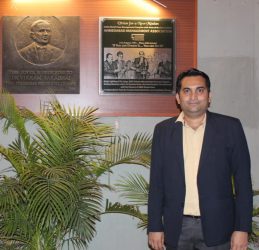
Dr. Kiran Kakade (Ph.D.,LL.M.,MCA,MBA(HR))
Be a reader, be a writer, be a problem solver.
| What is an After Action Review? It is a technique to evaluate and capture lessons learned upon the completion of a project. It allows project team members to discover for themselves what happened, why it happened, and how to sustain strengths and improve on weaknesses. It is structured as an informal discussion with the main team members of the project.An After Action Review can also be conducted at the completion of the project or any key milestones of a project that has a long duration.It is not a critique or a complaint session. AAR maximizes learning by offering a platform for leaders and members to honestly talk about the project. It is not a full-scale evaluation report. Why conduct After Action Review? The purpose of an After Action Review is to review the project outcomes vis-à-vis the intended outcomes of a project. The AAR is the basis for learning from project success and failures. It is the starting point for improvements in future projects. Team members can identify strengths and weaknesses and determine how to improve performance in the future by focusing on the desired outcome and describing specific observations.The project team can document the lessons learned and make it available to the rest of the organization to improve decision-making. How to conduct an After Action Review? An After Action Review can be conducted as soon as possible upon completion of project or major project milestones.Generally the following discussion questions are used to build consensus on the lessons learned:What was expected to happen?What actually happened? What went well and why?What can be improved and how?What are the lessons that can be used in the future?At the start of the AAR, the facilitator should review the purpose and sequence of the AAR to ensure that everyone understands what an AAR is and how it works. The introduction should also include some ground rules for conducting and managing the discussion. The role of the facilitator will be explained during the introduction.Some pointers for facilitators:It is permissible to disagree. Encourage members to provide honest opinionsUse open-ended questions to guide the discussionParaphrase and summarize key discussion pointsThe focus of the AAR is on learning i.e. identifying lessons learned rather than blaming individuals for wrong decisions or performance evaluation. Mistakes or poor decisions can be translated into learning opportunities.In order for this to happen, there must be an atmosphere of trust and openness.The discussion should ensure that specific issues are revealed, both positive and negative in nature. Skillful facilitation will ensure the AAR does not gloss over mistakes or weaknesses.In some projects, other stakeholders can provide useful insights and ideas to the review process. Before the review session, the facilitator or designated team member should consult with these outside stakeholders and then summarize the input for the AAR.The lessons learned are captured on a flip chart or electronically. This is dependent on who uses the information and how it is used. Flip charts are a convenient tool to make notes visible for all participating in the review and ensures a common understanding of and agreement to what has been discussed.Electronic capturing in the intranet enables reference later on and dissemination to relevant parties who are involved in similar projects. Who should conduct an After Action Review An independent facilitator can be used to conduct the AAR. A trained independent facilitator may be able to ensure participation from everyone. The facilitator will also be able to draw out insights and issues through probing questions.While an independent AAR facilitator could maintain objectivity throughout the review, it may be useful to enlist someone who is somewhat knowledgeable about the subject or topic of the review. That would minimize the learning curve and enable technical discussions to be carried out and recorded clearly.Alternatively, a project team member could facilitate the AAR. The team leader must ensure that all background materials are considered—reports, surveys, planning documents or other input. This will ensure that the AAR is complete, thorough, and appropriate |
| What is a Knowledge Cluster Throughout history, organizations have grouped together in various types of cluster, to be able to be more effective. Guilds, Societies, Associations, Networks etc continue to help support and develop their members. However, since the birth of the ‘Knowledge Economy’ there has been far more emphasis on the knowledge contained, developed and applied, within the organizations. There is much more interest in different types of Knowledge Network. The Knowledge Economy, and the primary knowledge management processes, in turn, have been newly enabled, in radical and fundamentally new ways, by communication, information, and collaborative working technologies, based on the Internet and World Wide Web. The term ‘Knowledge Cluster’ is a term given to a group that, as a result of coming together in this new way, create, innovate and disseminate new knowledge. In other words, different individuals, teams and organizations can now come together, virtually, on the Internet, to better communicate, collaborate, learn and share knowledge through the cluster. The term is used, for example, to represent a group of companies in the same industry sector e.g high technology knowledge cluster, biotechnology knowledge cluster. There are Regional Knowledge Clusters where groups of organizations come together, regardless of their size, around specific topics. Often, there is a high incidence of innovation centres linked to local Universities. At the center of the cluster, there is usually an R&D topic, and core public research institutions with high research potential. The system can also involves the participation of organizations and other groups from both inside and outside the locality or region. A Knowledge Cluster may be viewed as a type of Community of Practice (COP). A Knowledge Cluster is a more focused COP, normally with the aim of combining knowledge resources to create new innovative products and services and/or organize and compete in new ways, to win larger business contracts. Why use this tool? There are many good reasons to form and/or join a Knowledge Cluster. But, of special importance, is the use of Knowledge Clusters for small and medium sized organizations (SME’s). This enables them to gain access to, and participate in, new knowledge networks with new knowledge resources. SME’s can now communicate, collaborate, learn, share, and apply their knowledge much faster, and at a much higher quality, than ever before. Most importantly, SME’s are able to create a Knowledge Cluster that, in many ways, can effectively compete with large Organizations. For example, small regional legal firms have formed successful national legal Knowledge Clusters. As a result of the Internet, they can maintain lower operating overheads, compared to the higher overheads of large organizations. As a result, they are quite often more price competitive, more resource flexible, and often are able to respond and act much faster than larger organizations. But also, even very large organizations have formed collaborative knowledge clusters to produce products and services that would be impossible to produce individually. A good example of this is Airbus Industries who formed a collaborative knowledge cluster in the Aerospace Industry to build the fundamentally new Airbus 380. Furthermore, Knowledge Clusters can stimulate Regional development. More specifically for example, the Advancement Center for Science & Technology (NOASTEC) Knowledge Cluster Headquarters in Japan, highlight the strategic importance of Knowledge Clusters and refer to them as human networks that will promote beneficial feedback between the “seeds” of innovative technology possessed by public research organizations and other groups forming the core, and corporate needs for practicality. This creates a chain reaction of technical innovation, which eventually results in the creation of new industries. By expanding the regions which have this sort of system, it is possible to achieve world-class technical innovation. Migakiya Syndicate, a local consortium consisting of over forty small metal-polishing companies at countryside in Japan, is another example of Knowledge Cluster. The small companies used to produce most of the metallic western tableware in Japan, but the industry has faced serious decline over the last two decades. Managers of the companies started discussions along with representatives from the Chamber of Commerce and Industry to find the way to revive the structurally-depressed industry. They then realized that their core skills and knowledge was not manufacturing tableware but polishing anything – they had strong technical skills. Based upon the finding, they formed the knowledge cluster to market their capability of polishing, receive orders from any industries, and work together on the orders. The knowledge cluster received over 150 million yen orders in three years, and the once-declining industry achieved its revitalization through sharing and improving their core knowledge and skills. So SME’s can now both compete with larger organizations, through forming competitive knowledge clusters, and have more opportunity to join the value chain of large collaborative knowledge clusters, regionally and internationally. Thus, knowledge Clusters are considered to be the new 21st Century model for competitive knowledge driven organizations. How to use Knowledge Clusters Step 1 Become aware of the knowledge clusters that exist in your industry sector and join them. Contact your local University for Knowledge Cluster initiatives. If none exist, then consider forming a new knowledge cluster. eg a ‘Ceramics knowledge cluster.’ In any case, understanding key knowledge areas for the organization is one of the most critical successful factors. Step 2 Become competent in participating in Web based collaborative knowledge working. Consider developing the competencies for effective personal and team virtual knowledge working. Step 3 Understand, and become active in the knowledge cluster, by applying the principles of working in a Community of Practice. Especially, building trust relationship with other players is essential for the successful knowledge clusters. Step 4 Consider knowledge clusters as a key strategic resource and competitive tool within your business strategy. |
| What is Communities of Practice? Origin: Dr. Etienne Wenger and his team of social scientists were one of the early pioneers to establish the concept of Communities of Practice (COPs) through their study on apprenticeship as a learning model. They found that complex set of social relationships in apprenticeship that enabled learning effectively and named them Communities of Practice. COPs became one of the central focuses of knowledge management after their first book on COPs, Communities of Practice –Learning, Meaning, and Identity, was published in 1998. Since then, COPs have been played an important role in the context of KM especially for sharing common knowledge beyond formal divisions/departments, and, indeed, as a tool to break down the barriers of knowledge flow across organizations. Definition: COPs are groups of people who share a concern or a passion for something they do, and learn how to do it better as they interact regularly. In the context of knowledge management, COPs are formed –intentionally or spontaneously- to share and create common skills, knowledge and expertise among employees. Characteristics: COPs can exist in a division or department in an organization, across departments in an organization, or beyond boundaries of multiple organizations, depending upon its objective. COPs are usually for sharing and developing common skills, knowledge and expertise such as group of engineers working on similar problems, a network of surgeons exploring novel techniques, or a gathering of first-time managers helping each other. There are also some COPs that focus on generating new knowledge and innovation. The size of COPs varies from 2-3 people to thousands of people, and members of expertise could be either homogeneous or heterogeneous. For example, a COP for effective/efficient problem solving on a certain technological domain would have engineers in the same area, whereas a COP for improving quality of a certain product would have members from various areas such as developers, marketers, and maintenance staff. The following three elements are crucial when one designs COPs. ü The domain: A community of practice is not merely a club of friends or a network of connections between people. It has an identity defined by a shared domain of interest. Membership therefore implies a commitment to the domain, and therefore a shared competence that distinguishes members from other people. The domain is not necessarily something recognized as “expertise” outside the community. They value their collective competence and learn from each other, even though few people outside the group may value or even recognize their expertise.ü The community: In pursuing their interest in their domain, members engage in joint activities and discussions, help each other, and share information. A Platform that enables such activities is essential for a COP. It is based upon relationship of trust among members that encourage frequent interactions to share and develop common knowledge.ü The practice: COPs are not merely a community of interest–people who like certain kinds of movies, for instance. Members of a community of practice are practitioners. They develop a shared repertoire of resources: experiences, stories, tools, ways of addressing recurring problems—in short a shared practice. This takes time and sustained interaction. It is the combination of these three elements that constitutes a community of practice. And it is by developing these three elements in parallel that one cultivates such a community. Why COPs for SMEs?COPs could have various reasons for SMEs to apply, but the simplest and strongest reason is probably to effectively share and develop skills and knowledge among employees without huge investment, if COPs are designed well. As described in the next chapter, COPs usually does not require significant investment; you can form a COP as long as you have a certain domain and people who have passion on the domain. This is quite appealing for SMEs who usually cannot afford expensive skill development programs for employees. Many companies have COPs in which the company encourage participants help each other; for instance, one raises his/her facing problem and then another advises or shares his/her own experience. Other COPs merely give opportunities to exchange best-practices on a common subject.In addition, relationship of trust among employees nurtured through COPs would contribute increase employee’s satisfaction and eventually retain valuable workforce that are often key issues for SMEs. You can even form COPs to share common skills and knowledge across your company: among workers at various SMEs to create Knowledge Cluster. Sometimes, COPs are also formed for accelerating innovation. In this case, people from various backgrounds get together to discuss and experiment certain ideas. How to nurture COPs?Because COPs are essentially gathering of people, vigor among COP particiapnts is very important. However, we cannot force people actively involve or design active communities artificially, indeed. As a practical matter, the largest reason COPs fail is lack of vigor to attract and keep participants actively involved. Many successful COPs, instead, nurture the seedbed of activities through artful and flexible design although COPs themselves are spontaneous and organic. The following step shows basic principles of designing and sustaining active COPs. 1. Find opportunities around strong needs: COPs usually work well when strong need for sharing common interest/passion/skills/knowledge exists: for example, common technological expertise among maintenance engineers, or success/failure experiences of designing a common machine among designers. You have to find such key opportunities to connect people and share knowledge that can make a difference. In other words, this is pre-setting of the domain of the COP that attracts people with the common interest/needs. 2. Invite passionate people and take in their thoughts: To design a good COP, you need key people (2-3 are quite enough to start) who play a role of steward in the COP. He or she is usually very passionate (and often knowledgeable) on the subject that is a central focus of the COP. Then you discuss the COP design with them with the following focuses:- What is the strategic context of the COP?- What is the key knowledge to share and create?- Who are potential participants benefiting from and contributing to the COP?- What are key activities that sustain vigor of the COP?- Where can community members physically (and virtually) interact?- What are key values for both the organization and participants?These key questions are closely connected to the three elements of COPs: domain, community, and activities. 3. Launch the COP with socializing events: Development of any COP always start at people’s social relationship. If you don’t build trust relationship among participants, the COP will not work even it has rationale for sharing common knowledge. One easy way is to use existing social network, which is often becomes a core group of the COP, and expand it through face-to-face meeting. 4. Create results through activities and share the stories: After launching the COP, you need key activities that sustain vigor as well as produce results of the community. The activities vary: could be codifying tacit key knowledge shared among veteran workers or sharing good experience through storytelling sessions. The important part is you need to establish the first small result from the COP that can prove the value of the COP. Then you can expand the activities and attract more people by telling the success story. Key EnablersKey enablers of COPs depend upon the three elements of COPs: domain, community, and activities. For instance, if one of the key activities is to share success/failure real experience among engineers across various SMEs, probably passionate stewards and physical space for gathering together become very important. If you want to share daily activities among sales managers in different branches, you may need collaborative virtual workspaces. The followings are distinctive enablers for COPs.– Stewards: Key people who have passionate for the area and are willing to take care of the COP are the most important component of any COPs.– Incentives: In general, you do not need artificial incentive such as money or promotion. Instead, spontaneous motivation for continuous participation is essentially needed to sustain active COPs. Answers to problems participants face, growth opportunities, or just intellectual fun would be important.– Physical/virtual spaces: Since COPs are social, they need spaces where members can interact. It does not necessarily mean that COPs require exclusive rooms. It could be even virtual space if it can meet participants’ needs. Important aspect is that the center of COPs is human relationship built upon trust, and COPs require spaces where they can nurture such relationship.– Information Technology: Some COPs do not require any IT, whereas IT is key platform to share knowledge and do key activities for other COPs. Again, it depends on the three elements of COPs, domain, community, and activities.– Management’s support: If a COP has strong strategic purposes for an organization, management’s support is an important enabler. The support not only allows participants to understand the importance of COP activities but gives sufficient resources. If a COP has more spontaneous nature, too strong management support sometimes even harms motivation of members as they might think it is too controlled. In this case, the best support from management would be “hidden sponsorship” that accepts activities of COPs. |
What is brainstorming?
Brainstorming is a simple way of helping a group of people to generate new and unusual ideas. The process is actually split into two phrase: divergence and convergence. During the divergent phase everyone agrees to delay their judgement. In other words, all ideas will be treated as valid. During the convergent phrase, the participants use their judgement, but do so in a ‘positive’ manner – looking for what they like about the ideas, before finding flaws.
Why use this tool?
Brainstorming is appropriate whenever you need to generate a range of options that go beyond the immediately obvious set. Examples might include:
Brainstorms can be organised very quickly, and require very little in the way of material. The instructions (below) describe one method, but the tool is actually very resilient and the basic principles can be applied in many different ways.
How to brainstorm
Guidelines for brainstormingDivergent stage:
Convergent stage:
When to use ………… (and when not)
Useful when there is a need to generate a relatively large number of options or ideas. It is not appropriate when a problem is known to have a single correct solution that requires careful analysis to determine. For example, brainstorming about possible solutions to a mathematical problem would probably be a poor use of time.
Where to use ………….
Can be used in almost any situation where a group (2 or more people) can find a space to work together. This can be as simple as a shared desk with some blank pieces of paper.
Knowledge Management
 Dr. Kiran Kakade (Ph.D.,LL.M.,MCA,MBA(HR))