Title: “From Darkness to Light: The Uttrakhand Tunnel Rescue Saga” by Dr. Kiran Kakade

Source: https://images.app.goo.gl/QtpmP8AMdEN7D4yn6

In the picturesque expanse of Uttarkashi, where towering mountains meet the sky, a tragedy unfolded, turning a construction site into a battleground for survival. On November 12, the under-construction Silkyara tunnel collapsed, entombing 41 workers and plunging the nation into a 17-day ordeal of nightmares and unwavering hope.

A Race Against Time

National Disaster Response Force (NDRF) personnel, a beacon of hope in times of crisis, converged with other rescue operatives at the site, standing united against the formidable challenge nature had unleashed. The collapsed tunnel, a stark symbol of adversity, demanded a unique approach to rescue.

Rat-Hole Miners: Heroes in Darkness

In an awe-inspiring display of human ingenuity, a team of five-six rat-hole miners took center stage. Hailing from the coal mines of Meghalaya, these miners, armed with hand-held implements, carved a path through the rubble. Their expertise in navigating narrow pits, a skill honed in the depths of Meghalaya’s mines, became the beacon of hope for those trapped below.

The Breakthrough: A Ray of Light

On a Tuesday afternoon, the deafening silence was shattered by a breakthrough. At 1 pm, an 800 mm diameter pipe breached the darkness, becoming the lifeline for the trapped workers. The message, relayed by a source familiar with the development, brought a collective sigh of relief — a few hours now stood between the workers and freedom.

Rat-Hole Mining Unveiled

Rat-hole mining, a practice mostly confined to the coal mines of Meghalaya, took center stage in Uttarakhand’s rescue mission. Miners, suspended on bamboo ladders, delved into narrow pits, showcasing a form of mining that extends beyond coal extraction — it became a lifeline for those awaiting rescue.

The Tunnel’s Promise

The collapsed tunnel, once a symbol of progress, held the promise of connecting Silkyara with Barkot. This 4.5 km-long passage aimed to eliminate a 26 km-long, hour-long journey through treacherous terrain, heralding a new era of swift connectivity. Its completion, vital for geopolitical reasons, would provide all-weather access to areas like Harsil near the India-China border.

The Mosaic of Workers

The diversity of India echoed in the composition of the trapped workers — 15 from Jharkhand, five each from Odisha and Bihar, eight from Uttar Pradesh, and others from West Bengal, Assam, Uttarakhand, and Himachal Pradesh. Each life held a story, now intertwined in this tale of rescue.

International Collaboration in Action

A symphony of efforts unfolded over 17 days, with international agencies, experts, and a multitude of Indian counterparts working tirelessly. The rescue operation became a testament to collaboration, transcending borders in the pursuit of a common goal — saving lives.

In the heart of darkness, where nightmares lingered, the Uttrakhand tunnel rescue emerged as a story of patience, hope, and the indomitable spirit of humanity. As the nation held its breath, the tunnel transformed from a site of despair into a testament to the triumph of the human spirit over adversity.

Title: Nurturing Leadership: Striking the Balance in a Dynamic Business Environment by Dr. Kiran Kakade

In the fast-paced world of leadership, finding the delicate balance between assertiveness and collaboration is crucial, especially for those newly promoted to managerial roles. As you embark on this journey, it’s essential to cultivate a leadership style that fosters teamwork, acknowledges individual strengths, and motivates your team towards shared goals.

Understanding Your Team

Knowing your employees’ strengths and weaknesses is not just good for interpersonal relationships; it’s a strategic move for business success. Utilize this knowledge to assign tasks aligned with their expertise, making your team more self-sufficient and productive. Remember, you’re managing a team, not just a group of individuals.

Empowering Through Engagement

Engage your workers by granting them a share of power in projects. This not only provides a sense of direction and purpose but also motivates them. Express appreciation for their efforts and trust in their dedication. In managing people, building trust is as important as achieving results.

Setting Clear Expectations

Minimize room for conflicts by setting achievable goals and providing clear directions. Regular meetings for feedback and goal customization help in aligning individual objectives with broader organizational goals. A manager’s understanding of their team’s capabilities is instrumental in effective task delegation.

Building Relationships, Not Just Friendships

Show your employees that you care about them, building professional relationships that empower difficult decisions. Listening to diverse opinions ensures an open communication channel. This professional rapport becomes vital when making tough decisions like delegating responsibilities or addressing performance issues.

The Ever-Evolving Business Landscape

In today’s dynamic business landscape, a diverse set of managerial profiles is crucial for sustained success. Visionaries encourage innovation, data analysts ensure informed decision-making, strategic planners drive precision, and people developers nurture talent. The integration of these archetypes forms the bedrock of effective workforce management.

Strategic Imperative for Success

As businesses navigate complexities, recognizing and incorporating diverse management profiles is not just a choice but a strategic imperative. This harmonious integration fosters innovation, resilience, and sustained success. In conclusion, nurturing leadership that balances assertiveness with collaboration is key to thriving in the ever-evolving corporate world.

Title: Cultivating Excellence: The Essential Pillars of Effective Workforce Management by Dr. Kiran Kakade

Introduction

In the ever-evolving landscape of business, the cornerstone of a prosperous organization lies in its adeptness at effectively managing its workforce. Businesses striving for sustained employee motivation and seamless operations heavily depend on competent managers for guidance. While there’s no universally applicable method for identifying the ideal manager, a judicious strategic move is to diversify management profiles to cater to varying business needs.

1. Visionaries of Innovation

In today’s corporate world, individuals with innovative thinking and problem-solving skills play a pivotal role. Visionaries, encourage employees to think beyond boundaries, turning routine tasks into exceptional opportunities.

2. Cultivators of Company Culture

Profit margins are crucial, but so is the significance of company culture and employee well-being. Compassionate caretakers, characterized by kindness and understanding, foster strong connections within the company, contributing to heightened productivity and loyalty. Manager should emphasizes their role in developing a positive workplace culture, directly impacting the company’s success.

3. Masters of Informed Decision-Making

In the era of big data, making decisions is crucial. Data Analysis excel at leveraging data to shape strategies and streamline processes. Their emphasis on evidence-based decision-making ensures the company remains competitive by staying abreast of customer preferences and market developments.

4. Architects of Long-Term Success

Crafting a meticulous plan is as crucial to success as having a clear vision. Strategic planners establish precise goals, devise actionable plans, and ensure the company is on the right trajectory. Their ability to coordinate efforts across teams positions the company to capitalize on new opportunities and adapt to market changes.

5. Nurturers of Talent

The most valuable asset for any organization is its workforce. People developers are dedicated to nurturing talent and facilitating career advancement. They cultivate an environment that supports continuous growth and development, recognizing the significance of ongoing education. Integrating people developers into the managerial team is seen as a strategic move to foster a skilled and motivated workforce ready to embrace new challenges.

In conclusion, a harmonious integration of these managerial archetypes forms the bedrock for effective workforce management. As businesses navigate the complexities of the corporate landscape, recognizing and incorporating diverse management profiles is not just a choice but a strategic imperative for fostering innovation, resilience, and sustained success.

Publication Announcement

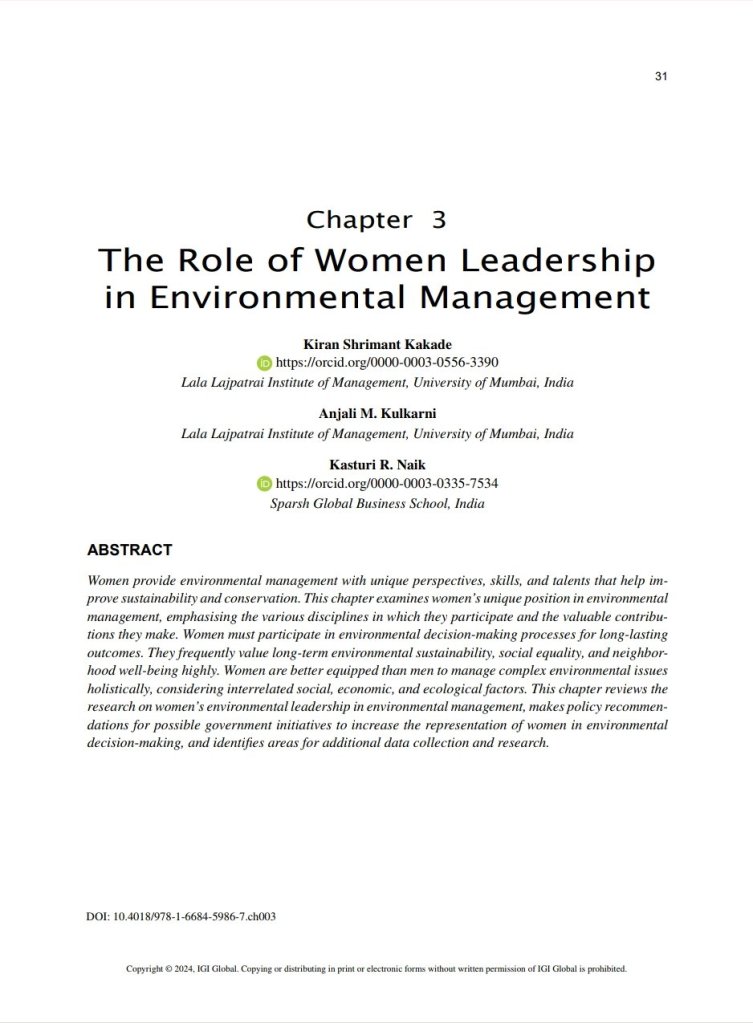
I am delighted to announce the publication of the chapter title

“The Role of Women Leadership in Environmental Management”

in the International book on “Opportunities and challenges for Women Leaders in Environmental Management”

https://www.igi-global.com/chapter/women-leadership-in-environment-management/334285

Title: “Revisiting the Pillars of Justice, Liberty, and Equality: Indian Constitution in Today’s Context” by Dr. Kiran Kakade

Introduction:


In the rich tapestry of India’s democratic landscape, the pillars of justice, liberty, and equality, enshrined in the Indian Constitution, stand as timeless beacons. As we navigate the complexities of the modern world, it becomes imperative to reflect on how these principles resonate in today’s context.

Justice:


The preamble of the Indian Constitution begins with the solemn commitment to secure justice, social, economic, and political. In today’s context, the pursuit of justice involves addressing evolving socio-economic challenges. From ensuring access to legal aid to promoting speedy and efficient trials, the concept of justice adapts to the changing needs of society.

Liberty:


The notion of liberty encapsulates the freedom of thought, expression, belief, faith, and worship. In the age of information, digital liberties have gained prominence. Balancing individual freedom with cybersecurity and privacy concerns presents a contemporary challenge that requires thoughtful legislation and robust institutions.

Equality:


The commitment to equality strives to eliminate discrimination and promote equal opportunities. In the present scenario, addressing issues like gender inequality, caste-based disparities, and economic stratification becomes paramount. Policies that bridge gaps and foster inclusivity contribute to the realization of true equality.

Challenges in Today’s Context:

  1. Technological Advancements: How do we safeguard constitutional values in the era of rapidly advancing technology, ensuring that innovation aligns with principles of justice, liberty, and equality?
  2. Social Justice: Addressing contemporary issues like environmental justice, LGBTQ+ rights, and the rights of indigenous communities requires a nuanced understanding of evolving societal norms.
  3. Global Interconnectedness: In an interconnected world, how can India’s constitutional ideals contribute to global justice, liberty, and equality? Exploring diplomatic avenues and international cooperation is crucial.

Conclusion:


As we navigate the complexities of the 21st century, the Indian Constitution remains a living document that evolves with the times. Nurturing justice, liberty, and equality requires a collective commitment to upholding the values that form the bedrock of our democracy. In doing so, we ensure that the constitutional principles envisioned by our forebearers continue to guide and inspire generations to come.

Title: “Management Resilience: Unpacking India’s World Cup Final 2023 Defeat and Australia’s Bounce Back ” by Dr. Kiran Kakade

Source: https://images.app.goo.gl/5CeneSEj2FCGEKsn9

Introduction:

In the pulsating drama of the World Cup final in 2023, India’s Men in Blue found themselves under immense pressure. The cricketing world watched as Australia orchestrated a remarkable comeback, starting their campaign with a couple of losses and ultimately clinching the title. Among the standout performers was Glenn Maxwell, whose epic contributions played a pivotal role in Australia’s resurgence. Beyond the cricketing spectacle, the events of that final offer profound management lessons that extend far beyond the cricket field.

  1. Handling Pressure with Grace: The very nature of sports, much like the corporate world, demands resilience in the face of pressure. How a team, or an organization, handles such moments speaks volumes about its character. In the world of management, it’s crucial to instill a culture that equips teams to navigate pressure with grace, maintaining focus and composure in challenging times.
  2. Bouncing Back from Setbacks:Australia’s journey in the World Cup 2023 is a testament to the power of bouncing back from setbacks. Starting with a couple of losses, the team did not falter but instead used those experiences to fuel their resurgence. Managers can draw a valuable lesson here – setbacks are not the end, but rather opportunities for growth. Encouraging teams to learn from failures and come back stronger is a hallmark of effective leadership.
  3. Individual Brilliance and Team Collaboration:Glenn Maxwell’s epic performances were a highlight of Australia’s turnaround. While individual brilliance is crucial, it’s equally important to foster a collaborative team environment. In management, recognizing and leveraging individual strengths while ensuring seamless collaboration is key to achieving collective success. Maxwell’s heroics underscore the significance of balancing individual brilliance with a cohesive team strategy.
  4. Strategic Adaptability:Cricket, like the business landscape, is dynamic and unpredictable. Successful teams, whether in sports or business, exhibit strategic adaptability. Australia’s ability to adjust their game plan, learn from early losses, and adapt to different challenges is a valuable lesson. Managers should encourage a culture of flexibility and adaptability, empowering their teams to evolve strategies based on changing circumstances.
  5. Consistency vs. Performance on the Day: India’s path to the final was marked by consistent performances, winning back-to-back matches. However, the final itself posed a different challenge. It was a stark reminder that past performances, no matter how impressive, do not guarantee success on a given day. In management, teams must understand that the game can change, and strategies need to be adapted based on the current circumstances. The lesson here is that success is not just about the journey but how well you perform when it matters the most.
  6. Day-of-Play Mentality:The final management lesson from the cricketing saga is the emphasis on the day-of-play mentality. Regardless of past victories or defeats, the focus should always be on the current game. Australia’s victory in the final and India’s consistent performances in the lead-up underline that success is decided by how well you play on that day. In the corporate world, this translates to being present, adaptable, and giving your best in the current situation, rather than relying solely on past laurels.

Conclusion:

The World Cup final of 2023 wasn’t just about cricket; it was a canvas of m weanagement lessons painted with pressure, resilience, and the unpredictability of the game. As the Men in Blue faced defeat and Australia scripted a remarkable comeback, the business world can draw profound insights. Whether it’s handling pressure, bouncing back from setbacks, understanding the balance between consistency and day-of-play mentality, these lessons are timeless. In the end, as in cricket, success in business is about how well you perform when the spotlight is on, irrespective of the journey that led you there.

📢 Announcement: New Research Paper Published!

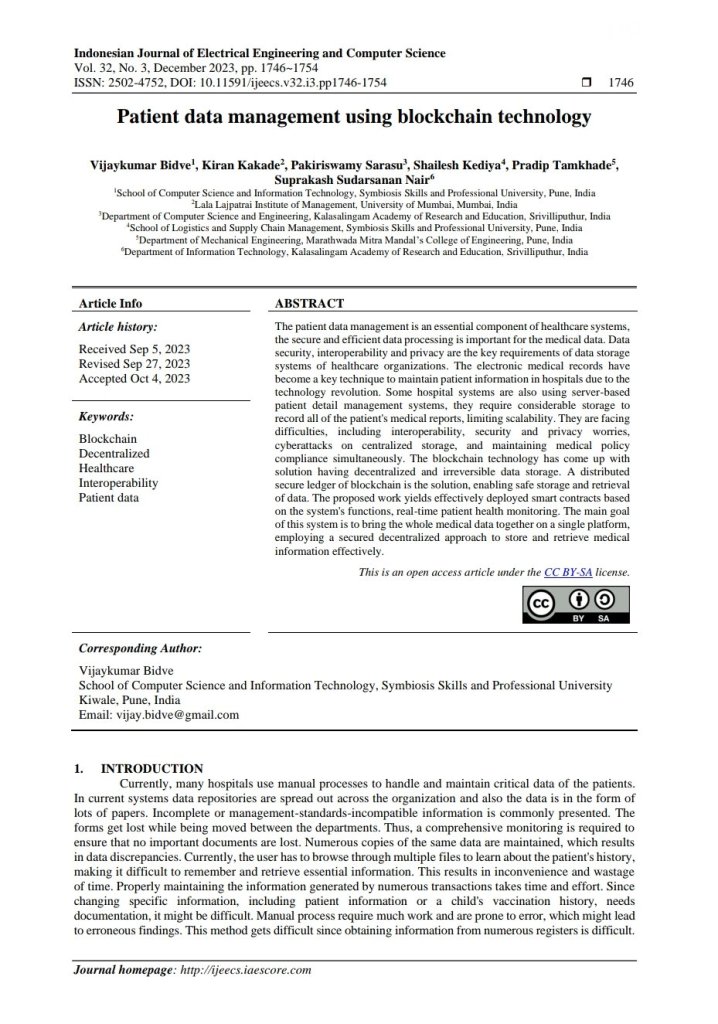
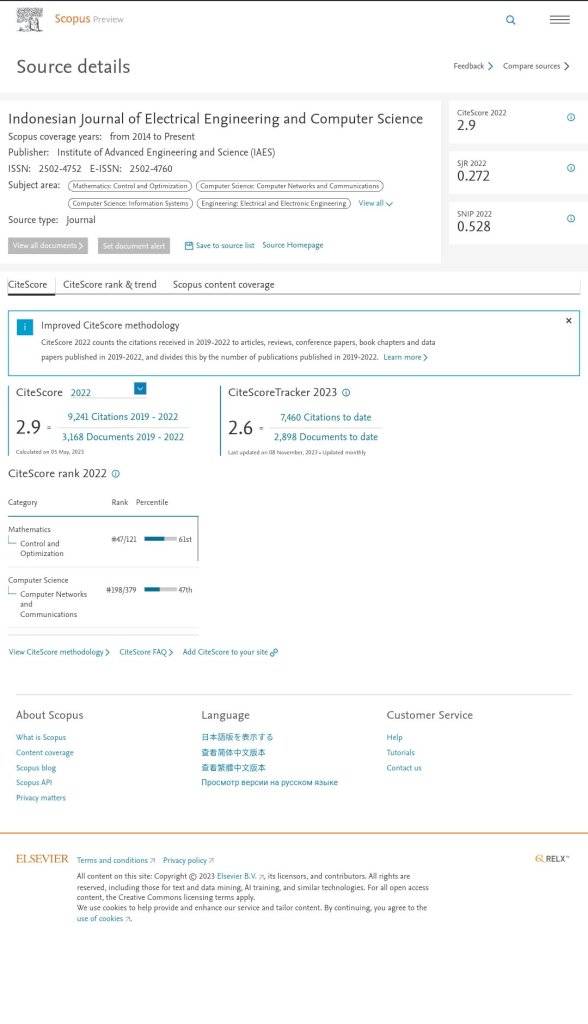
We are thrilled to announce the publication of a groundbreaking research paper titled “Patient Data Management using Blockchain Technology” in the Scopus Indexed (Q3) Indonesian Journal of Electrical Engineering and Computer Science.

📚 Journal Details:

🔗 Access the Full Paper:
Read the paper here

This research delves into the cutting-edge realm of patient data management, leveraging the power of blockchain technology. We invite you to explore the insightful findings and contribute to the ongoing discourse in the field.

Congratulations to the authors for their remarkable contribution!

ResearchPaper #BlockchainTechnology #DataManagement #IJEECS #ScopusIndexed

Title: Navigating the Professional Landscape: 5 Essential Skills for Success by Dr. Kiran Kakade

Source: https://images.app.goo.gl/51KxgrmKb3QChndp7

In the intricate tapestry of professional life, success is often woven through a combination of skills that extend beyond mere technical expertise. Let’s explore five indispensable skills that can shape a pathway to triumph in your career.

1. Time Management Skills:
Time, a finite resource, holds the key to unlocking your professional potential. Effectively managing it can be a game-changer. Learn to prioritize tasks, set realistic goals, and allocate your time wisely to boost productivity and reduce stress. Crafting schedules, setting deadlines, and eliminating time-wasting activities are integral components. Striking a balance between work, personal life, and self-care requires discipline. As you master time management, watch as you achieve more in less time, paving the way for success.

2. Networking Skills:
Success isn’t a solo journey; it thrives on the relationships you cultivate. Networking transcends the exchange of business cards; it’s about forging genuine connections and nurturing mutually beneficial relationships. Invest time in building connections both personally and professionally. Attend industry events, engage socially, and leverage online platforms. Authentic interest, active listening, and a willingness to assist others lay the foundation for a robust network. Over time, this network can become a powerful catalyst for your success.

3. People Skills:
In the dynamic realm of professional interactions, people skills are the threads that weave success. Effective communication, empathy, and collaboration are paramount. Master the art of connecting with colleagues, clients, and superiors. Genuine human connection not only fosters a positive work environment but also opens doors to opportunities. A successful career is often built on the ability to navigate and nurture relationships.

4. Persuasion Skills:
The ability to articulate ideas persuasively is a formidable asset in the professional toolkit. Whether negotiating, presenting, or leading, honing persuasion skills can shape outcomes and propel success. Understand your audience, craft compelling narratives, and navigate the delicate art of convincing. A persuasive communicator has the ability to influence decisions and drive initiatives forward.

5. Empathetic Skills:
Emotional Intelligence (EI) forms the bedrock of empathetic skills, influencing relationships, decision-making, and overall well-being. Recognizing, understanding, and managing emotions, along with empathizing with others, are pivotal. High EI equips you to handle stress, communicate effectively, and navigate social situations with grace. Cultivating empathy contributes to a positive and collaborative workplace, establishing you as a leader who inspires loyalty.

As you embark on your professional journey, remember that success is a culmination of various skills. Incorporating these five pillars into your professional repertoire can not only enhance your capabilities but also pave the way for a fulfilling and triumphant career.

Title: Cricket, Religion, and Diplomacy: India and Pakistan’s Tit-for-Tat on the Pitch by Dr. Kiran Kakade

Source: https://images.app.goo.gl

Cricket has always been more than just a sport in the subcontinent. It’s a passion, a way of life, and, at times, a stage for diplomatic exchanges. In a recent twist of events, Pakistan’s Mohammad Rizwan made a significant century, but it was the dedication of his century to Gaza, Palestine, that set the stage for a complex diplomatic tit-for-tat between India and Pakistan.

Century with a Cause

Cricket centuries are usually celebrated for the skill and resilience they showcase, but Rizwan’s century against Sri Lanka was accompanied by a fervent dedication. He chose to dedicate his achievement to Gaza, Palestine, a region mired in political conflict and humanitarian struggles. This move injected religion and politics into cricket, igniting passionate debates.

Rizwan’s gesture was seen as an act of solidarity and compassion by some and as an unwarranted mixing of sports and politics by others. It triggered a series of events that transcended the cricketing arena.

Indirect Jabs and Teasing

In the following days, members of the Pakistan cricket team seemed to adopt a different approach. They initiated indirect taunts, using various occasions as their platform. Whether it was Hyderabad Biryani, renowned for its unique flavors, or the hospitality offered by Hyderabad, the jabs appeared to be aimed at what they called “pseudo-secular” elements in India. This verbal sparring played out on and off the field, fueling the already intense India-Pakistan cricket rivalry.

India’s Response: A Dance of Diplomacy

Amidst this backdrop, India chose a unique and graceful response. Irfan Pathan, a former Indian cricketer, engaged in a dance alongside the Afghan cricket team’s skipper. This symbolic act represented unity, transcending national boundaries and political divides. It conveyed the message that cricket could be a powerful tool for building bridges and fostering friendships.

The Afghan skipper reciprocated by dedicating his team’s victory to Afghanistan, a nation that has faced immense struggles and challenges.

The Bigger Picture

Beyond the cricket pitch, this sequence of events highlights the intricate connection between sports, politics, and diplomacy. Cricket, often considered a unifying force, also serves as a platform for expressing solidarity and drawing attention to global issues.

While taunts and tit-for-tat gestures are a part of the rivalry, they also underscore that the cricketing arena reflects the broader world. It demonstrates that even the simplest actions, such as a dance, can convey diplomatic messages and symbolize the importance of unity and harmony.

The India-Pakistan cricket rivalry will persist as a grand spectacle, both on and off the field. In this recent chapter, cricket was not just a game; it was a medium for diplomatic exchanges, reminding us of the profound influence of sports in transcending boundaries and making powerful statements that extend well beyond the cricket stadium.

Title: Use HR Technology To Fuel Success: HR Trends in 2024 by Dr. Kiran Kakade

Source: https://images.app.goo.gl

Introduction:


In an ever-evolving business landscape filled with economic uncertainties, labor market challenges, and shifting work arrangements, human resource (HR) professionals are tasked with adapting to changing dynamics to enhance business growth, efficiency, and employee satisfaction. The key to addressing these challenges is embracing HR technology. While we can’t predict the exact future of HR, the HR trends in 2024 point toward an increased reliance on technology to make informed decisions, enhance the complete employee experience, and cultivate a skilled and empowered workforce. In this article, we will delve into seven compelling HR technology trends that are expected to shape the HR landscape in 2024 and beyond.

What Is HR Technology?


HR technology comprises both hardware and software tools designed to support a wide array of HR tasks and responsibilities. Traditionally, HR technology covered functions like payroll, benefits management, and applicant tracking. However, recent developments in HR tech extend far beyond these areas, addressing contemporary challenges such as remote and hybrid work arrangements, artificial intelligence (AI) integration, and data-driven decision-making. Furthermore, the growing demand for technology in the workplace, driven by a new generation of tech-savvy employees, is propelling the adoption of HR technology.

HR Technology Boosts Efficiency:


The advent of HR technology has created new opportunities for HR leaders to engage with employees more effectively, especially during the pandemic’s surge in remote work. The days of distributing hard copies of employee handbooks are long gone. Now, HR tech is pivotal in:

  • Ensuring compliance with employment laws and regulations.
  • Tracking time and attendance.
  • Processing employee payroll.
  • Maintaining up-to-date employee information.
  • Facilitating quick and timely communication with employees.

For larger corporations, HR technology advancements are aligning HR teams more closely with their organization’s strategic objectives. According to the 2023 Paychex Pulse of HR Survey, HR leaders expressed their intention to invest in technology that focuses on employee productivity, improving the overall employee experience, training and skill development, and employee retention. The measurable results of these new HR technologies can significantly enhance the efficiency of managers and their teams, with support from HR and IT professionals to identify the most effective tech solutions.

Seven HR Technology Trends for 2024:


a. Improving the Entire Employee Experience:
In 2024, HR leaders will concentrate on enhancing the holistic employee experience, from the recruitment phase to post-employment. HR technology will play a crucial role in refining every aspect of this journey, including recruiting and hiring, new-hire training and onboarding, benefits offerings, employee training, employee well-being, and even the offboarding process.

b. Retaining Employees Through Upskilling and Reskilling:
Modern performance management techniques emphasize employee retention by investing in learning and development. HR technology supports upskilling (improving existing skills) and reskilling (training for different roles) through learning management systems, job rotation, job expansion, and peer coaching.

c. Supporting Different Work Models:
Remote and hybrid work models are here to stay, and HR technology will aid in fostering consistent work environments that keep employees connected, engaged, and productive. Embracing these flexible work models can give organizations a competitive edge in talent acquisition and retention.

d. Demonstrating a Commitment to Diversity, Equity, and Inclusion (DEI):
Diversity, equity, and inclusion are no longer optional but are becoming central to an organization’s success. HR technology can assist in achieving DEI goals through automated skills assessments, feedback collection, data-driven hiring and promotion decisions, and monitoring inclusivity through anonymous feedback.

e. Using AI Strategically:
Artificial intelligence is becoming more prominent in HR. AI-powered processes, from resume screening to assessing employee satisfaction, offer scalability, efficiency, and personalization. AI can aid in training and career development, improving employee engagement, and gathering essential employee feedback.

f. Making Data-Driven Decisions:
The use of data analytics to guide business decisions will continue to grow. Small businesses should embrace HR analytics to make informed decisions, such as hiring more employees during staffing shortages or optimizing benefit offerings. This investment in data analytics technology underscores the value of HR in modern human capital management.

g. Adopting Cloud-Based HR Systems:
Cloud-based HR systems are gaining popularity, especially among businesses and younger employees accustomed to working online. These systems support recruitment, training, collaboration, and employee self-service portals. Moreover, they enable businesses to scale up as they grow.

Conclusion:


In 2024 and beyond, HR technology will be the driving force behind improving the employee experience, retaining talent through upskilling and reskilling, supporting diverse work models, demonstrating a commitment to DEI, strategic AI implementation, data-driven decision-making, and adopting cloud-based HR systems. By staying ahead of these HR technology trends, businesses can enhance efficiency, productivity, and employee satisfaction, ultimately fueling their success in the modern workforce. Embrace these trends, and your organization will be better positioned to navigate the evolving HR landscape in the years to come.