Title: A Beacon of Aspiration: India’s New Parliament Building by Dr Kiran Kakade

Source:- https://starofmysore.com

Introduction:

In a momentous event that captured the spirit of a new India, Prime Minister Narendra Modi inaugurated the new Parliament building in New Delhi on a significant day, Ganesh Chaturthi. With resounding pride and optimism, he hailed this architectural marvel as a reflection of India’s burgeoning aspirations, emphasizing its potential to empower the underprivileged and propel India towards becoming a developed nation that inspires the world.

A Monument of Progress:

The new Parliament building is more than just a structure; it symbolizes the dreams and hopes of India’s 1.4 billion people. It stands as a testament to the unwavering determination of a nation on the cusp of transformation. Its modern design and facilities underscore the need for progress and the ability to adapt to the changing needs of India’s growing population.

Empowering the Marginalized:

At the heart of this new Parliament’s purpose is the empowerment of India’s poor and marginalized communities. Prime Minister Modi reiterated that every decision made within its chambers would contribute to poverty alleviation and the upliftment of those who have been historically disadvantaged. This commitment to inclusive development is a cornerstone of India’s democratic values.

A Fusion of Tradition and Innovation:

The new Parliament building is a blend of tradition and innovation. Its architectural design marries India’s rich heritage with modernity, symbolizing the coexistence of the old and the new. The digital gallery dedicated to the 60,000 workers who contributed to its construction pays tribute to their invaluable efforts.

India’s Global Role:

Prime Minister Modi emphasized that India’s development is intertwined with global progress. This new Parliament building sends a powerful message to the world, signaling India’s commitment to becoming a developed nation. It showcases India’s potential to inspire other nations on their journey towards progress and development.

Conclusion:

The inauguration of India’s new Parliament building on Ganesh Chaturthi signifies a significant milestone in India’s evolution towards a brighter future. It encapsulates the dreams and aspirations of a nation poised for change, with a clear focus on inclusivity and the eradication of poverty. This iconic structure not only embodies the harmonious blend of tradition and modernity but also reaffirms India’s role as a global leader in the 21st century. As India advances, the new Parliament building will continue to serve as a beacon of hope, progress, and inclusive development for all its citizens, ultimately steering the nation towards its goal of becoming a developed, self-reliant, and inspiring India.

Title: All Things Metaverse: The Future of Learning and Development by Dr Kiran Kakade

Source:- https://www.chieflearningofficer.com

In recent years, the Metaverse has transcended its status as a buzzword, evolving into a transformative force in various fields, including Learning and Development (L&D). This article explores how the Metaverse is reshaping the landscape of self-paced training, virtual collaboration, and immersive learning experiences.

Self-Paced Training in the Metaverse

One of the most exciting prospects in the Metaverse is the ability to engage in self-paced training. Learners can enter virtual environments tailored to their specific needs, where they have the freedom to explore, interact, and learn at their own pace. These environments offer an array of possibilities, from historical reenactments to intricate simulations of complex tasks.

Breakout Rooms and Virtual Interactions

In the Metaverse, learners aren’t confined to static online courses. Instead, they can participate in dynamic breakout rooms and engage in real-time discussions with peers and instructors. This fosters a sense of community and collaboration, transcending the limitations of traditional online learning.

Seamless Mobility with Image Codes and QR Codes

The integration of image codes and QR codes adds a layer of convenience to Metaverse-based L&D. Learners can use their smartphones to instantly access virtual tours of the office or specific training scenarios. What’s more, their digital profiles remain consistent, providing a unified experience across different learning platforms.

Practical Skill Development in Virtual Environments

The Metaverse enables learners to practice and refine their skills in realistic scenarios mirroring their actual job roles. This immersive approach to training allows them to receive valuable feedback from managers and mentors, facilitating continuous improvement.

Real-World Applications

Beyond individual learning experiences, the Metaverse offers real-world applications for L&D. Teams spread across different geographical locations can participate in lifelike project debriefings, sharing insights and lessons learned as if they were in the same room. Certification and recertification processes can also be enhanced through Metaverse-based assessments and continuous upskilling.

Parting Thoughts

While Metaverse-enabled eLearning has progressed well beyond the realm of a passing trend, its true potential is still unfolding. The incorporation of advanced technologies like Augmented Reality (AR) and Virtual Reality (VR) for immersive training scenarios makes a compelling case for its adoption. Learning-focused organizations, especially those with remote or hybrid workforces, should consider how the Metaverse can revolutionize their training programs.

In conclusion, the Metaverse represents a new paradigm for learning and development. Its ability to provide immersive, interactive, and collaborative learning experiences has the potential to redefine how we acquire knowledge and skills. As the Metaverse continues to evolve, it’s essential for L&D teams to stay ahead of the curve and explore its diverse applications in shaping the future of learning. Embrace the Metaverse, and unlock a world of endless learning possibilities.

Title: Management Lessons from Bhagavad Gita Chapter 3: Wisdom, Desire Control, and Effective Leadership by Dr Kiran Kakade

Source:- https://thepeoplemanagement.com

Introduction:


The Bhagavad Gita’s timeless wisdom extends far beyond its spiritual context, offering profound insights for effective management and leadership. Chapter 3 of the Gita, known as Karma Yoga, is a rich source of lessons on wisdom, desire management, and leadership principles. In this blog, we will extract key management lessons from the teachings of Bhagavad Gita Chapter 3.

Lesson 1: The Role of Desires in Decision-Making
The Gita underscores that desires conceal our wisdom, which resides in our intellect. By categorizing desires into three types (Tamasic, Rajasic, and Sattvic), the text provides valuable lessons for decision-makers:

  • Tamasic Desires: These deeply ingrained desires, such as addiction, can cloud judgment and hinder wise decision-making. In management, recognizing and addressing these issues within the organization is essential.
  • Rajasic Desires: Transient desires driven by greed can lead to impulsive decisions. Effective leaders must encourage a focus on long-term goals rather than immediate gains.
  • Sattvic Desires: These desires, aligned with higher ideals, enable clear thinking. Leaders should foster a work culture where employees are motivated by a sense of purpose and values.

Lesson 2: Identifying Desire Residences
Krishna explains that desires reside in the senses, mind, and intellect. For leaders, understanding where desires originate within the team is crucial. The intellect, being the most potent, requires special attention to ensure rational decision-making free from personal biases.

Lesson 3: Taming Desires through Sense Control
The Gita advises controlling desires at the sensory level before they infiltrate the intellect. This can be applied in management by promoting emotional intelligence among team members. Employees can be trained to manage emotions and impulses, thus making rational decisions even under pressure.

Lesson 4: Levels of Awareness
The hierarchy of awareness outlined in the Gita highlights the importance of transcending material aspects. In management, this means encouraging employees to view their roles within the broader context of the organization’s mission and vision, fostering a sense of purpose.

Lesson 5: Karma Yoga and Effective Leadership
The Gita’s concept of Karma Yoga advocates selfless action performed for the greater good. Effective leaders can apply this by inspiring employees to focus on the organization’s mission and work selflessly for its success. This approach can lead to a workforce that is motivated by a shared purpose, transcending personal desires and ambitions.

Lesson 6: Leading with Knowledge and Detachment
Krishna emphasizes that leaders should lead with knowledge and detachment. This means making decisions based on rational analysis and not being swayed by personal likes or dislikes. Leaders must set an example of objectivity and fairness in their decision-making processes.

Lesson 7: Conquering the Enemy – Lust
Krishna identifies lust as the enemy that impels improper actions. In a leadership context, lust can be equated to unbridled ambition or selfish motives. Effective leaders should encourage team members to regulate their desires, prioritize ethical conduct, and focus on serving the greater good.

Lesson 8: The Power of Sacrifice (Yajna)
The Gita discusses the concept of Yajna, which involves selfless sacrifice and duties performed for the welfare of all. Leaders should promote a culture of collaboration and collective responsibility within their teams, where individuals willingly contribute to the common goals and objectives.

Conclusion:


Bhagavad Gita Chapter 3 offers invaluable management lessons on wisdom, desire control, and effective leadership. By understanding the role of desires in decision-making, identifying their origins, and applying the principles of Karma Yoga, leaders can create a work environment where employees are motivated by a shared purpose and ethical values. Leading with knowledge, detachment, and a focus on the greater good can ultimately result in more effective and ethical leadership, leading to organizational success and harmony.

Title: Navigating the Digital Frontier: HR Management in the Tech-Forward Era by Dr Kiran Kakade

Source : https://www.hcamag.com

Introduction

In the ever-evolving digital landscape, Human Resource Management (HRM) stands at a pivotal crossroads. It must navigate the intersection of technology and organizational growth while grappling with a set of futuristic challenges. The dynamic nature of the tech-driven business environment demands that HRM embrace change management and integrate advancements like Artificial Intelligence (AI) and Big Data to optimize productivity, streamline communication, and understand workforce dynamics better. This blog explores the transformative journey HRM is embarking upon and how it’s shaping the future of work.

  1. AI and Big Data for Workforce Insights: HRM has evolved from traditional practices to data-driven decision-making. AI and Big Data help HR professionals analyze vast amounts of employee data to gain insights into performance, employee sentiment, and trends. Predictive analytics enables HR teams to forecast future workforce needs and proactively address potential issues.
  2. Remote Work and the Gig Economy: The rise of remote work and the gig economy presents new challenges for HR. It’s crucial to manage and engage a geographically dispersed and diverse workforce. HR must adapt policies, communication strategies, and benefits to cater to remote and contract workers.
  1. E-Learning Platforms: Continuous learning is essential in a rapidly changing technological landscape. HRM deploys cutting-edge e-learning platforms that offer personalized training and development opportunities to employees. These platforms enable employees to upskill and reskill on-demand, fostering a culture of learning within the organization.
  2. Virtual Reality Training: To provide immersive and hands-on training experiences, HRM is turning to virtual reality (VR). VR training sessions allow employees to practice skills in a safe and controlled environment, improving retention and proficiency.
  1. AI-Driven Candidate Matching: HRM leverages AI algorithms to match candidates with job requirements more effectively. This not only saves time but also improves the quality of hires by identifying candidates whose skills and personality align with the company culture.
  2. Predictive Analytics in Hiring: Predictive analytics is used to forecast candidates’ future performance based on their past achievements and behavioral patterns. This helps HR make informed decisions when hiring for critical roles.
  1. Personalized Career Pathways: HRM recognizes that one size does not fit all when it comes to career development. Personalized career pathways allow employees to chart their own course within the organization, promoting engagement and retention.
  2. Work-Life Balance and Well-Being Programs: In a tech-driven world, employee well-being extends beyond the physical. HRM is integrating telehealth platforms and digital mental health solutions to support employees’ overall wellness.
  1. Minimizing Bias in Recruitment: Leveraging technology to minimize unconscious biases during recruitment is a priority. AI-powered tools can help remove bias from job descriptions, resume screening, and interview processes.
  2. Virtual Workspaces: HRM is fostering global collaboration by creating virtual workspaces that transcend geographical boundaries. These digital platforms facilitate seamless communication and collaboration among diverse teams.

In this tech-forward era, HRM’s role is not just to adapt but to pioneer transformative strategies that resonate with the future workforce. Embracing technology, upskilling, reimagining recruitment, and prioritizing diversity and inclusion are integral to HRM’s mission. As HR professionals continue.

Title: Navigating the Digital Frontier: HR Management in the Tech-Forward Era by Dr Kiran Kakade

Source : https://www.hcamag.com

Introduction

In the ever-evolving digital landscape, Human Resource Management (HRM) stands at a pivotal crossroads. It must navigate the intersection of technology and organizational growth while grappling with a set of futuristic challenges. The dynamic nature of the tech-driven business environment demands that HRM embrace change management and integrate advancements like Artificial Intelligence (AI) and Big Data to optimize productivity, streamline communication, and understand workforce dynamics better. This blog explores the transformative journey HRM is embarking upon and how it’s shaping the future of work.

  1. AI and Big Data for Workforce Insights: HRM has evolved from traditional practices to data-driven decision-making. AI and Big Data help HR professionals analyze vast amounts of employee data to gain insights into performance, employee sentiment, and trends. Predictive analytics enables HR teams to forecast future workforce needs and proactively address potential issues.
  2. Remote Work and the Gig Economy: The rise of remote work and the gig economy presents new challenges for HR. It’s crucial to manage and engage a geographically dispersed and diverse workforce. HR must adapt policies, communication strategies, and benefits to cater to remote and contract workers.
  1. E-Learning Platforms: Continuous learning is essential in a rapidly changing technological landscape. HRM deploys cutting-edge e-learning platforms that offer personalized training and development opportunities to employees. These platforms enable employees to upskill and reskill on-demand, fostering a culture of learning within the organization.
  2. Virtual Reality Training: To provide immersive and hands-on training experiences, HRM is turning to virtual reality (VR). VR training sessions allow employees to practice skills in a safe and controlled environment, improving retention and proficiency.
  1. AI-Driven Candidate Matching: HRM leverages AI algorithms to match candidates with job requirements more effectively. This not only saves time but also improves the quality of hires by identifying candidates whose skills and personality align with the company culture.
  2. Predictive Analytics in Hiring: Predictive analytics is used to forecast candidates’ future performance based on their past achievements and behavioral patterns. This helps HR make informed decisions when hiring for critical roles.
  1. Personalized Career Pathways: HRM recognizes that one size does not fit all when it comes to career development. Personalized career pathways allow employees to chart their own course within the organization, promoting engagement and retention.
  2. Work-Life Balance and Well-Being Programs: In a tech-driven world, employee well-being extends beyond the physical. HRM is integrating telehealth platforms and digital mental health solutions to support employees’ overall wellness.
  1. Minimizing Bias in Recruitment: Leveraging technology to minimize unconscious biases during recruitment is a priority. AI-powered tools can help remove bias from job descriptions, resume screening, and interview processes.
  2. Virtual Workspaces: HRM is fostering global collaboration by creating virtual workspaces that transcend geographical boundaries. These digital platforms facilitate seamless communication and collaboration among diverse teams.

In this tech-forward era, HRM’s role is not just to adapt but to pioneer transformative strategies that resonate with the future workforce. Embracing technology, upskilling, reimagining recruitment, and prioritizing diversity and inclusion are integral to HRM’s mission. As HR professionals continue to embrace these advancements, they will undoubtedly play a crucial role in shaping the workplaces of tomorrow, where technology and humanity coexist harmoniously.

Title: The Crucial Role of HR in Achieving Net Zero Carbon Emissions: Policies, Training, and Culture by Dr Kiran Kakade

Source:- https://www.linkedin.com/pulse/reducing-carbon-footprint-industry

Introduction:
Climate change is an undeniable global crisis, demanding immediate and coordinated action from all sectors of society. Among the key players in this battle are Human Resources (HR) professionals, who can leverage their influence within organizations to drive change towards achieving net-zero carbon emissions. In this blog, we will explore the essential role HR can play in the pursuit of carbon neutrality, focusing on policy implementation, training initiatives, and fostering a culture of sustainability.

Understanding Net Zero:
Net zero signifies a state where the quantity of carbon emissions released into the atmosphere is balanced by the amount removed from it. This equilibrium is vital in our quest to stabilize global temperatures and combat climate change effectively. Achieving net zero requires quantifying and managing climate-related risks, necessitating the establishment of metrics for tracking progress.

Organizational Contributions to Net Zero:
To make a substantial contribution to net zero, organizations must embrace the principles of ESG (Environment, Society, and Governance). This encompasses responsible and sustainable business practices, including reducing direct greenhouse gas emissions , managing indirect emissions through cleaner energy sources, and addressing emissions throughout the supply chain .

HR’s Role in Achieving Net Zero:

  • HR can instill an ESG culture within the organization by raising awareness about environmental sustainability, social responsibility, and governance.
  • Encouraging employees to understand the carbon footprint of seemingly small actions, such as online file storage and email management.
  • HR can champion green initiatives, from energy-saving measures to waste reduction and sustainable commuting.
  • Organizing engagement activities like volunteering for environmental causes and educational workshops on sustainability.
  • HR should provide training to raise awareness about climate change and the significance of sustainable practices.
  • Emphasizing individual contributions to the broader net-zero goal.
  • Encourage employees to take tangible steps like reducing air travel, conserving resources, and using public transportation.
  • Explain the environmental impact of these actions.
  • Showcase examples of individuals and organizations making a positive impact through sustainability.
  • Motivate employees to believe in their capacity to effect change.
  • Offer practical strategies employees can integrate into their daily lives.
  • Suggestions include setting sustainability goals and minimizing resource consumption.
  • Foster a sense of community and collaboration among employees to share sustainability practices.
  • Promote a positive ripple effect within the organization.
  • Stress that individual actions drive change.
  • Encourage employees to take responsibility for their choices and believe in collective impact.

Conclusion:
The path to achieving net-zero carbon emissions is paved with collective efforts from all quarters of society. HR professionals hold a pivotal role in guiding organizations toward sustainable practices. Through policies, training, and culture-building initiatives, HR can empower employees to be active participants in the fight against climate change. As each individual within an organization embraces sustainability, we move one step closer to a carbon-neutral future, safeguarding our planet for generations to come.

Title: Transforming HR in Higher Education: A Catalyst for Excellence by Dr Kiran Kakade

Source:- https://www.1training.org

Introduction:
The landscape of higher education in India is evolving rapidly, driven by the recommendations of the New Education Policy 2020 (NEP, 2020). To successfully adapt to these changes and compete on a global scale, universities need to address various challenges. Among these, the role of Human Resource Management (HRM) in Indian universities remains a topic of concern. In this blog, we will explore the current state of HRM in Indian universities, the need for transformation, and the potential benefits of aligning HRM with strategic goals.

Current HRM Landscape:
Indian higher education institutions (HEIs) are facing several challenges, including falling standards, inadequate resources, and the inability to compete internationally. One crucial aspect that often gets overlooked is HRM. In many Indian universities, HRM is fragmented and lacks a strategic focus. Key HRM instruments like recruitment, training, performance management, and talent retention are not given the priority they deserve. This disjointed approach hampers the universities’ ability to cope with domestic and international challenges.

Contrastingly, universities in the West have embraced cutting-edge HRM systems that align with their organizational strategies. Strategic HRM integrates HR strategies with overall institutional goals, leading to improved efficiency and productivity among staff, both teaching and non-teaching.

The Need for Transformation:
In light of the rapid changes in the education sector, especially post-COVID-19, Indian universities must upgrade their organizational structures. The traditional Establishment Department’s limited role in HRM should be replaced with a professional and empowered HRM unit. Such a unit would prioritize the development of employees, including academics and support staff, and the enhancement of students’ experiences.

The Responsibilities of Strategic HRM:


A strategic HRM division should focus on various aspects, including:

  1. Recruitment and Selection: Ensuring the hiring of suitable candidates to fulfill the university’s mission.
  2. Talent Retention: Implementing policies to retain faculty and staff.
  3. Performance Management: Establishing systems to evaluate and improve employee performance.
  4. Training and Development: Offering targeted training programs to enhance skills.
  5. Flexible Employment: Managing employment arrangements to meet changing needs.
  6. Institutional Rules and Regulations: Ensuring adherence to guidelines and regulations.
  7. Employee Development Planning: Charting a path for employees’ career growth.

Digitalizing HRM systems can significantly enhance efficiency and streamline university operations, making it easier to adapt to evolving demands.

The Path Forward:


In conclusion, Indian universities must prioritize the development of a proactive, professional HRM team to thrive in the changing educational landscape. By transforming HRM from a transactional to a strategic and transformational function, universities can effectively implement the recommendations of the NEP 2020.

A strong and connected HR function can give higher education institutions an edge in the race for talent, supporting faculty and staff while helping universities achieve their strategic objectives. As the education sector continues to evolve, universities that invest in HRM transformation are more likely to excel and make a lasting impact on the students and communities they serve.

Title: Management Lessons from Bhagavad Gita Chapter 2: Attaining Success through Steadfastness

Source: https://www.linkedin.com

Introduction:

The Bhagavad Gita, a 700-verse Hindu scripture that is part of the Indian epic Mahabharata, offers profound wisdom and guidance on various aspects of life, including management and leadership. In this blog post, we will delve into the teachings of Bhagavad Gita Chapter 2, particularly verses 46-72, and extract valuable management lessons that can be applied in the modern business world.

Chapter 2, Verses 46-53: The Power of Focusing on Supreme God

In these verses, the importance of devotion to the Supreme God is emphasized. It suggests that one should transcend the duality of good and bad actions and instead focus on the worship of the Supreme God. The concept of yog (bhakti) is introduced, advocating the abandonment of the desire for the fruits of one’s actions.

Management Lesson 1: Detachment from Results

In management, leaders often face situations where outcomes are uncertain. By adopting the principle of detachment from results, professionals can focus on their responsibilities without being overwhelmed by the fear of success or failure. This mindset encourages a more balanced and effective approach to decision-making.

Chapter 2, Verse 54: Characteristics of a Steadfast Bhakt (Devotee)

Arjuna inquires about the attributes of a steadfast bhakt who is devoted to the Supreme God.

Management Lesson 2: Leadership Qualities

In the corporate world, leaders who possess a steadfast mind exhibit qualities such as unwavering commitment, ethical conduct, and a sense of purpose. They inspire their teams through their actions, setting an example for others to follow. This verse encourages aspiring leaders to cultivate these qualities.

Chapter 2, Verses 55-68: Attaining a Steadfast Mind

These verses elaborate on how a devoted bhakt achieves a steadfast mind. Such a person is content with their destiny, maintains equanimity in the face of joy and sorrow, and has control over their senses.

Management Lesson 3: Emotional Intelligence and Self-Control

In the business environment, emotional intelligence and self-control are vital for leaders. Employees who can remain composed and rational in challenging situations contribute positively to the overall team dynamic. The ability to manage emotions, both one’s own and those of others, is a hallmark of effective leadership.

Chapter 2, Verses 69-72: Distinction Between Two Types of Individuals

This section highlights the contrast between individuals driven by sensual pleasures and those devoted to God. It suggests that the latter, who have realized the truth about God, are free from desires and remain balanced in all circumstances.

Management Lesson 4: Prioritizing Values Over Immediate Gains

In the corporate world, leaders often face ethical dilemmas and temptations for immediate gains. However, the lesson from these verses is that those who prioritize values, ethics, and the greater good over short-term pleasures ultimately achieve long-term success and inner peace.

Conclusion:

Bhagavad Gita Chapter 2 offers timeless wisdom that can be applied to modern management and leadership practices. By embracing the principles of detachment, steadfastness, emotional intelligence, and ethical values, leaders and professionals can navigate the complexities of the business world with grace and achieve lasting success. As these verses suggest, it is not only about achieving success but also about finding inner peace and balance in the journey towards our goals.

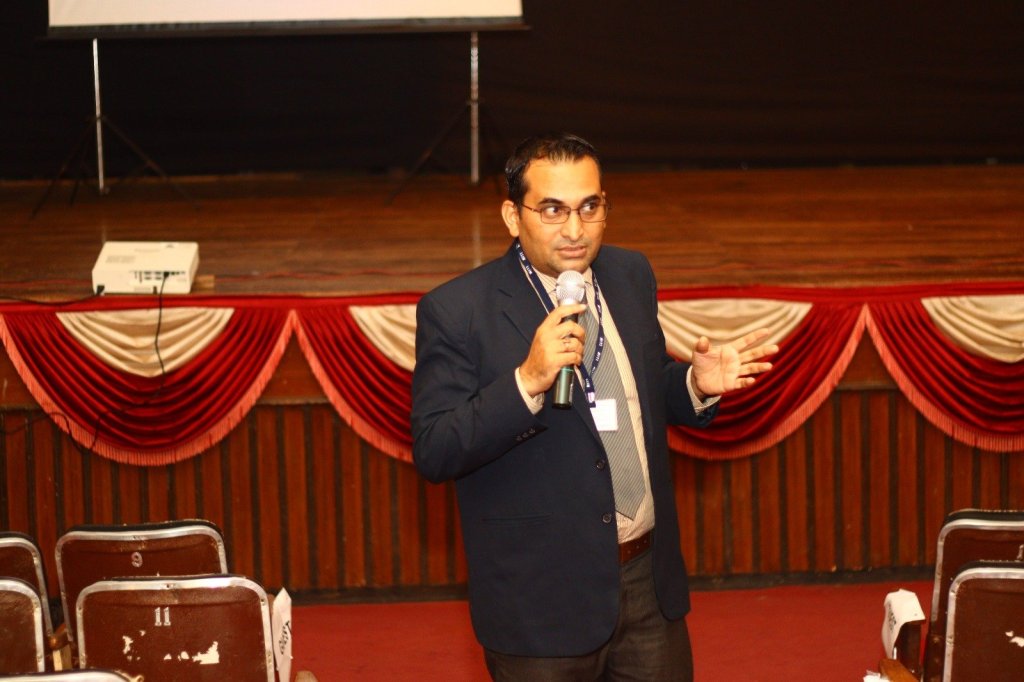
Dr. Kiran Kakade, a distinguished faculty member at the Lala Lajpatrai Institute of Management, Mumbai recently conducted a highly informative session for the incoming MMS 2023-25 batch.

The session delved into the intricate aspects of “Future Trends in Management,” shedding light on the concept of building an “Agile Organization” capable of thriving in the ever-changing landscape of a VUCA (Volatile, Uncertain, Complex, Ambiguous) business environment. Dr. Kakade emphasized the necessity for future employees to possess well-rounded, T-shaped skills.

This entails having a profound understanding and expertise in a particular area of specialization while concurrently possessing the curiosity and adeptness to forge connections and collaborations across diverse disciplines. The session provided the students with a comprehensive understanding of the multifaceted nature of modern management, equipping them with the insights and tools necessary to excel in their academic journey and to be future-ready leaders in the business world.

Website: http://www.drkirankakade.com

kirankakade #VUCAworld #llim #agileorganization #futureleaders #futuretrends #management #mumbaiuniversity

Title: Enhancing Management Pedagogy with Business Simulations and Data Analytics by Dr. Kiran Kakade

Source: https://medium.com

Introduction

In the ever-evolving landscape of business education, staying up-to-date with the latest teaching methodologies is crucial. One approach that has gained immense popularity in recent years is the use of business simulations. These simulations offer students a hands-on experience that bridges the gap between theory and practice, preparing them for real-world challenges. In this blog, we will delve into the realm of business simulations, focusing on how they enrich management pedagogy. We will also explore some notable examples, including data analytics simulations and strategic decision-making exercises created by renowned thought leader Professor Tom Davenport.

1. Data Analytics Simulation: Strategic Decision Making

Imagine stepping into the shoes of a brand manager for a laundry detergent company facing declining performance. Your mission is to turn the brand’s fortunes around using sophisticated analytics. This is precisely the scenario students encounter in this single-player simulation.

  • Objective: To teach students the power of analytics in decision-making.
  • Gameplay: Students are tasked with predicting market demand, setting channel prices, making formulation decisions, determining promotional spending strategy, and effectively communicating their strategy to their managers.
  • Realism: The simulation utilizes actual consumer data informed by a multinational consumer goods company, offering students a taste of real-world data analytics.
  • Duration: 60-90 minutes, making it a suitable classroom activity.
  • Supporting Materials: A Teaching Note provides an overview of theory, simulation screens, and reference materials.

2. IT Management Simulation: Cyber Attack!

In today’s digital age, cybersecurity is a paramount concern for businesses. This simulation puts students in the shoes of a Chief Technology Officer (CTO) during a cyber attack, emphasizing crisis management.

  • Objective: To teach students key issues faced by managers when responding to an IT crisis.
  • Gameplay: Students must prioritize actions, navigate information overload, and make critical decisions to preserve data and recover from the attack.
  • Realism: The simulation mirrors the fast-paced, high-pressure environment of a real cyber crisis.
  • Versatility: It can be played in asynchronous or synchronous mode, accommodating different teaching styles.

3. Leadership and Team Simulation

Leadership and teamwork are fundamental skills in management. This award-winning simulation uses the context of a Mount Everest expedition to reinforce these skills.

  • Objective: To enhance student learning in group dynamics and leadership.
  • Gameplay: Students play different roles on a team of climbers attempting to summit Mount Everest. They must collectively make decisions on whether to proceed to the next camp, considering various factors.
  • Challenges: Hidden challenges add unpredictability, mimicking real-life obstacles.

4. New Venture Simulation: The Food Truck Challenge

Entrepreneurship and innovation are vital in the business world. This simulation places students in the role of running a food truck in Boomtown, emphasizing the value of learning by doing.

  • Objective: To teach students about innovation, prototyping, and the willingness to fail.
  • Gameplay: Students make decisions about where to park their food truck and what menu items to offer. They must choose between scaling up, further analysis, or experimentation.
  • Discussion: Debriefing discussions explore trade-offs between analysis, experimentation, and scale.

5. Strategic Innovation Simulation

Strategic thinking and innovation are critical for business success. In this simulation, students take on the role of the President at Back Bay Battery, Inc., making strategic decisions to sustain the company’s leadership position.

  • Objective: To apply strategic innovation thinking to maintain market leadership.
  • Gameplay: Students forecast sales, set unit prices, and allocate R&D investments. They must manage trade-offs between core technology and new disruptive technologies.
  • Audience: Suitable for undergraduate, graduate, and executive education courses specializing in strategic innovation, strategy, and general management.

Conclusion

Incorporating business simulations into management pedagogy enhances students’ learning experiences by providing practical, real-world scenarios. These simulations cover a wide range of topics, from data analytics and crisis management to leadership and innovation. By using these innovative tools, educators can better prepare the business leaders of tomorrow for the complex challenges they will face in their careers.