Title: Bhagavad Gita: Timeless Wisdom for Leadership and Sustainability in the VUCA World by Dr Kiran Kakade

Source:- https://www.googlesir.com

Introduction

In a world characterized by Volatility, Uncertainty, Complexity, and Ambiguity (VUCA), the Bhagavad Gita, a revered ancient text of Hinduism, offers profound insights into leadership and organizational sustainability. It is fascinating to discover that the wisdom contained in this millennia-old scripture resonates with contemporary leadership theories and practices.

The VUCA World and the Bhagavad Gita

The concept of VUCA has become synonymous with our rapidly changing world. However, the Bhagavad Gita reminds us that change has always been the only constant. Volatility signifies the high rate of change, leading to pervasive uncertainty. Life itself is a testament to complexity, as we evolve from a single cell into multifaceted human beings, changing with every passing moment. Ambiguity is inherent in change; clarity often emerges only in hindsight.

Bhagwan Krishna’s Guidance

In this ever-evolving landscape, Bhagwan Krishna imparts a timeless lesson: the importance of remaining calm and equanimous under all circumstances. This calmness is the key to succeeding in the VUCA world. Whether waiting for the storm to pass or using prior knowledge to protect oneself, maintaining composure is essential. In a state of agitation, decision-making becomes flawed.

Leadership Lessons from the Bhagavad Gita

It’s intriguing to note that many contemporary leadership topics, such as emotional intelligence, situational leadership, character, and integrity, have their roots in the Bhagavad Gita. Peter Senge, a prominent management thinker, acknowledges the relevance of the Gita in his works.

Navigating a Global Crisis

Today’s world faces a global crisis encompassing health, economic, and geopolitical dimensions. Swift and decisive actions are imperative, but we must also consider the long-term consequences of our choices. Collaboration, sharing of information, and learning from one another are vital in overcoming adversity on a global scale.

Karma Yoga: A Path to Sustainable Leadership

In our fiercely competitive business world, survival often hinges on negative competitive behavior and a disregard for value-based business practices. Here, the Bhagavad Gita’s doctrine of Karma Yoga becomes relevant. It emphasizes detachment, an equanimous attitude towards success and failure, and virtues like sacrifice, dedication, belief, and the greater good of society as motives for action.The tenets of Nishkama Karma Yoga, which promotes selfless action, can serve as guidelines for today’s business leaders. By embracing these principles, managers can pursue long-lasting success and happiness while contributing positively to society.

Conclusion

In conclusion, the Bhagavad Gita’s wisdom transcends time and offers valuable insights for leadership and organizational sustainability in the VUCA world. By staying calm, embracing change, and adhering to ethical principles, leaders can navigate the complexities of today’s business environment. The ancient teachings of the Gita continue to resonate as a beacon of guidance in our contemporary world.

Title: Accelerating Progress on SDGs: India’s Commitment to a Sustainable Future

Source: https://en.wikipedia.org/

Introduction:

The United Nations Sustainable Development Goals (SDGs) are a universal call to action to end poverty, protect the planet, and ensure prosperity for all by 2030. These goals serve as a roadmap for addressing global challenges, and India, with its vast population and unique socio-economic landscape, plays a crucial role in determining the success of the SDGs worldwide. In this blog, we will delve into India’s commitment to achieving these goals and explore the efforts made by the government, civil society, and the United Nations to accelerate progress on the SDGs.

India’s Pledge to Sustainable Development:

At the UN Sustainable Development Summit in 2015, Prime Minister Narendra Modi emphasized India’s commitment to sustainable development, stating that “the sustainable development of one-sixth of humanity will be of great consequence to the world and our beautiful planet.” This pledge underscores India’s recognition of its role in achieving global sustainability and prosperity.

Coordination through NITI Aayog:

To spearhead India’s efforts towards the SDGs, the government established NITI Aayog, the premier think tank responsible for coordinating the SDGs. NITI Aayog’s role includes mapping schemes related to the SDGs, identifying lead and supporting ministries for each target, and ensuring a cohesive approach to achieving these goals. This centralized coordination is pivotal in aligning India’s policies and programs with the SDGs.

National Indicators for Monitoring:

The Ministry of Statistics and Programme Implementation (MoSPI) has taken the lead in developing national indicators for the SDGs. These indicators provide a crucial framework for tracking progress and making data-driven decisions. By establishing reliable metrics, India can measure the impact of policies and interventions, ensuring accountability and transparency in its pursuit of the SDGs.

State Governments’ Key Role:

Recognizing that sustainable development must prioritize inclusivity and leave no one behind, state governments play a pivotal role in India’s progress on the SDGs. They are uniquely positioned to address local challenges, tailor initiatives to specific needs, and empower communities to actively participate in the development process. By focusing on putting people first, state governments contribute significantly to achieving the SDGs at the grassroots level.

UN Support for India’s SDGs:

The United Nations Country Team in India stands in solidarity with India’s efforts to achieve the SDGs. Collaborating closely with NITI Aayog, Union ministries, and state governments, the UN ensures that the interconnected nature of the goals is acknowledged and addressed comprehensively. Furthermore, the UN advocates for adequate financing to fulfill the ambitious SDGs agenda in India.

The UN Sustainable Development Framework (UNSDF):

The UNSDF serves as a vital partnership framework between the Government of India and the UN System. This framework is designed to align with national priorities and the SDGs, focusing on seven key areas:

  1. Poverty and Urbanization
  2. Health, Water, and Sanitation
  3. Education and Employability
  4. Nutrition and Food Security
  5. Climate Change, Clean Energy, and Disaster Resilience
  6. Skilling, Entrepreneurship, and Job Creation
  7. Gender Equality and Youth Development

These focus areas represent a collaborative effort to address complex challenges and drive sustainable change in India.

Conclusion:

India’s commitment to the Sustainable Development Goals is not only a national imperative but also a global responsibility. By coordinating efforts through NITI Aayog, developing robust indicators, engaging state governments, and partnering with the United Nations, India is making significant strides towards achieving these transformative goals. As Prime Minister Modi stated, the success of India’s sustainable development journey will lead to “a world of fewer challenges and greater hope.” In realizing this vision, India is not only securing its future but also contributing to a more equitable and prosperous world for all.

Title: The Complex Politics of Maratha Reservation in Maharashtra By Dr Kiran Kakade

Source: https://india.postsen.com

Introduction

As the Lok Sabha and Assembly elections draw near, the intricate politics surrounding Maratha reservation has once again taken center stage in Maharashtra politics. Recent events, including renewed aggression and violence in Jalna district, have sparked high-level inquiries to identify those responsible. The presence of senior politicians making personal visits to Manoj Jarange Patil, who is on a week-long indefinite fast in Antarwali Sarathi village, Jalna district, speaks volumes about the significance of this issue.

Who are the Marathas?

The Marathas constitute a diverse group of castes, including peasants and landowners, making up approximately 33 percent of Maharashtra’s population. While most Marathas are Marathi-speaking, it’s essential to note that not all Marathi speakers belong to the Maratha community. Historically, the Marathas have been recognized as a ‘warrior’ caste with substantial landholdings. Since the formation of Maharashtra state in 1960, 12 out of 20 chief ministers have hailed from the Maratha community. Despite the challenges posed by land divisions and agrarian issues over the years, the Maratha community continues to play a vital role in the rural economy.

The Demand for Reservation

The Marathas have been advocating for reservation in government jobs and educational institutions for several decades. The first protest in this regard took place 32 years ago, led by Mathadi Labour Union leader Annasaheb Patil in Mumbai. Since 1981, the issue of Maratha reservation has been a recurrent theme in Maharashtra politics, fueling mass protests. This demand for reservation stems from historical social discrimination within Hindu society.

Shri Chhatrapati Shahu Maharaj of Kolhapur, recognizing the severity of social discrimination, took the pioneering step of introducing constitutional provisions for reservation in the state and the private sector in July 1902. This was a groundbreaking move, marking one of the first instances where a state ruler actively implemented social justice policies. The basis for this reservation was the deeply entrenched caste system and its discriminatory practices upheld by religious texts. Shri Chhatrapati Shahu Maharaj sought to eliminate this brutality and promote social equality by excluding privileged castes and classes who had benefitted from the caste system.

The Ongoing Challenge

Despite several attempts, Maharashtra, a state historically dominated by Marathas, has failed to find a lasting solution to the Maratha reservation issue. The issue resurfaced prominently during the tenure of the Devendra Fadnavis-led BJP government between 2014 and 2019.

Before the 2014 Assembly elections, the Prithviraj Chavan-led government introduced an ordinance granting 16 percent reservation to Marathas in government jobs and education, based on the recommendations of the Narayan Rane Committee.

In 2016, the tragic Kopardi rape and murder case galvanized the Maratha community, leading to well-organized protests under the Maratha Kranti Morcha and Sakal Maratha Samaj. The protests, which turned violent in 2017-18, prompted the Fadnavis government to take concrete measures. In November 2018, the government approved reservation for Marathas under the Socially and Educationally Backward Class Act, based on the findings of the Backward Class Commission headed by M G Gaikwad. This move gave the BJP a political advantage over its rivals.

Current Political Landscape

Now, nearly five years later, Deputy Chief Minister Devendra Fadnavis finds himself once again at the center of Maratha quota politics, this time as the target of his political opponents. The Congress, NCP (led by Sharad Pawar), and Shiv Sena (under Uddhav Thackeray) have joined forces to scrutinize the Eknath Shinde-led coalition government’s handling of the Maratha reservation issue.

Unlike the Fadnavis era, where an upper-caste CM led the state, the current administration sees both CM Shinde and Deputy CM Ajit Pawar belonging to the Maratha community. This shift in leadership dynamics adds another layer of complexity to the ongoing political battle.

High Court Verdict in 2019

In June 2019, the Bombay High Court upheld the constitutional validity of Maratha quota under the Socially and Educationally Backward Classes (SEBC) Act, 2018. However, the HC reduced the quota from 16 percent to 12 percent in education and 13 percent in government jobs, aligning it with the recommendations of the Maharashtra State Backward Class Commission. The HC also emphasized that the total reservation should not exceed 50 percent, except under exceptional circumstances.

The HC’s decision relied heavily on the comprehensive findings of the 11-member Maharashtra State Backward Class Commission, which conclusively established the social, economic, and educational backwardness of the Maratha community and their underrepresentation in public employment.

Supreme Court’s Intervention

In May 2021, the Supreme Court, led by Justice Ashok Bhushan, struck down the provisions of Maharashtra law providing reservation to the Maratha community. This decision exceeded the 50 percent ceiling set by the court in its 1992 Indra Sawhney (Mandal) judgment. However, in November 2022, the SC upheld a 10 percent quota for Economically Weaker Sections (EWS) in Maharashtra. As a result, economically disadvantaged members of the Maratha community can benefit from the EWS quota until a resolution to the Maratha reservation issue is reached.

Conclusion

The Maratha reservation issue in Maharashtra is a complex and deeply rooted political challenge that has persisted for decades. It reflects not only the historical social injustices but also the evolving political landscape of the state. With changing alliances and leadership dynamics, the future of Maratha politics and its impact on administration remain uncertain. The issue serves as a reminder of the complexities involved in addressing historical injustices through reservation policies and the delicate balance required to ensure equitable representation while adhering to legal limitations set by the judiciary. As Maharashtra heads into crucial elections, the resolution of the Maratha reservation issue is likely to remain a prominent topic in the state’s political discourse.

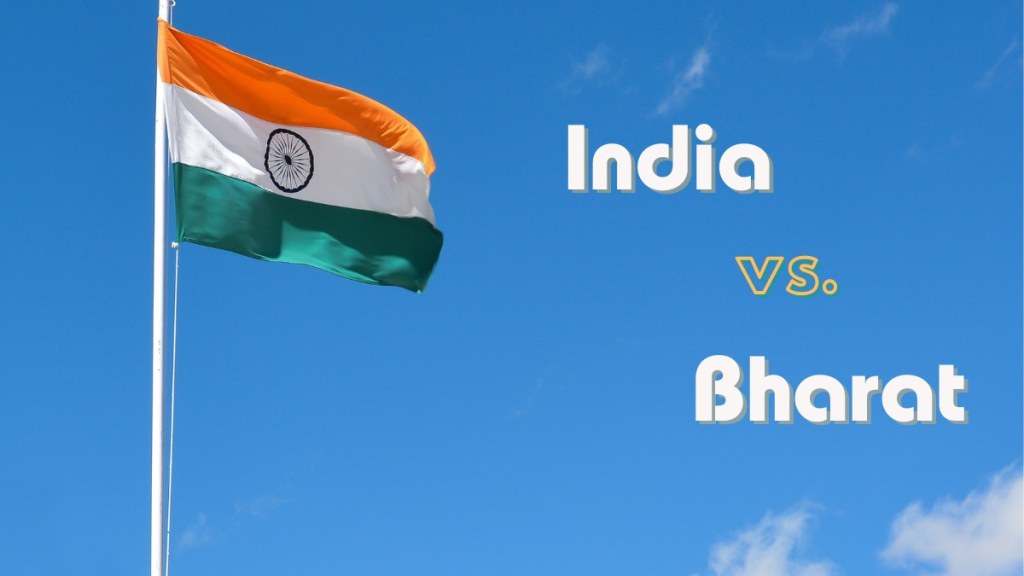
Title: India vs. Bharat: A Tale of Names and Identity by Dr. Kiran Kakade

Source : https://www.jagranjosh.com

Introduction

India is a land of diverse cultures, languages, and traditions. But what’s in a name? Well, when it comes to India, it appears there’s quite a bit. India is perhaps the only country in the world with multiple names – Bharat, India, Hindustan, or Hind, each carrying its own historical and cultural significance. In this blog, we’ll delve into the evolution, implications, and suitability of these names for the country, examining how they reflect India’s complex identity.

The Ancient Names

Long before the modern labels, the ancients referred to this vast subcontinental land as “Jambu Dweep” and “Bharatvarsha.” The former, “Jambu Dweep,” was linked to the Jamun fruit, which is abundant in the region. The latter, “Bharatvarsha,” referred to the land of the sons of Bharat, a legendary emperor. These names reflected a deep connection between the land and its people, rooted in mythology and tradition.

Colonial Hangover and Cultural Influence

The names “India” and “Hindustan” have colonial origins, with “India” being used by Greek and Latin authors and “Hindustan” appearing in Persia as early as the third century B.C. These names evolved over time and were often context and language-sensitive, reflecting the changing political landscape of the subcontinent.

The Constitutional Conundrum

Fast forward to India’s independence, and the Constitution faced a unique challenge: what name should represent the nation officially? The Constituent Assembly had to choose between “Bharat” and “India.” While the Constitution uses both, the prevalent usage of “India” in official documents suggests a colonial hangover and cultural imperialism imposed by the West.

The Cultural Divide

Interestingly, the name chosen often depends on the context and language used. In English, it’s “India,” while in Hindi or other vernacular languages, it’s “Bharat.” This linguistic divide even extends to contemporary literature and societal perceptions. “India” is associated with the educated, urban, and economically better-off segments, while “Bharat” is linked to the rural, less privileged, and less educated population.

The Confusion Persists

The confusion surrounding these names persists today. Cultural events, like the “Azadi ka Amrit Mahotsav,” use “Bharat” and “India” interchangeably, suggesting a distinction between the spirit of “Bharat” and the constitutional republic of “India.” This duality in naming remains a baffling subject for Indian citizens.

Conclusion

The multiple names of India reflect its rich history, cultural diversity, and the impact of colonialism. While the Constitution acknowledges both “Bharat” and “India,” the choice of “India” as the prevalent official name raises questions about the lingering colonial influence. The ongoing debate and confusion surrounding these names highlight the complexity of India’s identity, which continues to evolve in the 21st century.

Title: The Evolution of Education: From Education 1.0 to Education 3.0

Source:- https://www.viewsonic.com

Introduction:
Education has always been a cornerstone of human development and progress. Over the centuries, it has undergone significant transformations, adapting to the changing needs of society and advancements in technology. In this blog, we will embark on a journey through the stages of education, from Education 1.0 to the modern Education 3.0, exploring how each era has shaped the way we learn and teach.

Education 1.0: The Traditional Classroom
Education 1.0 represents the traditional classroom setting that has been prevalent for centuries. In this era, education was primarily teacher-centered, with knowledge imparted through lectures and textbooks. Students played a passive role, absorbing information and regurgitating it through examinations.

Key Features:

  1. Teacher-Centered: The teacher was the central figure, and learning was mostly a one-way transmission of information.
  2. Limited Access: Education was confined to physical classrooms, limiting access for many.
  3. Standardized Curriculum: A standardized curriculum was followed, often not tailored to individual needs.
  4. Memorization: Learning focused on memorization and rote learning.

Education 2.0: The Digital Revolution
The emergence of technology marked the transition to Education 2.0. The internet, computers, and digital resources revolutionized the way education was delivered and received. This era witnessed a shift towards student-centered learning, where students had access to a vast array of information and resources.

Key Features:

  1. Digital Resources: The internet and digital tools provided access to a wealth of information and interactive learning materials.
  2. Blended Learning: A mix of traditional classroom teaching and online learning became popular.
  3. Customization: Learning platforms started to offer personalized learning experiences.
  4. Collaboration: Online forums and social media allowed students to collaborate and share knowledge.

Education 3.0: The Age of Personalized and Lifelong Learning
Education 3.0 represents the current and evolving phase of education. It is characterized by a learner-centric approach, recognizing that every individual has unique learning needs and goals. Technology continues to play a pivotal role in this phase, but the focus has shifted towards self-directed, lifelong learning.

Key Features:

  1. Personalization: Learning experiences are tailored to individual interests, abilities, and goals.
  2. Lifelong Learning: The idea that learning is a lifelong journey is embraced, with continuous skill development.
  3. Online Learning Ecosystems: A wide variety of online platforms, courses, and resources are available.
  4. Critical Thinking: Emphasis is placed on problem-solving, critical thinking, and creativity.
  5. Global Learning: Collaboration across borders and cultures is facilitated through online networks.

Conclusion:
The journey from Education 1.0 to Education 3.0 illustrates the remarkable evolution of education. While the traditional classroom will always have its place, the integration of technology and the shift towards personalized

Title: The Future of Education: Bridging the Skills Gap

Source: https://www.skillstork.org

In recent years, a growing concern has taken center stage in discussions about the future of education – the widening skills gap in the workplace. It has become increasingly evident that the traditional education system, which relies heavily on degrees and certifications, is struggling to adequately prepare students for the ever-evolving demands of the job market. Meanwhile, rapid technological advancements have ushered in a host of new professions, necessitating a continuous cycle of upskilling and reskilling for those already in the workforce. The statistics are telling: by 2025, it’s estimated that half of all workers will require some form of reskilling or upskilling to remain relevant in their careers.

As we look forward, it’s clear that education is on the brink of a profound transformation, one that will reshape how knowledge is acquired, assessed, and applied. In this blog post, we’ll explore three key dimensions of this transformation:

  1. How Education is Delivered: Traditional classroom-based education is giving way to a more flexible and personalized approach. Online learning platforms, blended learning models, and virtual classrooms have gained prominence, offering students greater accessibility and the ability to learn at their own pace. This shift towards digital education not only accommodates diverse learning styles but also allows for continuous learning, which is vital in an era of rapid technological change.
  2. Which Outcomes Students are Hoping to Achieve: The ultimate goal of education is evolving beyond the acquisition of degrees and certificates. While these credentials remain important, there’s a growing emphasis on the development of practical skills and competencies that align with real-world job requirements. Students are increasingly seeking education pathways that offer tangible and immediately applicable skills, rather than solely focusing on academic achievements.
  3. How Students are Proving Their Competency: Traditional assessments, such as exams and standardized tests, are being supplemented or replaced by innovative methods that provide a more holistic view of a student’s capabilities. Competency-based education (CBE) is gaining traction, allowing students to progress based on their mastery of specific skills or knowledge areas rather than rigid timelines. Additionally, micro-credentials, which offer concise and targeted certifications, enable individuals to demonstrate their expertise in specialized domains quickly.

The future of education also extends to how individuals showcase their skills to potential employers. Digital portfolios, blockchain-based credentials, and AI-driven assessment tools are emerging as means to present a more comprehensive and verifiable picture of one’s capabilities.

In conclusion, the future of education is a dynamic landscape that responds to the evolving needs of the workforce and the expectations of students. It’s a world where education is delivered flexibly, outcomes are focused on practical skills, and competency is proven through innovative means. As we adapt to these changes, we’ll be better equipped to bridge the skills gap, preparing individuals to thrive in a rapidly changing job market. The future of education is not just a transformation; it’s a revolution in learning and skill development.

Title: Accelerated, Inclusive, and Resilient Growth: India’s G20 Priorities and UN’s Positive Outlook by Dr Kiran Kakade

Source:- https://www.ndtv.com

Introduction:


India’s role on the global stage has been steadily evolving, and as it assumes the presidency of the G20, its priorities reflect a commitment to accelerated, inclusive, and resilient growth. In this blog, we’ll delve into India’s key focus areas during its G20 presidency and examine the United Nations’ positive outlook on India’s economic resilience. India, with its rich history, diverse culture, and rapidly growing economy, has set an ambitious goal to become a developed country by 2047, marking the centenary of its independence. To achieve this monumental milestone, India must focus on several key areas that have the potential to bring about structural transformation, thereby ensuring accelerated, inclusive, and resilient growth. In this blog, we will delve into some of these crucial areas, including supporting small and medium-sized enterprises (SMEs) in global trade, promoting labor rights and welfare, addressing the global skills gap, and building inclusive agricultural value chains and food systems.

1. Empowering Small and Medium-Sized Enterprises (SMEs)

SMEs are the backbone of India’s economy, contributing significantly to employment and GDP. To propel India towards developed status, it is imperative to provide robust support to these enterprises. This can be achieved through:

  • Access to Finance: Ensuring SMEs have easy access to affordable credit and financial services is crucial. Government-backed schemes, interest rate subsidies, and fintech innovations can play a pivotal role in this regard.
  • Skill Development: Equipping SMEs with skilled labor is essential. Government-sponsored training programs and collaborations with industry experts can help enhance the workforce’s capabilities.
  • Digital Transformation: Encouraging SMEs to adopt digital technologies for marketing, operations, and finance can boost efficiency and competitiveness. Providing incentives and facilitating digital infrastructure can facilitate this transformation.

2. Promoting Labor Rights and Welfare

Ensuring labor rights and welfare is not only a moral imperative but also vital for sustained growth. To achieve this, India must focus on:

  • Labor Laws Reforms: Streamlining and modernizing labor laws can encourage formal employment while safeguarding workers’ rights. Balancing flexibility for employers with protections for employees is key.
  • Social Security: Expanding social security nets to cover a broader spectrum of the population can reduce vulnerability and enhance overall well-being. This includes healthcare, pension schemes, and unemployment benefits.
  • Skilling and Reskilling: Continuous skill development programs can empower workers to adapt to changing market demands, making them more employable and resilient in the face of economic uncertainties.

3. Addressing the Global Skills Gap

The global workforce is evolving, and India’s workforce must evolve with it. To bridge the skills gap and remain competitive on the global stage:

  • Education Reforms: Modernizing the education system to emphasize critical thinking, problem-solving, and practical skills can prepare the workforce for the demands of the future.
  • Vocational Training: Expanding vocational training and apprenticeship programs can align skills with industry requirements, ensuring a job-ready workforce.
  • Global Collaboration: Collaboration with international institutions, businesses, and governments can facilitate knowledge transfer and exposure to global best practices.

4. Building Inclusive Agricultural Value Chains and Food Systems

Agriculture remains a significant sector in India, providing livelihoods to a large portion of the population. To ensure inclusive growth and food security:

  • Technology Adoption: Encouraging farmers to adopt modern agricultural practices, such as precision farming and organic methods, can improve productivity and sustainability.
  • Market Access: Facilitating market access for smallholders through better transportation infrastructure and technology platforms can ensure fair prices and reduce post-harvest losses.
  • Diversification: Promoting crop diversification and integrated farming systems can enhance income stability for farmers while addressing food security concerns.

UN’s Positive Outlook on India’s Economy:
According to a United Nations report titled ‘Foreign Direct Investment Trends And Outlook In Asia And The Pacific 2020/2021,’ India’s economy is poised to be the “most resilient” in South and South-West Asia in the long term. Several factors contribute to this positive outlook:

  1. Economic Growth: Despite a slight decrease in inward Foreign Direct Investment (FDI) flows in 2019 across the region, India emerged as a driving force, accounting for 77% of total inflows. This reflects confidence in India’s economic prospects.
  2. Investment Magnet: India’s large market and positive economic growth trajectory continue to attract investments, even in the aftermath of the COVID-19 pandemic.
  3. ICT and Construction: The majority of FDI flows to India were directed towards Information and Communications Technology (ICT) and the construction sector. This highlights India’s prowess in the digital economy.
  4. Outward FDI: India’s outward FDI also saw growth, making it a key player in the region’s outward investment. In 2019, India invested USD 12.1 billion abroad, signaling its expanding global footprint.

Conclusion:


India’s journey towards becoming a developed country by 2047 is a challenging but achievable goal. Accelerated, inclusive, and resilient growth is contingent on addressing key structural issues, including empowering SMEs, promoting labor rights, bridging the skills gap, and building inclusive agricultural systems. A concerted effort by the government, private sector, civil society, and the international community is essential to propel India towards a brighter and more prosperous future. As we work towards this goal, we must remember that true development is not just about economic growth but also about improving the quality of life for all citizens. India’s presidency of the G20 and the UN’s positive assessment of its economic resilience underscore the nation’s determination to lead on the global stage. By prioritizing inclusive and resilient growth, embracing technology, and advocating for reform, India is positioning itself as a key player in shaping the future of international relations and economic prosperity.

Title: India’s Green Development and Climate Finance: A Path to a Sustainable Future by Dr Kiran Kakade

Source:- https://globalsummitoncrvs.org

Introduction:

India stands at a critical juncture in its pursuit of a sustainable future, with ambitious goals to increase its renewable energy capacity and combat climate change. As the country strives to achieve 500GW of renewable energy capacity by 2030, it is imperative to explore innovative approaches to secure the necessary financial resources for this green transition. In this blog, we will delve into the crucial role of green financing and the collaborative efforts required to realize India’s green development aspirations.

The Importance of Green Financing:

To realize its renewable energy targets, India needs substantial financial support from both public and private sectors. Green financing is the linchpin of this endeavor, providing the necessary capital for sustainable projects. Here, we highlight some key initiatives and principles that can guide India’s green finance strategy:

  1. UNEP and Sustainable Development Commitments: India can take inspiration from global initiatives like the United Nations Environment Programme (UNEP) and the Statement of Commitment by financial institutions on sustainable development. These frameworks offer valuable insights into implementing green finance practices.
  2. Principles for Responsible Investment (PRI) and Equator Principles (EP): Adhering to these principles can ensure that financial institutions in India integrate environmental and social considerations into their decision-making processes, aligning investments with sustainability goals.
  3. Collaboration: Collaboration among key stakeholders, including government agencies, financial institutions, and the private sector, is essential. It can lead to the creation of innovative financing models and the pooling of resources to fund sustainable projects.

India’s Renewable Energy Potential:

India’s commitment to green development is evident in its ranking as the 3rd largest contributor to total renewable power capacity additions over the past decade. This commitment presents a significant opportunity to harness green finance and achieve ambitious renewable energy goals. To do so effectively, several strategies must be considered:

  1. Policy and Regulatory Environment: India should focus on creating a robust policy and regulatory framework that encourages green investments. Clear guidelines and incentives can attract investors and promote sustainable practices.
  2. Capital Mobilization: Mobilizing capital from various sources, including domestic and international investors, is vital. Financial instruments such as green bonds can be instrumental in raising funds for renewable projects.
  3. Capacity Building: Building the necessary human and technical capacity is crucial. Training programs and partnerships with educational institutions can develop a skilled workforce to support green initiatives.
  4. Long-Term Focus: Sustainability efforts should be viewed as long-term commitments. Consistency in policies and investments will help India work towards its 2070 net-zero goal while ensuring economic growth.

Green Hydrogen Innovation:

In India’s quest for green development, green hydrogen plays a pivotal role in achieving clean energy goals. The National Green Hydrogen Mission outlines a comprehensive R&D program to drive innovation in green hydrogen technology. Here are some key aspects of this initiative:

  1. Technology Advancement: India recognizes the importance of technology development and innovation to enhance green hydrogen production and use. Research will focus on addressing cost and technology challenges.
  2. R&D Strategy: The mission outlines a clear R&D strategy with short-term, mid-term, and long-term objectives. This approach allows for targeted innovation and scalability.
  3. Public-Private Collaboration: A public-private partnership framework, known as Strategic Hydrogen Innovation Partnership (SHIP), will be established. This collaboration aims to mobilize funds, share expertise, and drive innovation.
  4. Centers of Excellence: Creating Centers of Excellence through collaboration among academia, industry, and government will facilitate the transfer and commercialization of new green hydrogen technologies.

Conclusion:

India’s green development journey and commitment to combat climate change are commendable. With a focus on green financing, collaborative efforts, and innovation in green hydrogen technology, India can pave the way for a sustainable and prosperous future. By addressing challenges, mobilizing resources, and staying committed to long-term sustainability, India can make significant contributions to the global fight against climate change while ensuring economic growth for its citizens.

Title: “India 2047: A Journey to a Developed Nation – A Blog Series on G20 Summit Themes by Dr. Kiran Kakade”

Source:- https://www.jagran.com

“Exciting news! Starting today, I’m launching a new blog series that will run until the G20 Summit on September 9th.

In this series, we’ll dive deep into the six core themes of the G20 Summit, all from the unique perspective of India’s journey toward becoming a developed nation by 2047.

India, as the host of the G20, has set its priorities, and we’re here to explore and discuss them:

1) Green Development, Climate Finance, and Life
2) Accelerated, Inclusive, and Resilient Growth
3) Accelerating Progress on SDGs
4)Technological Transformation and Digital Public Infrastructure
5) Multilateral Institutions for the 21st Century
6) Women-led Development

Join me on this exciting journey as we analyze and understand these vital global issues through the lens of India’s aspirations. Stay tuned for thought-provoking insights and engaging discussions!

Website: http://www.drkirankakade.com

#G20India #Development2047 #GlobalPriorities #drkirankakadeblog #drkirankakade