

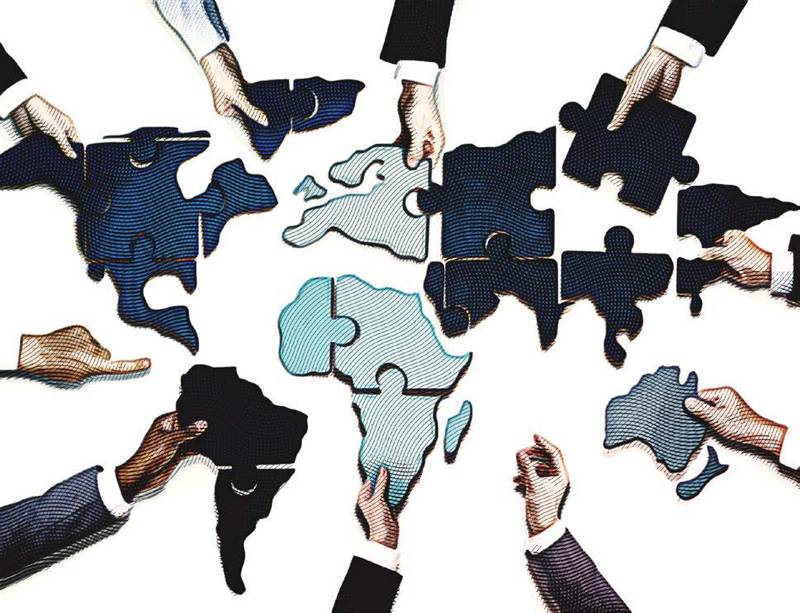
Source:- https://indiafoundation.in
Introduction
In a rapidly changing world facing unprecedented challenges, the need for reform in multilateral institutions has never been more pressing. The 21st century presents global issues that transcend borders, demanding a more accountable, inclusive, just, equitable, and representative international system. India’s G20 presidency in 2023, under the theme ‘Vasudhaiva Kutumbakam’ (One Earth-One Family-One Future), emphasizes the urgency of reformed multilateralism. This blog explores the imperative for change and outlines key recommendations presented in the T20 Policy Brief by Andreas Bummel and Thomas Pogge in May 2023.
The Challenge
Multilateralism serves as a tool for aligning the long-term national interests of states to achieve common global goals. These goals include addressing global public goods like infectious disease prevention, climate change mitigation, international financial stability, and more. However, the multilateral system is facing significant challenges that hinder its effectiveness in tackling these issues.
One of these challenges is the demand for global public goods often outweighing the supply due to various factors such as a preference for non-binding commitments, short-term interests conflicting with long-term goals, free-rider tendencies, and a lack of legitimate governing mechanisms. To overcome these challenges, a reformed multilateralism is essential.
Enhancing Legitimacy and Representation
India’s G20 presidency recognizes the need to enhance legitimacy in the multilateral system, which is closely tied to principles of justice and democracy. Legitimacy is vital because it influences the trust, support, and cooperation an institution receives from its stakeholders. Without legitimacy, institutions may face resistance and struggle to achieve their intended purposes.
The United Nations (UN) is the most important institution of multilateralism, but it primarily comprises national governments, potentially excluding minority and opposition groups. There is also a lack of mechanisms for ordinary citizens to connect with UN deliberations and decision-making, raising concerns about its legitimacy.
The G20’s Role
The Group of Twenty (G20) is a powerful forum comprising 19 countries and the European Union, representing a significant portion of the world’s population, GDP, and global influence. While initially focused on economic and financial governance, the G20 has expanded its scope to include various global challenges such as climate change, terrorism, and sustainable development.
However, the G20 faces criticism over its legitimacy and efficiency due to its self-selected nature and lack of permanent formal structures. To address these concerns, the G20 can review its operations, establish formal structures, and improve coordination with the UN.
Recommendations to the G20
To advance the cause of inclusive global governance and enhance legitimacy in the multilateral system, the policy brief recommends two key initiatives: the creation of a United Nations Parliamentary Assembly (UNPA) and the instrument of a UN World Citizens’ Initiative (UNWCI).
- United Nations Parliamentary Assembly (UNPA)
The UNPA would provide a platform for elected representatives of UN member states to deliberate on and engage in UN affairs, considering the concerns of their constituencies and promoting the interests of humanity. It would transcend the intergovernmental character of existing UN bodies by focusing on shared viewpoints rather than geopolitical regional groupings.
The UNPA could debate relevant matters and present its views to the UN and the global public, fostering diverse perspectives and strengthening political and public support for the UN. Its potential powers and functions would be defined within the scope of the UN General Assembly, ensuring it does not interfere in domestic affairs.
- UN World Citizens’ Initiative (UNWCI)
The UNWCI would establish the right to equitable participation in domestic and global decision-making without discrimination. Like the UNPA, it can be instituted by a majority vote of the UN General Assembly as a subsidiary body.
To refine these proposals and develop common positions, like-minded G20 members, alongside other UN member states, could establish a ‘Group of Friends of Inclusive Global Governance,’ involving civil society representatives, parliamentarians, and experts.
Conclusion
Reforming multilateralism is a vital step toward addressing the complex challenges of the 21st century. India’s G20 presidency presents an opportunity to drive this reform by advocating for a more accountable, inclusive, and representative international system. The creation of a United Nations Parliamentary Assembly and a UN World Citizens’ Initiative can help establish a more equitable and participatory global governance framework, ultimately strengthening the effectiveness and legitimacy of the multilateral system in addressing the world’s most pressing issues.
 Dr. Kiran Kakade (Ph.D.,LL.M.,MCA,MBA(HR))